There are many components that go into making products, and while the product itself, such as packing tape, carpet, insulation or flexible ducts may be commonplace and well understood, each of the components that make up the final product may be completely unfamiliar.
This is certainly the case with the reinforcing product used in these very diverse types of common products. If you were to ask most people, “What is a scrim?” it is highly unlikely they would know the answer. However, if you were to point to the web of fibers in these products, they would recognize there was a very specific component in place.
What is Scrim: A Simple Answer
A simple definition of a scrim is a lattice or a grid of flexible fabric-like material that forms a netting or backing. Most of the scrims today are made from polyester or fiberglass polyester filaments, known as yarns.
There are different methods of producing scrims depending on the manufacturing system in place. The very traditional method is to weave or interlace the yarns, with a more advanced technology using a nonwoven method where chemical adhesives secure the yarns in place.
As can be imagined, with the woven option of producing a scrim the end result is a slightly textured net or lattice where the areas that the yarns interweave slightly raised and thicker. There will also be some pulling at the ends, slightly distorting the perfection of the lattice due to the tension applied through the weaving process.
With a nonwoven scrim, the yarns are held in place by chemical bonding adhesives that are carefully selected for the specific use of the scrim after production. As there is no pulling on the warp or weft yarns in the pattern, the pattern is perfect throughout the design, and there is no alteration in the thickness of the scrim over the entire surface.
Their Use
Today, different weights and styles of scrims can be produced using the chemical adhesion method much faster than the traditional woven options. They are used in most types of laminates, leaving a smooth, even surface.
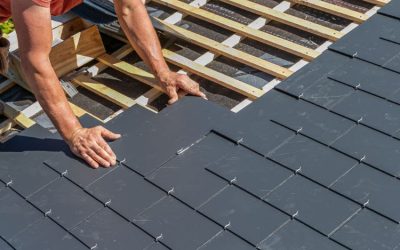
Most roofing products use a scrim to provide both rigidity and flexibility to the shingle, and for the same reason, they are also used for the backing of carpeting used in residential and commercial buildings.
Interestingly, nonwoven scrim is now used in the sails for boats, offering a much lighter weight and more responsive sail than a traditional heavy canvas. Disposable cloth, wipes, and even filters all use a scrim to provide the framework of the product, which is why answering the question, “What is a scrim?” is not such an easy process.