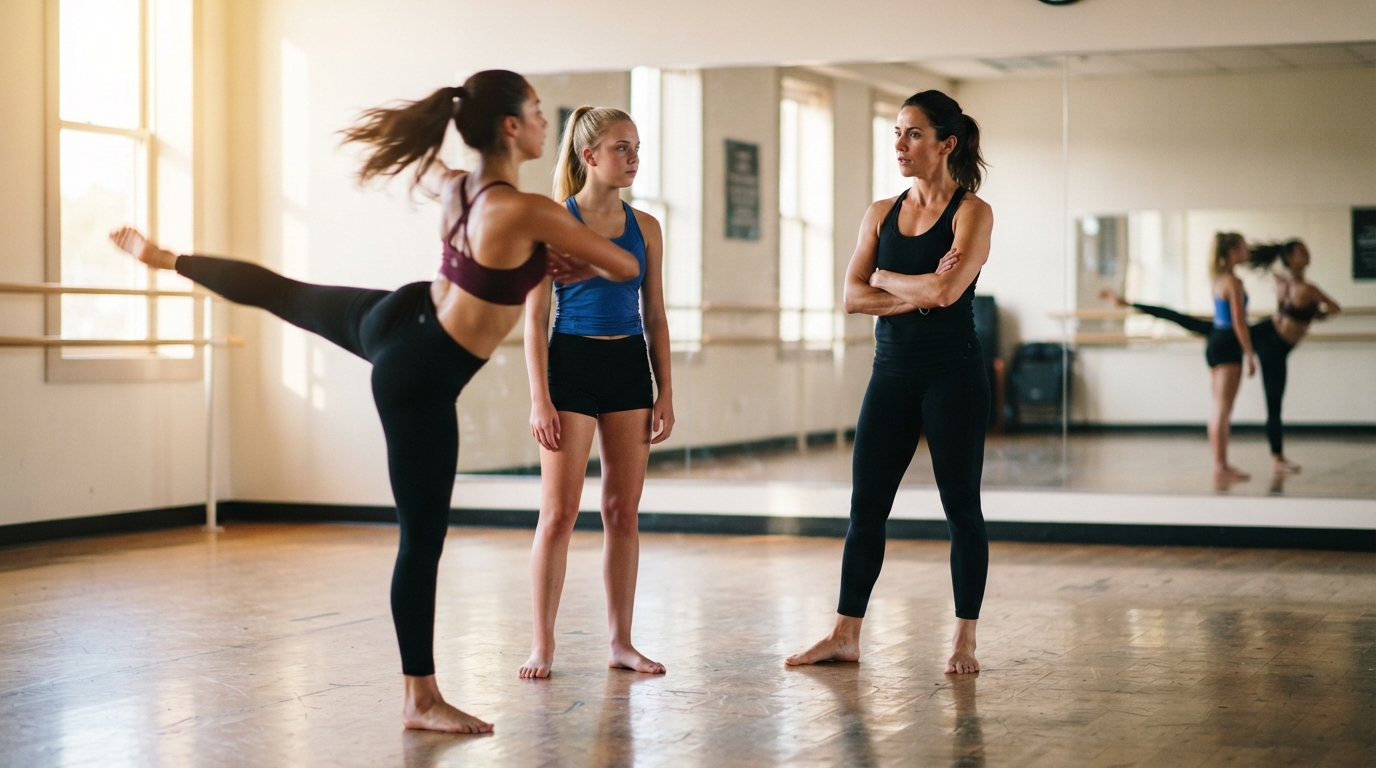
Short answer:
- Dance competitions give dancers structured goals, performance exposure, and feedback that studio classes alone cannot replicate.
- Judged events build stage presence, discipline, and resilience through repeated public performance under pressure.
- For dancers in Louisville, KY, competitions also connect local training with wider regional and national performance circuits.
Dance competitions serve as a measurable benchmark for technical growth, stage readiness, and artistic development, pushing dancers beyond routine classroom practice into real performance conditions. They matter because they compress months of training into a single high-stakes showing, revealing gaps that regular rehearsal cannot expose.
Why Competitive Performance Shapes Technical Growth
Judged events force dancers to execute choreography under conditions that differ sharply from a studio run-through. Lighting, unfamiliar stages, audience energy, and strict timing all introduce variables that test muscle memory and composure. Dance Competitions in Louisville, KY typically score technique, musicality, and execution against a rubric, giving dancers specific, actionable feedback rather than general praise or correction.
That feedback loop is what separates competitive training from casual participation:
- Judges’ scorecards identify precise technical weaknesses, such as alignment or timing issues.
- Repeated exposure to performance pressure builds consistency under stress.
- Ranked results create measurable progress markers across a season.
Building Stage Presence and Performance Discipline
Technical skill alone does not guarantee a strong performance. Projection, facial expression, and the ability to hold an audience’s attention are skills that develop almost exclusively through repeated live exposure. Competitive stages offer that repetition in a structured, recurring format that a single annual recital cannot match.
Discipline also compounds over a competition season. Dancers who prepare for multiple events learn to manage:
- Rehearsal scheduling around academic or work commitments.
- Costume, music, and choreography deadlines set by event organizers.
- Physical conditioning to reduce injury risk across a demanding calendar.
The National Dance Education Organization publishes resources on dance training standards that reinforce how structured, goal-oriented practice supports long-term skill development in young and adult dancers alike.
Competition Formats: What Dancers Can Expect
Competition structures vary by organizer, age division, and style. The table below outlines common formats dancers and families encounter when evaluating which type of event fits a given skill level or goal.
| Format Type | Typical Focus | Best Suited For |
| Solo competitions | Individual technique and artistry | Advanced dancers seeking personal feedback |
| Group or ensemble rounds | Synchronization and formation work | Teams building cohesion |
| Regional qualifiers | Scored advancement to larger events | Dancers targeting national circuits |
| Themed or style-specific events | Genre mastery (jazz, contemporary, hip-hop) | Dancers specializing in one discipline |
Each format demands a different preparation approach, but all share a common thread: structured scoring that pushes dancers toward measurable improvement rather than open-ended practice.
Regional Access and Preparation in Louisville, KY
Dancers in Louisville, KY benefit from proximity to a growing circuit of regional events that connect local training programs to broader competitive networks. Preparing for these events typically involves coordinating choreography timelines, costume logistics, and travel scheduling well in advance of registration deadlines. Based in USA, Royal Events serves participants and organizers connected to competitive circuits that extend into the Louisville, KY area.
Seasonal planning matters as much as technical rehearsal. Families and dancers often map out a competition calendar early, accounting for:
- Registration and qualification deadlines set by individual competitions.
- Travel logistics for regional or multi-day events.
- Recovery time between back-to-back competition weekends.
Frequently Asked Questions
What skills do dance competitions develop beyond technique? Competitions build stage presence, performance consistency, time management, and resilience under evaluative pressure, skills that extend beyond pure technical execution.
How do judges typically score a competitive routine? Scoring generally covers technique, musicality, choreography, and overall execution, with written or verbal feedback provided after each performance.
Are dance competitions appropriate for beginner-level dancers? Many competitions offer divisions by age and skill level, allowing newer dancers to compete against peers at a comparable stage of training.
How far in advance should competition preparation begin? Preparation timelines vary by routine complexity, but most dancers and instructors begin rehearsal and logistics planning several months before a scheduled event.
Planning Ahead
Dance competitions function as a structured measure of growth, combining technical scoring with the kind of live performance exposure that studio rehearsal cannot fully replicate. Current listing information for Royal Events is available for review by participants coordinating competitive dance logistics.