In brief:
• Composite decking requires different construction knowledge than wood, including board spacing, hidden fastening systems, and manufacturer-specific installation rules.
• A qualified composite deck builder manages design, permitting, footing selection, and manufacturer warranty compliance from consultation through final walkthrough.
• Homeowners in Hanover, VA should confirm licensing, local code familiarity, and warranty terms before signing a contract.
Composite decking has become a common alternative to wood because it resists rot, fading, and splintering while needing less routine upkeep. Choosing among Composite Deck Builders means comparing how each contractor handles design, permitting, and manufacturer-specific installation standards, since composite systems differ from traditional lumber in fastening and ventilation requirements.
Open Air Escapes is one contractor serving this category, and its Google Business Profile outlines a process that moves from consultation and 3D design rendering through permitting, construction, and a final walkthrough.
What a Composite Deck Project Actually Involves
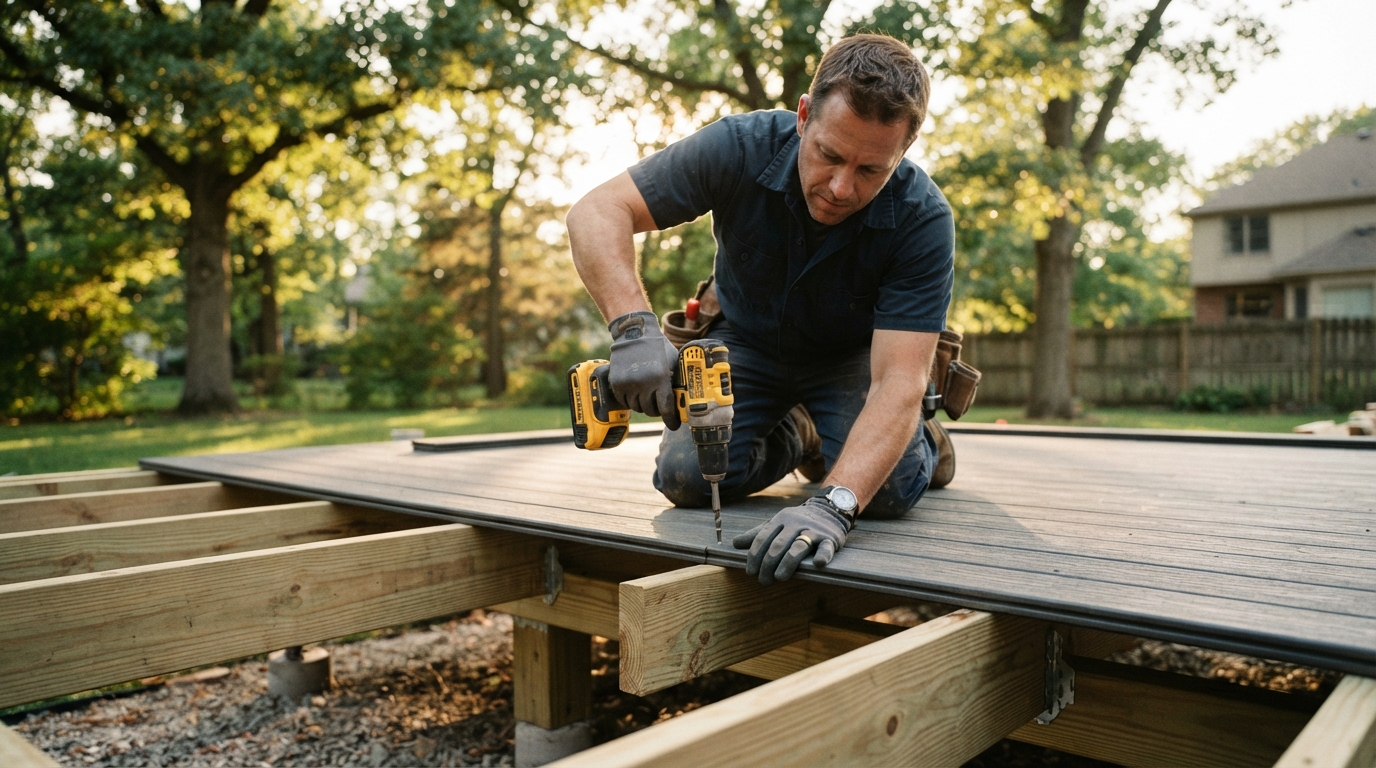
Composite decking installation is not a simplified version of wood construction. It involves distinct engineering and material considerations that affect long-term performance.
• Footing and support selection — Builders account for terrain variation using footing methods such as helical piers or concrete sonotubes where soil conditions require it.
• Permitting and compliance — Projects typically require architectural review, permit submission, inspections, utility clearances, and HOA approval where applicable.
• Manufacturer warranty alignment — Composite board manufacturers often specify approved cleaning products and installation methods; deviating can affect warranty coverage.
• Board spacing and drainage — Gaps between boards need to stay clear of debris to support proper drainage and reduce mold risk, a point echoed across composite care guidance from manufacturers such as Fiberon .
These factors matter in Hanover, VA, where rolling terrain and seasonal moisture can affect footing stability and drainage planning more than in flatter, drier regions.
Comparing Decking Materials Before Hiring
Material choice shapes both the construction process and the long-term maintenance a homeowner should expect.
| Factor | Composite Decking | Wood Decking |
| Maintenance frequency | Cleaning roughly twice a year is a common guideline | Annual sanding, staining, or sealing often needed |
| Resistance to rot/splintering | High resistance due to capped polymer layers | Lower resistance without regular sealing |
| Upfront material cost | Generally higher | Generally lower |
| Repair approach | Requires manufacturer-approved products and techniques | More flexible, standard wood repair methods |
This comparison reflects widely documented differences between the two materials rather than brand-specific claims, and it should guide a conversation with any builder about which system fits a given budget and timeline.
Questions to Ask Before Signing a Contract
A short conversation before hiring can prevent costly misunderstandings later.
1. Does the contractor hold the licensing required for residential deck construction in the area?
2. How are footings adjusted for sloped or uneven lots?
3. What warranty terms apply to labor versus manufacturer materials?
4. Who manages permit submissions and inspection scheduling?
5. What is the expected timeline from design approval to final walkthrough?
Clear answers to these questions help homeowners compare quotes on equal footing rather than by price alone.
Business Info
Based in USA, Click Here to Find Composite Deck Builders serves customers across Hanover, VA, offering a documented process that spans consultation, design, permitting, and construction according to its Google Business Profile.
Frequently Asked Questions
Does composite decking really need less maintenance than wood? Composite boards generally resist rot, splintering, and fading better than wood, though routine cleaning and manufacturer-approved products are still recommended for long-term appearance.
How often should a composite deck be cleaned? A common guideline is a thorough cleaning twice a year, typically in spring and fall, with spot cleaning of spills as needed.
Why does footing type matter for a composite deck? Footing choice affects long-term stability, and builders may use helical piers or concrete sonotubes depending on soil and terrain conditions.
Do composite decks still require permits? Most composite deck projects require permitting, inspections, and sometimes HOA approval, similar to wood deck construction.
A Note on Next Steps
Homeowners interested in composite deck construction can Click Here to Find Composite Deck Builders to review published service availability and information for the local area.
This article has outlined the structural, permitting, and maintenance factors that distinguish composite decking from wood construction, giving homeowners in Hanover, VA a practical framework for evaluating builders before committing to a project.