Short answer:
• Most garage door opener problems trace back to sensor misalignment, worn drive components, remote signal issues, or a failing motor.
• Basic checks like battery replacement and sensor cleaning can be done without tools, but motor or circuit board issues usually require a trained technician.
• Garage Door Opener Repair typically restores function without replacing the entire unit, saving on full system replacement costs.
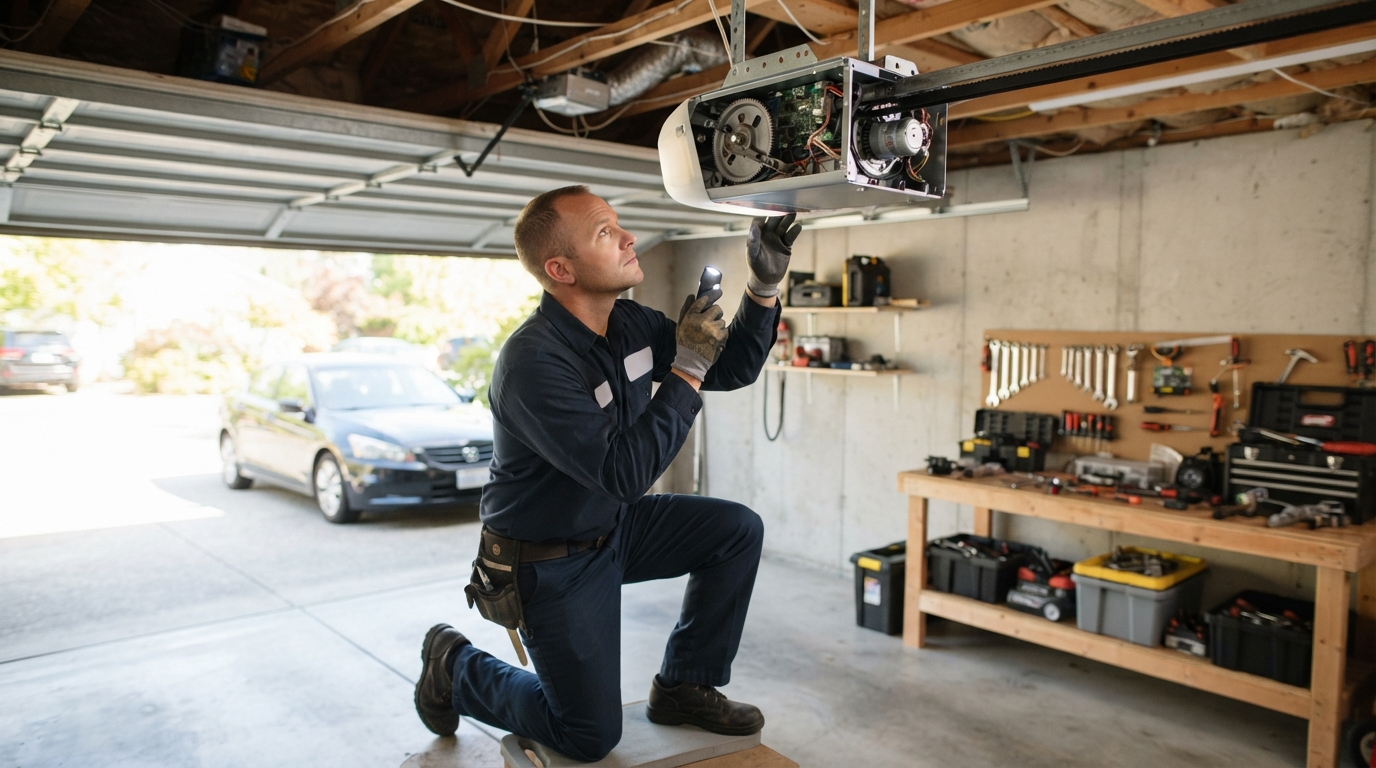
A garage door opener that stalls, reverses unexpectedly, or stops responding to a remote is usually signaling a specific, identifiable problem rather than total failure. In most cases, Garage Door Opener Repair Milwaukee WI addresses the faulty part, whether that’s a sensor, circuit board, or drive mechanism, instead of requiring a full opener replacement.
Milwaukee, WI homeowners dealing with freeze-thaw cycles and humidity swings often see opener issues tied to weather stress on tracks, springs, and sensor alignment. Understanding the common failure points helps determine whether a quick fix is possible or whether professional service is the more practical route.
Common Signs an Opener Needs Attention
Garage door openers rarely fail without warning. Watch for these indicators:
• The door reverses before fully closing, often due to misaligned safety sensors.
• The motor runs but the door does not move, which can point to a worn drive belt or chain.
• Remote controls work inconsistently or not at all, suggesting signal interference or a dying battery.
• Unusual grinding or clicking noises during operation, indicating gear or bearing wear.
• The door responds to the wall switch but not the remote, isolating the issue to the remote’s receiver circuit.
Each of these symptoms narrows down where the problem likely originates, which helps avoid unnecessary part replacement.
Troubleshooting Steps Before Calling a Technician
A few basic checks can resolve minor issues without professional intervention.
1. Check the safety sensors. Wipe the lenses clean and confirm both sensors sit at the same height, since dirt or misalignment often triggers false reversals.
2. Replace remote batteries. A weak battery is one of the most common reasons remotes stop working reliably.
3. Inspect the track for obstructions. Dust, debris, or a bent track can prevent smooth door movement.
4. Test the wall-mounted control panel. If the door operates from the panel but not the remote, the issue is isolated to the remote or receiver.
5. Listen for motor sounds. A humming motor with no movement often points to a mechanical blockage rather than an electrical fault.
When the Problem Requires Professional Repair
Some issues go beyond basic troubleshooting and involve components that are not safely serviceable without training.
| Issue | DIY Feasible | Professional Repair Recommended |
| Dead remote battery | Yes | No |
| Misaligned sensors | Yes | No |
| Worn drive gear or belt | No | Yes |
| Circuit board failure | No | Yes |
| Motor burnout | No | Yes |
Openers that involve torsion springs or electrical wiring carry higher injury risk when handled without proper tools or training. The U.S. Consumer Product Safety Commission notes that garage door systems under tension can cause serious injury if mishandled, which is a key reason spring and motor work is generally left to trained technicians.
Maintenance Habits That Reduce Repair Frequency
Routine upkeep extends the working life of an opener and reduces emergency repair calls.
• Lubricate moving metal parts twice a year to reduce friction-related wear.
• Test the auto-reverse safety feature monthly by placing an object in the door’s path.
• Keep the opener’s motor unit free of dust buildup, especially in garages without climate control.
• Schedule a professional inspection if the opener is more than eight years old, since internal components degrade gradually even with light use.
Based in USA, Advance Overhead Door Inc serves customers across Milwaukee, WI, where seasonal temperature swings can accelerate wear on opener components. Routine inspection helps identify small issues before they turn into full system failures.
Frequently Asked Questions
How long does a typical garage door opener last? Most residential openers last between 10 and 15 years, depending on usage frequency and maintenance habits.
Can a garage door opener be repaired instead of replaced? Yes, in many cases a single failed part, such as a sensor, logic board, or drive gear, can be replaced without needing a new unit.
Why does my garage door opener work with the wall switch but not the remote? This usually points to a remote battery issue, a signal interference problem, or a receiver fault inside the opener unit.
Is it safe to troubleshoot garage door opener issues alone? Basic checks like battery replacement and sensor cleaning are generally safe, but spring, cable, and motor repairs involve higher risk and are better handled by a trained technician.
Final Notes on Opener Repair Decisions
Garage door opener issues typically fall into a predictable set of causes, from sensor misalignment to worn mechanical parts. Identifying the symptom first narrows down whether a homeowner fix is realistic or whether the repair requires specialized tools and training.
Current availability details for Advance Overhead Door Inc are published for the local service area.