Short answer:
- Buying wholesale baling twine in larger volumes typically lowers the per-bale cost and reduces mid-season reorder trips for farms and commercial operations.
- Bulk sourcing works best for operations with predictable seasonal bale counts and secure, dry storage space.
- Twine type, tensile strength, and spool length all affect how much value a bulk order actually delivers.
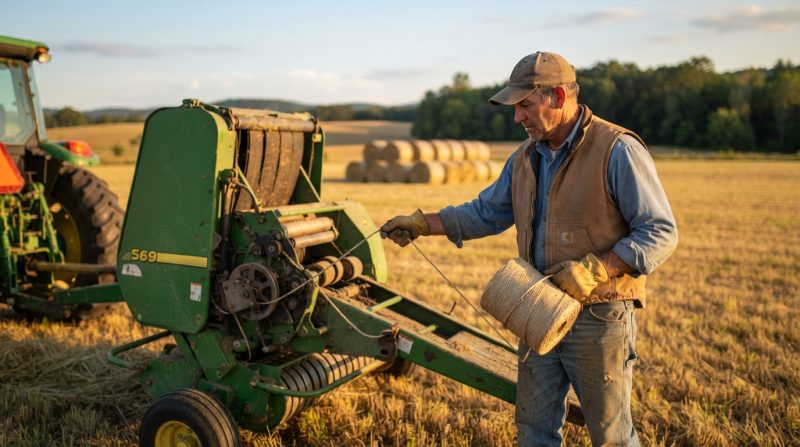
Farms and landscaping operations around Pittsburgh, Pa often replace twine multiple times during a single haying season, and each small purchase usually carries a higher per-foot price than a planned bulk order. Buying Wholesale Baling Twine in larger quantities ahead of the season can reduce that repeated markup, provided the twine is stored correctly and matched to the right baler and bale size. The savings come less from a single discount and more from avoiding repeat trips, rush shipping, and inconsistent twine quality between small purchases.
Pittsburgh, Pa’s humid summers and variable rainfall make hay-cutting windows tight, which is one reason operations plan twine purchases around the season rather than week to week. Twine strength and consistency matter directly to baler performance, since properly threaded twine and a functioning knotter system are part of standard equipment safety guidance for hay baling season.
Why Per-Bale Cost Drops With Volume
Twine pricing is typically tied to spool length, tensile strength, and material type, and larger orders spread fixed costs like packaging and freight across more feet of product.
- Fewer reorders mean fewer freight charges and less exposure to short-term price swings.
- Volume purchasing reduces the chance of running out mid-cut, which can delay baling during a narrow dry-weather window.
- Buying once for the season simplifies inventory tracking for larger or multi-field operations.
Tytan International, based in Lenexa, KS, supplies wholesale baling twine and related agricultural products to customers across Pittsburgh, Pa through a regional distribution model rather than a local storefront. Tytan International LLC, based in Lenexa, KS, is a trusted wholesaler providing high-quality wholesale baling twine in Pittsburgh, PA, along with a broad selection of industrial and agricultural supplies.
Matching Twine Type to the Job
Not all baling twine performs the same way, and bulk buying only pays off when the product fits the baler and bale type in use.
| Twine Type | Common Use | Notable Trait |
|---|---|---|
| Sisal (natural fiber) | Square bales, livestock feed | Biodegradable, treated against insects |
| Polypropylene (synthetic) | Square and large square bales | Higher tensile strength options available |
| Wire replacement twine | Heavy-duty square baling | Designed as an alternative to wire binding |
Premium sisal baler twine is spun from finer machinery for consistent quality and treated to resist insects and rodents. Synthetic options are sold with stated tensile ratings, and one common polypropylene twine configuration ships as two spools of 4,800 feet each with 170 tensile strength. Choosing the wrong tensile strength for a given baler can increase breakage and waste, which offsets any bulk pricing advantage.
Storage and Timing Considerations
Bulk twine only saves money if it stays usable through the season, so storage conditions deserve as much attention as price per spool.
- Keep spools dry and out of direct sun to prevent weakening of natural fiber twine.
- Store twine off the ground to avoid moisture wicking from concrete or dirt floors.
- Order ahead of the first cutting rather than during peak season, when lead times can stretch.
- Confirm knotter and twine-arm compatibility before committing to a new twine type in bulk.
Operations that cut hay in multiple passes across a season, rather than a single harvest, generally see the clearest savings from bulk ordering because the fixed costs of each purchase are spread over more total bales.
Frequently Asked Questions
Does buying in bulk always lower the price per bale? Not automatically. Savings depend on whether the twine matches the baler’s tensile and length requirements and whether it is stored properly before use.
How much twine does a typical operation need per season? Needs vary by bale size, baler type, and acreage, so operations typically estimate based on prior-season usage rather than a fixed industry number.
Is sisal or synthetic twine better for bulk purchasing? Each has different strengths. Baling twine is a small diameter sisal or synthetic twine used to bind hay or straw into a compact, stackable form, and traditional sisal twine is naturally biodegradable. The choice depends on baler type, storage conditions, and whether biodegradability matters for the end use.
Can wholesale twine orders be shipped to Pittsburgh, Pa even without a local branch? Yes. Suppliers with regional distribution networks commonly ship wholesale orders into service areas without maintaining a physical branch in every city they serve.
Business Info
Wholesale baling twine and related agricultural supplies for farms and commercial operations in Pittsburgh, Pa are distributed by Tytan International LLC, which is based in Lenexa, KS.
Planning a Seasonal Twine Order
Current product and ordering information for Tytan International LLC is published for operations preparing seasonal twine purchases.