Takeaway:
- Frequent clogs, foul odors, and slow drains often signal that a sewer lateral has cracked, corroded, or collapsed and needs replacement, not just repair.
- Homeowners typically own and are responsible for the sewer lateral running from the house to the municipal connection.
- A video inspection determines the exact cause and scope before any digging or trenchless work begins.
A failing sewer line in Maplewood almost always shows warning signs before it fails completely, including recurring backups, gurgling drains, and soggy patches in the yard. Catching these signals early can mean the difference between a planned repair and an emergency excavation.
Homes in this part of Essex County often have clay or cast-iron laterals installed decades ago, and those materials are more prone to root intrusion and joint separation over time. When a line has reached that point, sewer line replacement in Maplewood NJ is typically the more durable fix compared to repeated spot repairs. Property owners are generally responsible for maintaining the lateral pipe that connects their home to the public sewer main, a responsibility outlined in EPA guidance on septic and sewer system ownership.
Signs Your Sewer Line Needs Attention
Not every clog means a full line needs replacing, but certain patterns point to structural failure rather than a simple blockage.
- Multiple drains backing up at the same time, especially the lowest fixtures in the house
- Persistent sewage odors in the yard or basement
- Slow-draining sinks and tubs that do not improve after snaking
- Visible sinkholes or unusually green, soggy patches over the pipe route
A camera inspection is the most reliable way to confirm whether the issue is a blockage, a crack, or a collapsed section. This step identifies cracks, root intrusion, or collapsed pipe before any excavation decisions are made.
How the Replacement Process Works
Replacing a sewer lateral generally follows a consistent sequence, regardless of the method used.
- Inspection – A camera is run through the line to locate damage and measure pipe condition.
- Assessment – The contractor determines whether trenchless or traditional excavation fits the site conditions.
- Removal and installation – Old pipe sections are removed and replaced with new material rated for current plumbing codes.
- Testing and backfill – The new line is tested for flow and sealed before the trench or access point is restored.
A thorough process that prioritizes minimal disruption to the property while still meeting code requirements tends to produce the most durable long-term results.
Comparing Replacement Methods
Homeowners generally choose between two approaches, each with different cost and disruption tradeoffs.
| Factor | Traditional Excavation | Trenchless Replacement |
|---|---|---|
| Cost per linear foot | Lower upfront | Higher upfront |
| Yard disruption | Significant digging | Minimal, 1-2 access points |
| Typical cost range (2026 national data) | $8,900-$16,300 for a 50-ft lateral | $6,000-$15,000 for a 50-ft lateral |
| Best suited for | Severely collapsed or misaligned pipe | Cracked pipe with intact structure |
National pricing data from a 2026 cost guide shows a 50-foot residential lateral running roughly $8,900 to $16,300 for open-trench work or $6,000 to $15,000 for trenchless methods, though actual costs depend on depth, soil conditions, and permit requirements in a given municipality.
Why Replacement Matters Beyond the Repair Itself
Aging sewer lines create risks that extend past clogged drains. Replacing a failing line addresses several concerns at once:
- Code compliance – Updated plumbing standards improve system efficiency and reduce future failure points.
- Property protection – Catching leaks early prevents water damage, mold growth, and foundation deterioration.
- Reduced emergency risk – A properly installed system lowers the chance of sudden backups or unexpected breakdowns.
These factors make replacement a preventive investment rather than a reactive expense, particularly for homes with pipe materials common to Maplewood’s older housing stock.
Frequently Asked Questions
How do I know if I need a repair or a full replacement? A video inspection is the clearest way to tell. Localized cracks or isolated blockages may only need spot repair, while widespread corrosion, collapse, or repeated backups across multiple fixtures usually point to full replacement.
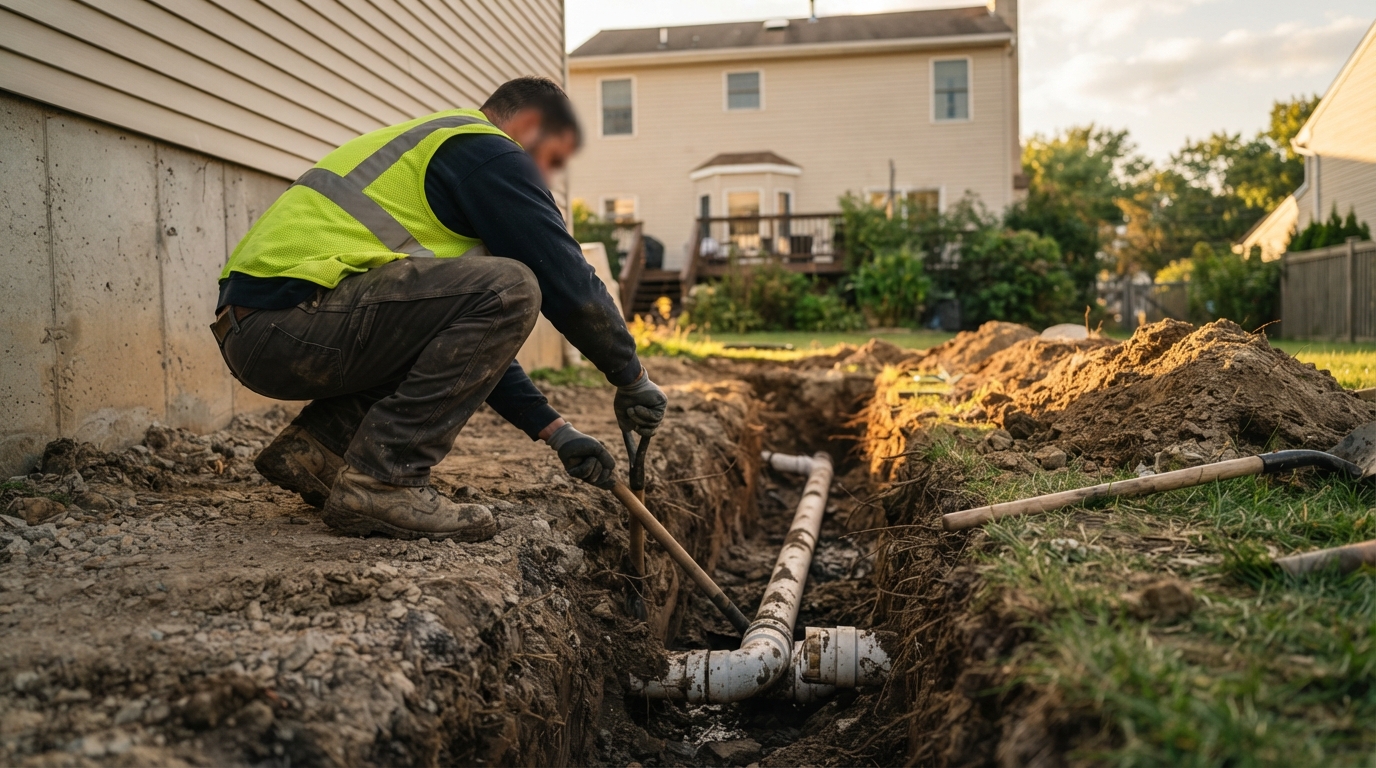
Will my yard be torn up during the project? That depends on the method. Traditional excavation requires digging along the pipe route, while trenchless techniques use one or two small access points and leave most of the landscaping intact.
How long does a sewer line replacement take? Trenchless projects are generally completed faster than open-trench work, though exact timelines depend on pipe length, depth, and site access.
Is the sewer lateral my responsibility or the town’s? In most municipalities, the homeowner owns and maintains the lateral from the house to the connection point at the street, while the municipality maintains the main line beyond that point.
If you are noticing recurring drain problems or suspect an aging sewer line beneath your Maplewood property, a professional camera inspection is the most direct way to confirm what is happening underground. Gregory’s Waterproofing has served Essex and Union County homeowners with drainage and sewer line services, and a site visit can clarify whether repair or full replacement fits your situation. You can review service details and customer feedback on their Gregory’s Waterproofing Google Business Profile before scheduling an inspection.