At glance:
• Regenerative medicine uses the body’s own healing components, such as platelet-rich plasma (PRP), to support joint tissue repair rather than mask pain with medication.
• Georgetown residents dealing with chronic joint discomfort can access PRP and related regenerative therapies through local providers offering personalized, science-backed care.
• Results and candidacy vary by joint condition, so a consultation with a qualified provider is the recommended first step before starting treatment.
Joint pain that lingers after typical rest, ice, or over-the-counter medication often points to underlying tissue wear that needs more targeted support. Regenerative medicine addresses this by using concentrated components already present in a person’s blood, such as platelets and growth factors, to encourage the body’s own repair processes in and around affected joints.
For residents searching for regenerative medicine in Georgetown TX, the appeal is straightforward: these approaches aim to work with the body’s healing biology instead of simply covering up discomfort. Providers such as Nurse Julie ATX offer regenerative therapies alongside peptide and hormone-based wellness services, giving Georgetown-area clients a range of options depending on their specific joint or recovery goals.
What Regenerative Medicine Involves for Joint Pain
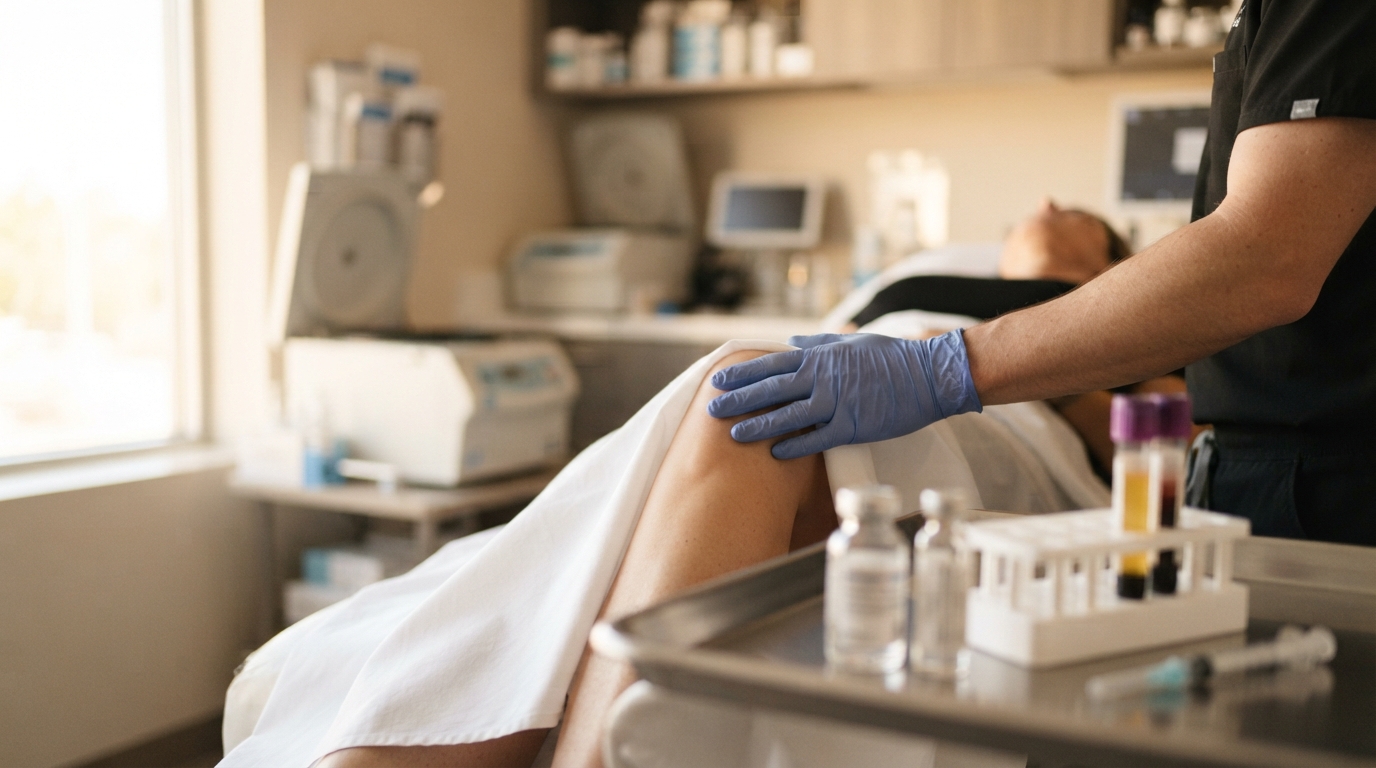
Regenerative medicine for joint pain typically centers on platelet-rich plasma (PRP) therapy, a procedure that draws a small blood sample, concentrates the platelets, and reintroduces them near the affected joint or soft tissue.
• Platelets contain growth factors that play a role in tissue repair signaling.
• The procedure is performed in an outpatient setting with minimal downtime compared to surgical options.
• It is generally considered for chronic tendon, ligament, or joint-related discomfort rather than acute fractures.
According to the National Institutes of Health, PRP and related orthobiologic approaches continue to be studied for musculoskeletal conditions, with research focused on optimizing preparation methods and patient selection. This ongoing research reflects why providers emphasize individualized evaluation rather than a one-size-fits-all protocol.
How Joint-Focused Regenerative Care Compares to Other Options
Georgetown residents weighing their choices for joint pain often compare regenerative therapy against more conventional paths. Each option carries different tradeoffs in invasiveness, recovery time, and goals.
|
Approach |
Invasiveness |
Typical Recovery |
Primary Goal |
|
PRP / Regenerative Therapy |
Minimally invasive |
Days |
Support tissue repair |
|
Oral pain medication |
Non-invasive |
None |
Symptom relief |
|
Corticosteroid injection |
Minimally invasive |
Days |
Short-term inflammation reduction |
|
Joint surgery |
Invasive |
Weeks to months |
Structural repair |
This comparison is general and not a substitute for a provider’s assessment, since the right path depends on the specific joint, severity, and a person’s overall health history.
What to Expect During a Consultation
A first visit for joint-related regenerative care generally focuses on understanding the history of the pain and whether regenerative options are appropriate.
1. Discussion of pain location, duration, and any prior treatments tried.
2. Review of overall health history and current medications.
3. Explanation of PRP or other regenerative options, including realistic expectations.
4. A personalized plan, which may include regenerative therapy alone or alongside complementary services like peptide support for recovery.
Providers who take a personalized, appointment-based approach can spend more focused time explaining these steps, which matters for clients trying to understand whether a therapy fits their specific joint concern.
Choosing a Provider in Georgetown
Selecting a provider for joint-focused regenerative care means looking beyond marketing claims to how the practice actually operates.
• Confirm the provider has clinical training relevant to injection-based or regenerative procedures.
• Ask how the consultation process works and whether it includes a thorough health history review.
• Look for practices that are transparent about what regenerative therapy can and cannot do for a given joint condition.
Georgetown’s growing wellness sector means residents have more than one option, so comparing consultation processes and provider communication style is a practical way to narrow the choice.
Frequently Asked Questions
Is regenerative medicine the same as stem cell therapy? No. Regenerative medicine is a broader category that includes PRP and other biologic approaches; stem cell therapy is a distinct and separately regulated category with its own considerations.
How many sessions are typically needed for joint pain? This varies by individual and condition, and a provider can only give a realistic estimate after a personal evaluation.
Is PRP therapy covered by insurance? Coverage varies widely by insurer and plan, so checking directly with your insurance provider before scheduling is recommended.
Who should avoid regenerative joint therapy? People with certain blood disorders, active infections, or specific medical conditions may not be candidates, which is why a health history review is a standard part of any consultation.
Joint pain that interferes with daily life deserves a clear, informed look at every available option, from conventional care to regenerative approaches like PRP. Georgetown residents considering this path can start by scheduling a consultation to discuss their specific joint concerns and determine whether regenerative therapy fits their goals. Nurse Julie ATX offers personalized consultations for those exploring regenerative and wellness-focused care in the Georgetown area.