Briefly:
• Pool liner repair typically involves patching tears, fixing wrinkles, or addressing leaks at seams and fittings rather than full replacement.
• Costs and methods depend on liner material, tear size, and whether the damage is above or below the waterline.
• Professional assessment helps determine whether a patch, seam reseal, or liner replacement is the more practical long-term option.
A vinyl pool liner develops problems over time from sun exposure, chemical imbalance, ground shifting, or sharp debris, and most minor damage can be addressed through patching or seam repair rather than a full liner swap. Pool liner repair generally restores the liner’s seal and appearance without the cost of a complete replacement, provided the material is still flexible enough to hold a patch.
Homeowners in coastal climates often see liner wear accelerate because of humidity, UV intensity, and seasonal temperature swings that cause vinyl to expand and contract repeatedly.
Common Pool Liner Problems and Repair Approaches
Liner damage generally falls into a few recognizable categories, each requiring a different repair technique.
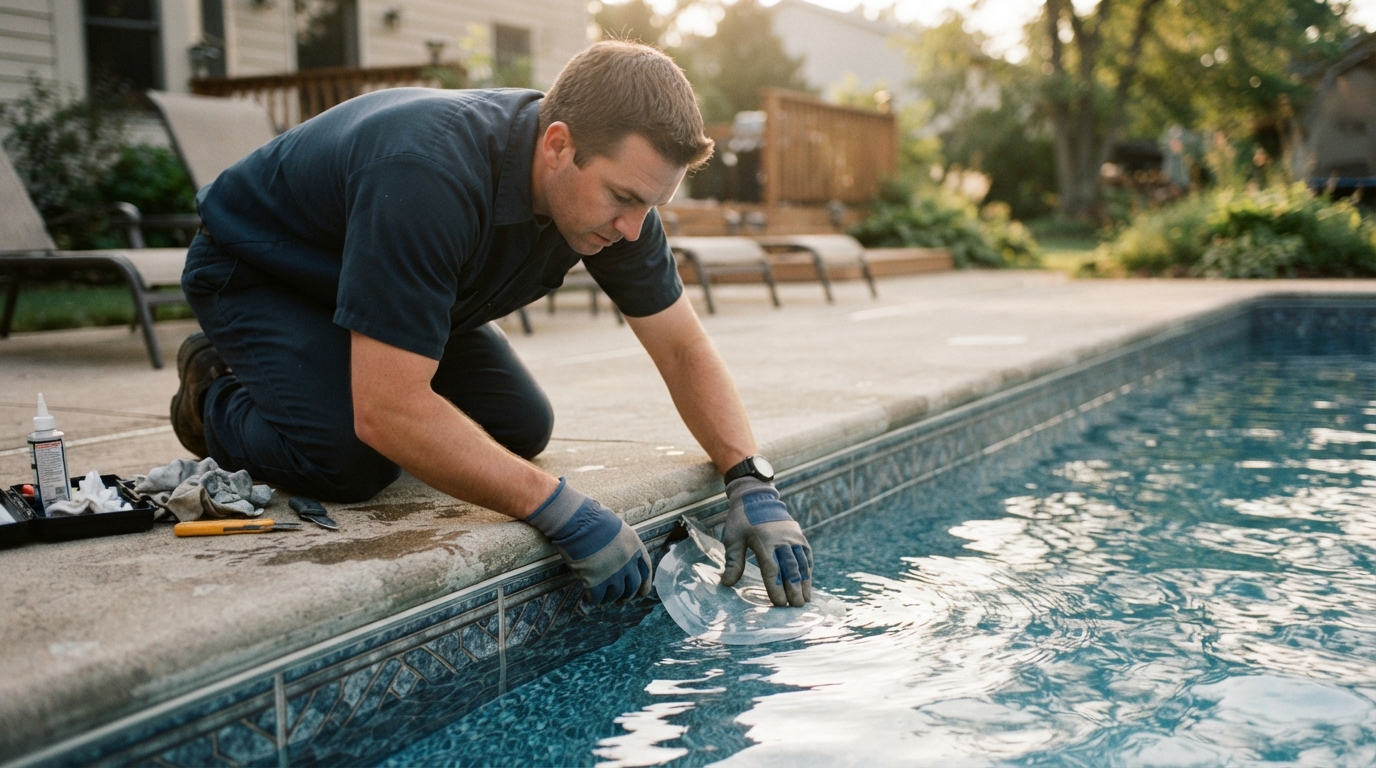
• Small punctures or tears – Usually sealed with underwater vinyl patch kits applied directly over the damaged area.
• Seam separation – Occurs where liner panels were originally welded together and may require specialized adhesive or a new seam weld.
• Wrinkling or stretching – Often linked to water loss or improper installation and may need the liner to be partially drained and repositioned.
• Fading or brittleness – A sign of UV degradation that patches may no longer hold properly, signaling the liner is nearing the end of its service life.
Each of these issues has a different urgency level. A small puncture below the waterline, for example, should be addressed quickly since continuous water loss can affect the pool’s structural base.
What Affects Pool Liner Repair Costs
Repair costs vary based on several factors that a technician typically evaluates before recommending a fix.
| Factor | Lower Cost Scenario | Higher Cost Scenario |
| Damage size | Small puncture or pinhole | Multiple tears or long seam splits |
| Location | Above waterline, easy access | Below waterline, near fittings or steps |
| Liner age | Newer liner, flexible vinyl | Older liner, brittle or faded material |
| Repair type | Patch kit application | Seam reweld or partial liner replacement |
Pricing also depends on whether the pool needs to be partially drained to access the damaged section, since drainage and refilling add time and water cost to the project. Liner material itself varies in thickness and UV resistance, which affects how long a patch will hold before the surrounding vinyl also needs attention, according to general guidance from the U.S. consumer product safety commission on pool safety and maintenance standards.
Repair Versus Replacement Considerations
Not every liner issue calls for a brand-new liner, but recognizing when repair is no longer cost-effective helps avoid repeated service calls.
1. Check the liner’s age – Vinyl liners generally have a finite lifespan, and repairs on older material may not hold as well as they would on newer vinyl.
2. Count the number of repair sites – Multiple patches across different areas of the liner often indicate the material is reaching the end of its usable life.
3. Inspect for consistent wrinkling – Recurring wrinkles after a repair may point to an underlying liner fit issue rather than an isolated tear.
4. Review water loss patterns – If water levels keep dropping even after a patch is applied, the leak source may be elsewhere, such as plumbing fittings or the pool structure itself.
Pool owners in Virginia Beach dealing with seasonal humidity and heavy pool use during warmer months may notice liner wear surface faster than in drier climates, making periodic inspection a practical habit rather than an afterthought.
Based in Chesapeake, VA, pool liner repair extends its pool liner services to residents throughout Virginia Beach.
Frequently Asked Questions
Can a pool liner be repaired underwater? Yes, vinyl patch kits are designed to be applied underwater, which avoids the need to drain the pool for minor punctures or small tears.
How long does a typical liner patch last? Patch longevity depends on the vinyl’s condition and the patch quality, though a properly applied repair can last for multiple pool seasons if the surrounding liner remains flexible.
Is a wrinkled liner always a sign of damage? Not necessarily. Wrinkling can result from water loss, temperature shifts, or installation settling, and it does not always indicate a tear or leak.
When should a liner be replaced instead of repaired? Replacement becomes more practical when the liner shows widespread fading, brittleness, or multiple repair sites, since patches on aging vinyl tend to fail sooner.
Next Steps for Pool Owners
Addressing liner damage early tends to limit water loss and reduce the chance of repairs expanding into larger, more involved work. Current service details for Click here for pool liner repair are published for the local service area.