Essentially:
• Professional repair typically costs far less than replacing a major appliance, especially when the unit is under 10 years old.
• Addressing small problems early (strange noises, minor leaks, slow cycles) prevents costlier breakdowns later.
• A trained technician can diagnose whether a repair or replacement makes more financial sense for a specific appliance and situation.
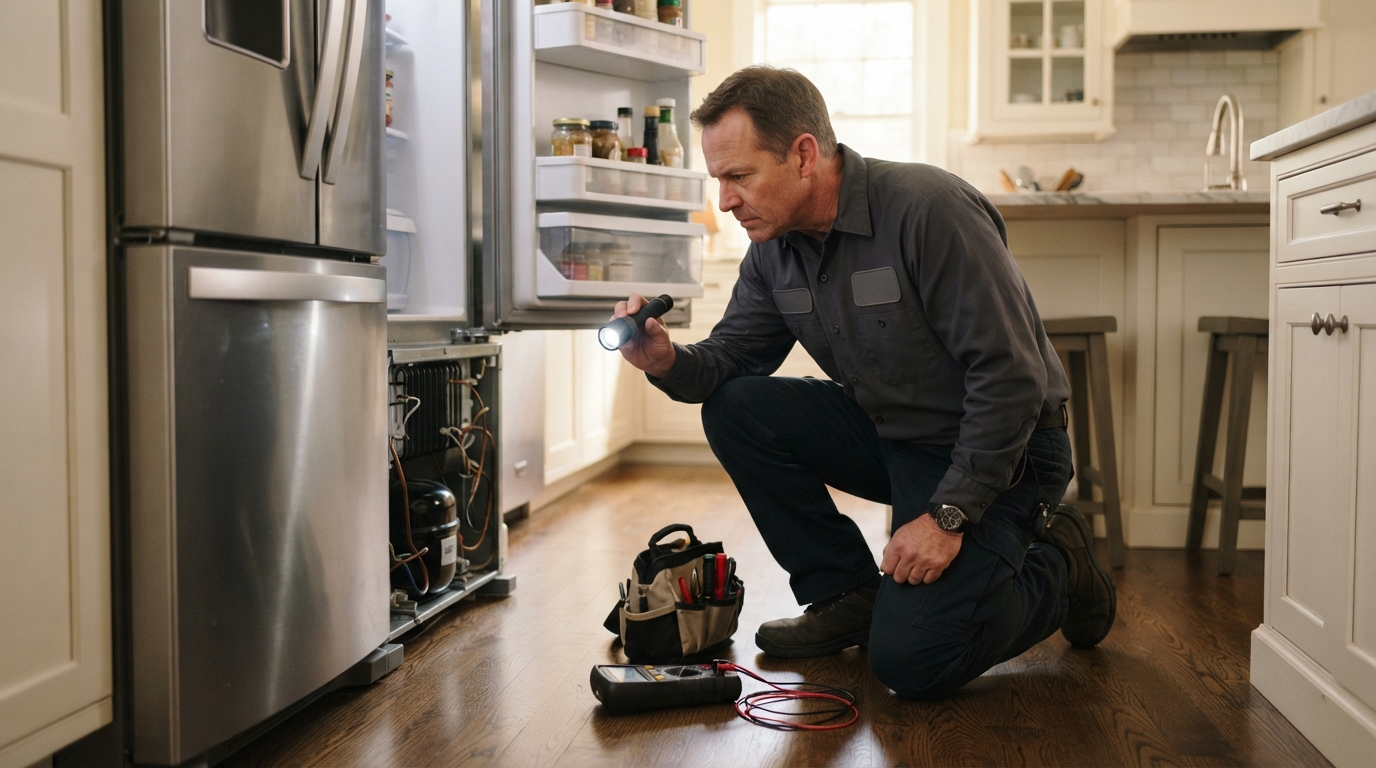
A broken refrigerator, washer, or dishwasher does not always mean a trip to the appliance store. In many cases, a diagnostic visit from a qualified technician identifies a fixable issue for a fraction of the cost of a new unit.
Choosing Home Appliance Repair over replacement keeps money in a household budget while extending the working life of equipment that may otherwise still have years of service left. Homeowners in Rochester, MI, dealing with a malfunctioning oven or a washer that will not spin often assume the appliance is beyond saving, when the actual problem is a single worn part.
Why Repair Usually Costs Less Than Replacement
Appliance pricing has not slowed down, and neither has the gap between a repair invoice and a new unit’s price tag. A refrigerator repair commonly falls in the range of a couple hundred dollars, while a comparable new refrigerator runs well into four figures.
A widely used guideline among service professionals is the 50 percent rule: if a repair costs less than half the price of a new comparable appliance, fixing it is usually the better financial move. This is especially true for appliances under 8 to 10 years old, which still have significant useful life remaining.
• A refrigerator under 10 years old is often cheaper to repair than replace.
• A single part failure, such as a defrost thermostat or door gasket, rarely justifies a full replacement.
• Repeated breakdowns within a short period are a stronger signal that replacement may be worth considering.
When Energy Costs Change the Equation
Age affects more than reliability. Older appliances also tend to run less efficiently, which adds to monthly utility bills even when the unit is still functioning.
According to the ENERGY STAR Flip Your Fridge program, an old refrigerator can use roughly 20 percent more energy than a new ENERGY STAR certified model, and replacing an aging unit can reduce long-term electricity costs. For a refrigerator that is approaching 15 years old and already needs a major repair, weighing the energy savings of a new unit against the repair cost is a reasonable step before deciding.
Repair or Replace: A Practical Comparison
| Factor | Favors Repair | Favors Replacement |
| Appliance age | Under 8-10 years | Over 10-15 years |
| Repair cost | Under 50% of new unit price | Over 50% of new unit price |
| Repair history | First or second issue | Third breakdown in two years |
| Energy use | Recently manufactured, efficient model | Pre-2010 model with rising utility bills |
This kind of comparison works best when paired with an actual diagnostic visit, since every appliance’s condition and remaining lifespan varies based on use and maintenance history.
Signs a Repair Visit Makes Sense
Certain symptoms point toward a fixable problem rather than a dying appliance. Catching these early also tends to keep repair costs lower, since minor issues are less likely to cascade into bigger ones.
• Unusual noises during a wash or spin cycle
• A refrigerator that runs warmer than normal
• A dishwasher that leaves dishes wet or spotted
• Slow drying times or a dryer that overheats
• Minor leaks around hoses, seals, or connections
Addressing these signs promptly, rather than waiting for a full breakdown, is one of the more practical ways Rochester, MI, homeowners manage appliance costs over time.
Frequently Asked Questions
Is it always cheaper to repair than replace an appliance? Not always. Repair is usually more cost-effective for appliances under 8 to 10 years old with a single part failure, but older units with repeated issues or high repair costs may be better candidates for replacement.
How do I know if my appliance is worth repairing? A diagnostic visit from a technician can identify the specific problem and estimate repair costs, which can then be weighed against the appliance’s age and the price of a new unit.
Does appliance age affect energy bills even if it still works? Yes. Older appliances, particularly refrigerators, often use more energy than current ENERGY STAR certified models, which can add to monthly utility costs over time.
What appliances are typically repairable rather than replaceable? Refrigerators, washers, dryers, dishwashers, stoves, and microwave ovens are commonly repaired when the issue involves a specific part rather than major structural or mechanical failure.
Business Information
Based in Utica, MI, Doc’s Appliance Service serves customers across Rochester, MI.
Learn More about Doc’s Appliance Service for current service details published for the local service area.