Short version:
- Non-toxic cleaning products rely on plant-based or mineral ingredients instead of harsh synthetic chemicals, reducing indoor air pollutants and skin or respiratory irritation.
- Products certified under programs like EPA Safer Choice or rated by the Environmental Working Group meet screened safety standards without sacrificing cleaning performance.
- Chicago, IL households with children, pets, or allergy concerns can use these standards to compare cleaning options before choosing a product or service.
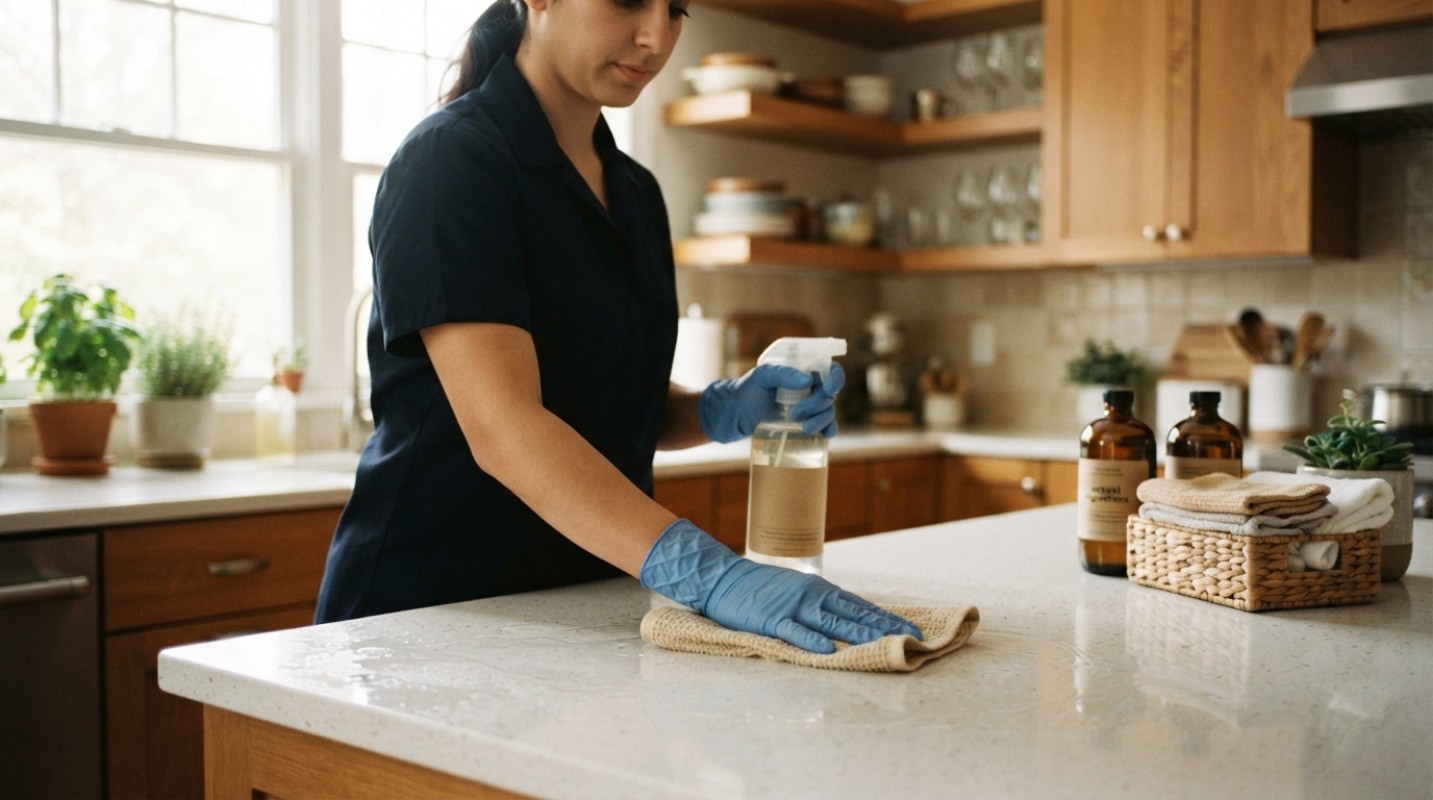
Non-toxic house cleaning uses products formulated without the harsh solvents, synthetic fragrances, and volatile compounds found in many conventional cleaners, reducing exposure to substances linked to respiratory and skin irritation. The approach prioritizes plant-derived or mineral-based ingredients that still clean effectively while limiting residue left behind on household surfaces.
Choosing Non Toxic House Cleaning Chicago products matters most in homes with children, pets, or household members with allergies or asthma, since those groups tend to spend more time in close contact with floors, counters, and upholstery. Reading ingredient labels and looking for third-party safety ratings helps separate genuinely low-toxicity formulas from products marketed as “green” without independent verification.
What Makes a Cleaning Product Non-Toxic
A product earns the non-toxic label when its ingredients avoid known carcinogens, reproductive toxicants, and high concentrations of volatile organic compounds (VOCs). The EPA’s Safer Choice program screens every ingredient in a formula, including minor components like dyes and fragrances, before granting certification.
Key criteria used by safety-focused certifications include:
- No known carcinogens or reproductive and developmental toxicants, as required under EPA Safer Choice standards
- Restricted VOC content to limit indoor air pollution
- pH levels formulated to minimize skin and eye irritation
- Ingredient-level screening rather than only finished-product testing
The Environmental Working Group applies a similar letter-grade system, rating products from A to F based on ingredient transparency and toxicity data. Products earning an A or B rating generally avoid the chemicals most associated with indoor air quality complaints.
Why It Matters for Chicago Homes
Chicago’s older housing stock, including many vintage greystones and courtyard buildings, often has limited ventilation compared to newer construction, which can trap airborne residue from heavily fragranced or solvent-based cleaners. Combined with the city’s long heating season, when windows stay closed for months, indoor air quality becomes more dependent on what products are used inside the home.
Households with hardwood floors, antique fixtures, or older plumbing may also benefit from gentler formulas that avoid degrading finishes or pipe seals over time. Non-toxic products formulated with milder pH levels tend to be safer for these surfaces while still removing grime and buildup.
Comparing Conventional and Non-Toxic Cleaning Approaches
| Factor | Conventional Cleaners | Non-Toxic Cleaners |
| Common ingredients | Synthetic solvents, bleach, ammonia | Plant-derived surfactants, mineral compounds |
| Indoor air impact | Higher VOC emission potential | Lower VOC content, reduced fumes |
| Surface compatibility | Can degrade sealants or finishes over repeated use | Generally gentler on wood, stone, and fixtures |
| Safety verification | Varies; not always independently tested | Often certified by EPA Safer Choice or EWG rated |
This comparison reflects general category differences rather than any single brand, since formulations vary widely even within each category.
Practical Steps for Choosing Safer Products
Shoppers can take a few concrete steps before stocking a cleaning cabinet:
- Check for a recognized certification mark, such as EPA Safer Choice, printed directly on the label.
- Look up unfamiliar products through the EWG’s online database for an ingredient-based safety grade.
- Avoid products listing only “fragrance” without disclosing specific ingredients, since this term can mask dozens of undisclosed chemicals.
- Store concentrated cleaning solutions away from children and pets regardless of their toxicity rating, since even mild formulas can cause irritation if misused.
Based in USA, cleaning services that serve the Chicago, IL area can also be evaluated using these same certification standards when comparing providers. Checking whether a company discloses its product ratings publicly is one practical way to confirm non-toxic claims before scheduling service.
Frequently Asked Questions
Are non-toxic cleaning products as effective as conventional ones? Many non-toxic formulas, including those certified under EPA Safer Choice, are required to perform comparably to standard cleaners in their category before earning certification.
Can non-toxic cleaners still disinfect surfaces? Some certified products include EPA-registered disinfectant claims, though options are more limited than general-purpose non-toxic cleaners since disinfectants must meet separate pesticide registration requirements.
Is “natural” the same as “non-toxic” on a product label? No. The term “natural” is not independently regulated, while non-toxic claims backed by EPA Safer Choice or EWG ratings involve ingredient-level screening.
How can Chicago, IL residents verify a cleaning company uses non-toxic products? Asking for specific product names or certifications, rather than general “eco-friendly” language, is the most reliable way to confirm claims.
A Note on Local Cleaning Services
Current service details for Mother B Green Cleaning are published online for households evaluating non-toxic cleaning options in the area.