Key point:
- CRP management refers to the maintenance of land enrolled in the USDA Conservation Reserve Program, not a medical blood marker.
- Landowners in Toledo, IA with CRP contracts must follow NRCS-approved conservation plans that include scheduled mowing, mid-contract management, and habitat upkeep.
- Working with an experienced land management provider helps keep enrolled acreage compliant and reduces the risk of contract penalties.
Readers searching for information on CRP likely mean one of two very different things: a blood test marker called C-reactive protein, or the Conservation Reserve Program that governs millions of acres of enrolled farmland. This guide addresses the second meaning, since it reflects a real, actionable service available to landowners. CRP Management in this context means the ongoing upkeep of land enrolled in USDA’s Conservation Reserve Program, including the conservation practices required to keep a contract in good standing.
The Conservation Reserve Program pays farmers and landowners to remove environmentally sensitive acreage from active farming and replace it with grasses, trees, or other approved cover. The purpose of the program is to reduce land erosion, improve water quality and effect wildlife benefits. Staying enrolled, however, requires more than planting cover once and walking away.
What CRP Management Actually Involves
Participation in CRP is not a one-time action. CRP participants enroll land under contracts and maintain approved cover, including grasses and trees, or water cover, in exchange for annual rental payments and financial assistance to install certain conservation practices. That maintenance obligation is where most of the technical land management work happens.
Mid-contract requirements commonly include:
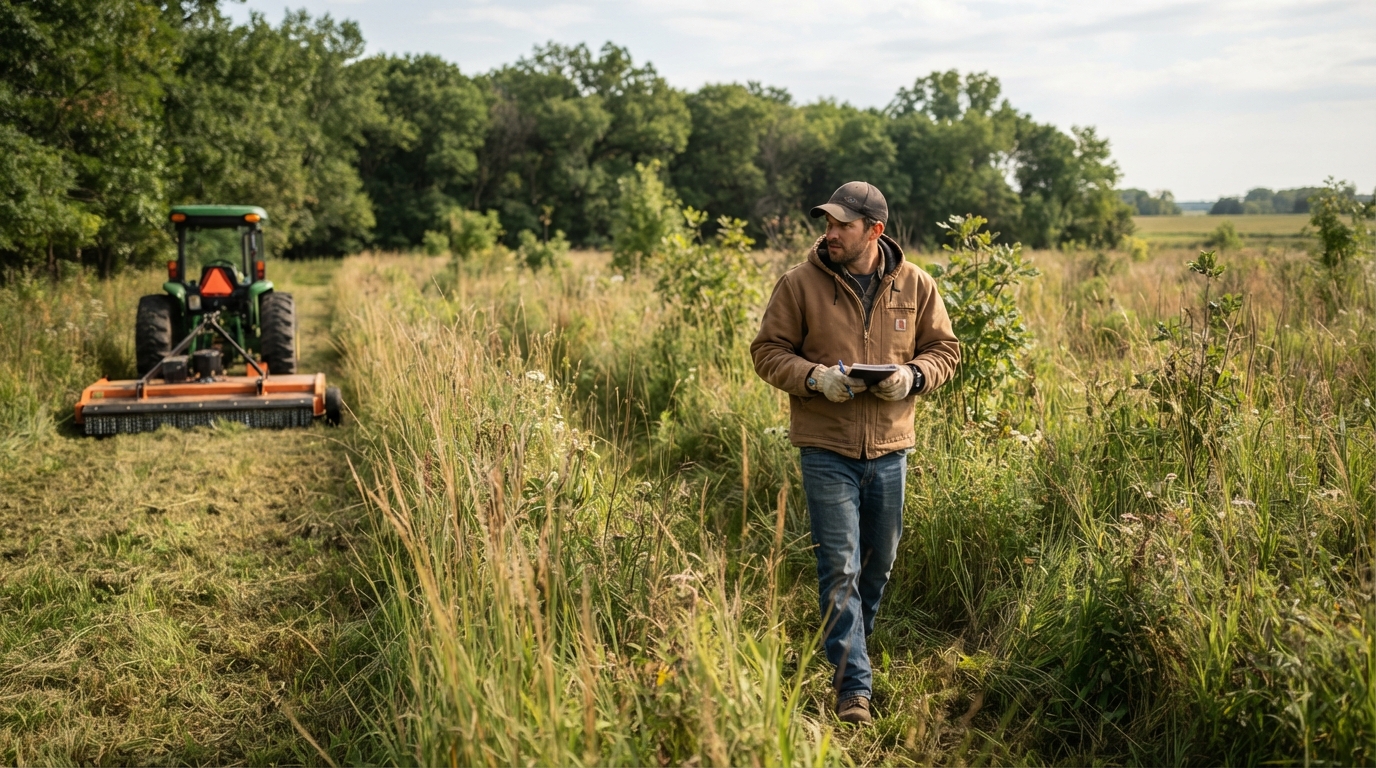
- Mowing or haying outside restricted nesting periods
- Controlling invasive species and woody encroachment
- Maintaining buffer strips, waterways, or tree plantings specified in the contract
- Addressing erosion or drainage issues identified during inspections
Grazing of all practices is only permitted outside the primary nesting season if included as an approved CRP contract management activity. Landowners who skip required maintenance risk contract violations, which can trigger repayment of rental income already received.
Who Oversees CRP Compliance
Two federal agencies share responsibility for the program, and understanding their roles helps landowners know where to turn for guidance. The program is administered by three agencies within the USDA. FSA is the agency that runs the program. NRCS is the agency that provides technical assistance in the planning and mid-contract management stages.
For landowners near Toledo, IA, that means conservation plans and practice standards originate with NRCS guidance, even though the day-to-day fieldwork, such as mowing, clearing, or tree removal, is typically carried out by private land management contractors. More detail on how practices are structured is available through the NRCS Conservation Reserve Program technical assistance pages.
Comparing Common CRP Mid-Contract Activities
| Activity | Purpose | Typical Timing Restriction |
|---|---|---|
| Mowing/haying | Control woody growth, refresh cover | Outside primary nesting season |
| Selective tree/brush removal | Manage overgrowth, reduce disease | Per conservation plan schedule |
| Habitat restoration work | Improve wildlife value | As specified in contract |
| Pond or waterway maintenance | Prevent erosion, support water quality | Site-specific, NRCS-approved |
Local Considerations for Enrolled Acreage
Land enrolled in CRP near Toledo, IA often includes a mix of grassland and timbered buffers, both of which need periodic attention to stay within contract terms. Seasonal mowing windows, brush encroachment, and tree health all factor into whether a parcel remains compliant at inspection time. Addressing these issues before an NRCS or FSA review reduces the chance of corrective notices or payment adjustments.
Business Info
Based in Marshalltown, IA, Mitchell Land Management carries out land management work, including timber and CRP-related upkeep, for property owners across the surrounding area and serves customers across Toledo, IA.
Frequently Asked Questions
Does CRP management mean medical monitoring of C-reactive protein? No. In the context of land services, CRP refers to the USDA Conservation Reserve Program, which involves maintaining enrolled acreage rather than any medical testing.
How often does CRP land need maintenance? Requirements vary by contract, but most plans call for periodic mowing, brush control, or habitat work on a schedule set during the conservation planning process with NRCS.
What happens if required CRP practices are not completed? Failing to complete scheduled mid-contract management can result in a compliance violation, which may require repayment of rental payments already received.
Who approves the conservation plan for enrolled land? NRCS reviews and approves the conservation plan, while FSA administers the contract and rental payment side of the program.
Current service area information for land management activities involving CRP upkeep is available under Read About CRP Management.