At glance:
• Grinding noises, jerky movement, or hook drift often signal mechanical or electrical faults that worsen with continued use.
• OSHA requires both frequent and periodic inspections of overhead cranes, and skipping repairs can turn a minor fault into a compliance violation.
• Facilities across Houston, TX rely on documented inspection and repair records to keep lifting equipment in service.
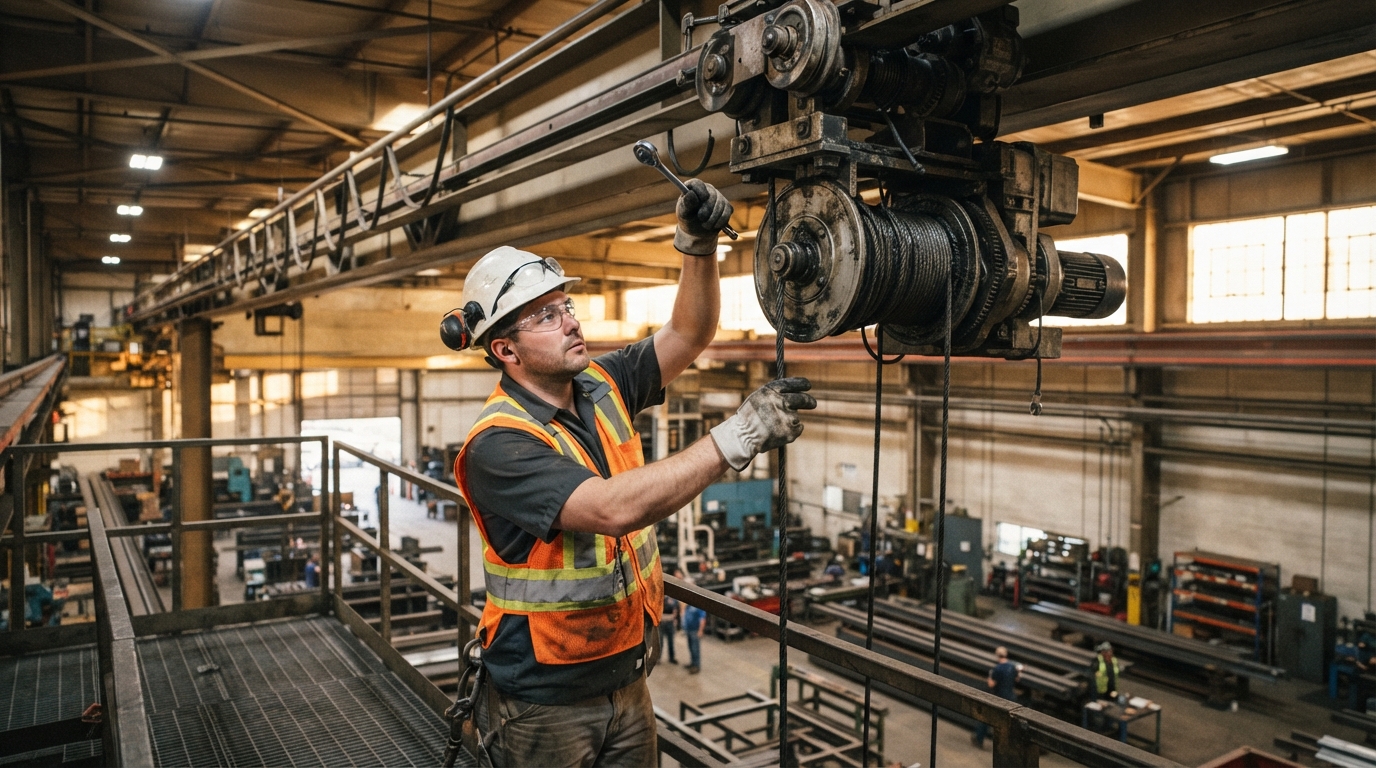
An overhead crane needs immediate professional attention when it shows unusual noise, uneven movement, control delays, or visible wear on hooks, cables, or brakes. These symptoms usually point to problems that affect load safety rather than minor cosmetic issues.
Overhead Crane Repair Houston TX becomes urgent once a facility notices performance changes that affect how a crane lifts, stops, or tracks along its runway. Ignoring these symptoms rarely resolves the issue on its own, and continued operation under fault conditions tends to accelerate wear on connected components. Addressing problems early also reduces the chance of unplanned downtime during a production run.
Warning Signs That Point to Mechanical Failure
Mechanical faults are often the easiest to notice because they change how a crane sounds or feels during operation.
• Grinding, squealing, or clicking noises from the hoist or trolley
• Jerky or hesitant movement instead of smooth travel along the bridge
• Visible wear, fraying, or kinking on wire rope or chain
• Hook deformation, cracks, or an opened throat gap
• Excessive vibration during lifts that previously ran smoothly
Any one of these signs on its own may not stop operations immediately, but combined with heavier use or an aging crane, the risk of sudden failure increases. A facility operating in industrial corridors around Houston, TX often runs multiple shifts, which means components wear faster and problems surface sooner than in lighter-duty settings.
Electrical and Control System Red Flags
Electrical issues tend to be less obvious than mechanical ones but can be just as disruptive when a crane shuts down mid-lift.
| Symptom | Likely Cause | Urgency Level |
| Intermittent power loss | Loose wiring or failing contactor | High |
| Pendant or radio control lag | Worn control components | Medium |
| Limit switch not engaging | Switch failure or misalignment | High |
| Overheating motor housing | Overload or ventilation fault | High |
A crane that stops responding to controls, even briefly, should be taken out of service until a qualified technician diagnoses the fault. Continuing to operate equipment with inconsistent controls raises the chance of dropped loads or runway collisions.
When Inspection Findings Demand a Repair Call
Routine inspections sometimes reveal problems before they become visible during normal operation. OSHA 29 CFR 1910.179 requires frequent inspections at daily to monthly intervals covering operating mechanisms, hooks, hoist chains, and rope reeving, along with periodic inspections at one to twelve month intervals covering deformed or cracked members, loose bolts, sheaves, worn drums, bearings, brake system parts, and electrical apparatus. Findings from either inspection tier that identify cracked welds, worn brake linings, or damaged sheaves generally call for repair rather than continued monitoring.
Facilities that document inspection results consistently are better positioned to catch developing issues before they force an unplanned shutdown. For additional detail on inspection intervals and documentation expectations, the OSHA crane inspection checklist guidance outlines the applicable frequent and periodic requirements for general industry equipment.
Business Info
Based in Crosby, TX, Advanced Overhead Crane serves facilities throughout Houston, TX that rely on bridge, gantry, and jib cranes for daily material handling.
Frequently Asked Questions
How quickly should a facility respond to crane noise complaints? Unusual noise should prompt an inspection before the next shift, since grinding or clicking sounds often indicate bearing or gear wear that worsens under continued load.
Can a crane keep operating while waiting for repair parts? A crane showing safety-related faults, such as brake slippage or hook deformation, should be removed from service until parts arrive and repairs are completed.
Does every crane fault require a full inspection? Not every fault requires a comprehensive inspection, but any issue affecting lifting, braking, or control response warrants evaluation by a qualified technician before the crane returns to regular use.
Next Steps for Crane Owners
Service hours and additional operational details for Advanced Overhead Crane are published for facilities evaluating repair options in the region.