Briefly:
• A machine repair service diagnoses and corrects electrical and mechanical faults in CNC and conventional machine tools to restore accuracy and uptime.
• Repair differs from retrofitting or preventive maintenance in scope, cost, and how long the fix is expected to last.
• Facilities in Arlington, TX can compare repair, retrofit, and maintenance options based on machine age, downtime tolerance, and budget.
A machine repair service focuses on diagnosing and correcting a specific electrical or mechanical fault so a CNC or conventional machine tool returns to normal production as quickly as possible. This differs from a full retrofit, which replaces outdated controls, or a preventive maintenance program, which is scheduled before a breakdown occurs rather than after one. Facilities that rely on continuous machining often need to weigh these three options against each other rather than assume one approach fits every situation.
Repair vs. Retrofit vs. Preventive Maintenance
Shops evaluating machine downtime typically choose between three service paths, each suited to a different stage of equipment life. The table below outlines how they compare on scope, typical trigger, and expected outcome.
| Service Type | Typical Trigger | Scope of Work | Expected Outcome |
| Machine Repair | Breakdown, fault code, or performance drop | Diagnose and fix a specific electrical or mechanical issue | Machine returns to prior working condition |
| Retrofit | Outdated controls or obsolete parts | Replace drives, controls, or electrical systems | Updated machine with modern components |
| Preventive Maintenance | Scheduled interval, not a failure | Inspections, lubrication, calibration checks | Reduced likelihood of unplanned failure |
Choosing among these depends on machine age, how critical the equipment is to production schedules, and whether replacement parts remain available.
What a Machine Repair Service Typically Involves
Repair work on CNC and manual machine tools generally spans both the mechanical and electrical sides of the equipment, since a single fault can originate in either system.
• Diagnostic testing to isolate whether a fault is mechanical, electrical, or control-related
• Spindle and drive system checks, including lubrication and alignment review
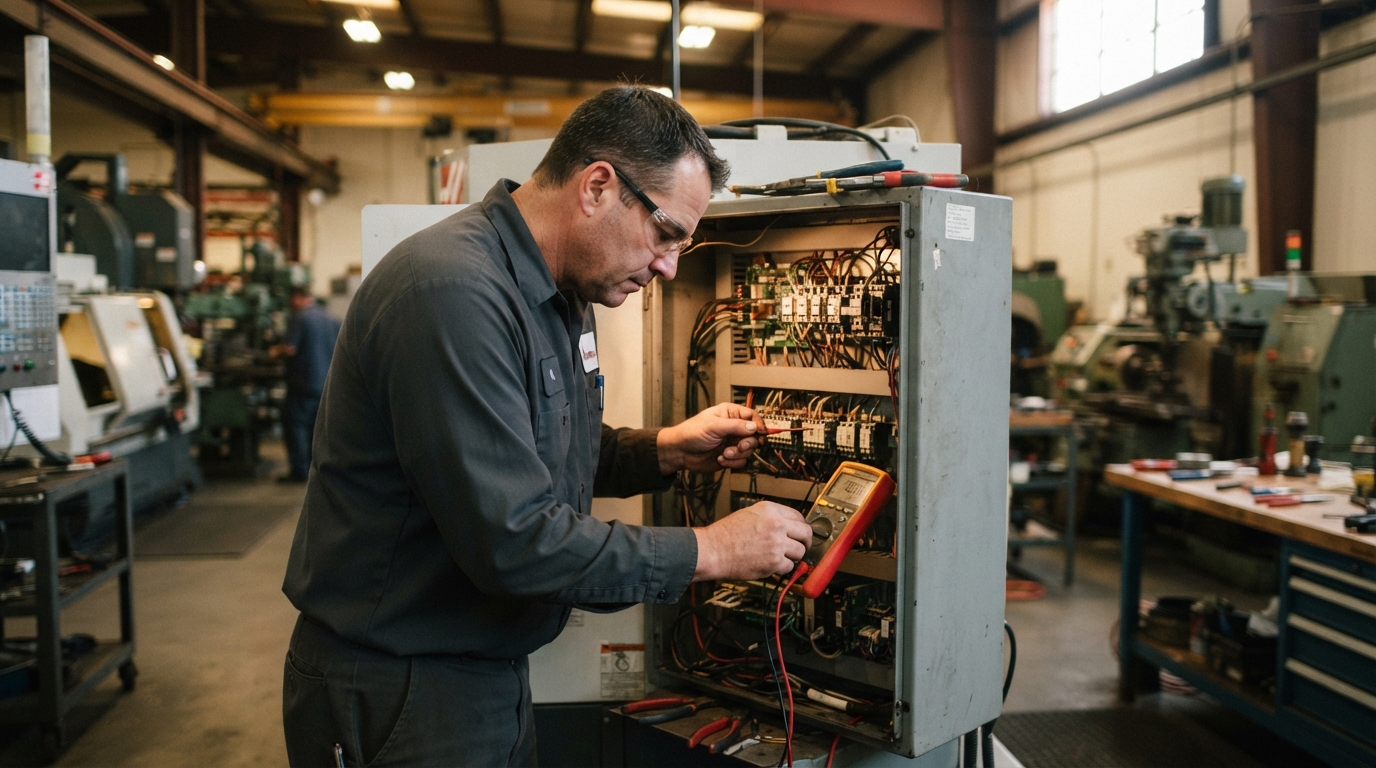
• Electrical troubleshooting across controls, wiring, and power components
• Replacement of worn or failed parts specific to the affected system
• Functional testing after repair to confirm the machine meets production tolerances
Shops operating machines from multiple manufacturers often need technicians familiar with a range of control brands, since parts, software, and diagnostic steps vary between systems.
Why Timely Repair Matters for Shop Operations
A machine left in a faulted state does not only stop production on that unit; it can create downstream scheduling problems for an entire shop floor. Unplanned downtime on a single CNC machine can delay every job queued behind it, which compounds costs beyond the repair itself.
Safety procedures also apply once a machine is opened for servicing. Under OSHA’s machine guarding standard, guards must be affixed to the machine where possible, and the standard governs how equipment is protected during both normal operation and servicing. Facilities in Arlington, TX working with older machine tools should also confirm that guards and interlocks are reinstalled correctly before a repaired machine returns to production, since skipped steps during reassembly are a common source of repeat failures.
Frequently Asked Questions
How is a machine repair different from a retrofit? Repair addresses a specific fault to restore a machine to its prior working condition, while a retrofit replaces outdated controls or components with newer technology, often changing how the machine operates going forward.
Can older CNC machines still be repaired instead of replaced? Many conventional and older CNC machines can be repaired if replacement parts or compatible components are still available, though the cost-effectiveness depends on the machine’s age and the extent of the fault.
Does machine repair cover both electrical and mechanical issues? Yes. Machine tool repair commonly spans both systems, since electrical faults in drives or controls can produce symptoms that initially look mechanical, and vice versa.
How often should a machine be inspected to catch problems early? There is no universal interval, but regular inspection schedules tied to usage hours or production cycles help identify wear before it causes an unplanned breakdown.
Service Area and Contact Information
Based in Arlington, Texas, USA, Apollo Machine Tool Services Inc. serves customers with machine tool repair and related services for CNC and conventional equipment.
For current service details, business hours, and contact information, Click Here.