Short answer:
• Wood fence installation in Johnston, IA typically involves permitting, post setting below the frost line, and cedar or treated lumber selection suited to Iowa’s freeze-thaw climate.
• Most Johnston wood fence projects require a city permit before work begins.
• Average installed costs and timelines vary by fence length, style, and site conditions.
Wood fencing remains one of the most requested outdoor improvements for homeowners seeking privacy, a defined property line, or added curb appeal. A properly planned Wood Fence Installation accounts for local soil conditions, permit requirements, and wood species selection before the first post goes into the ground.
Fencing Solutions has operated as a family-run fencing business since 1995, and its service area covers Johnston, IA and surrounding Polk County communities. Fencing Solutions is a family-owned fencing company serving Johnston, IA, and the greater Polk County area with residential and commercial fencing installations since 1995. Based in Marshalltown, IA, the company extends that cedar fencing work to homeowners throughout the Johnston area rather than operating a separate location there.
Planning a Wood Fence Project
Before installation begins, several site-specific factors determine how the project is scoped and priced.
• Permit requirements : Most wood fence projects in Johnston, IA, require a permit from the City of Johnston Building Department.
• Property line verification : Confirming boundaries avoids disputes with neighbors before posts are set.
• Material selection : Cedar is a material selection backed by decades of Iowa installation experience, prized for its natural resistance to rot and insects.
• Budget range : Homeowners in Johnston can expect to pay between $2,000 and $5,000 for a standard wood fence installation, depending on length and style.
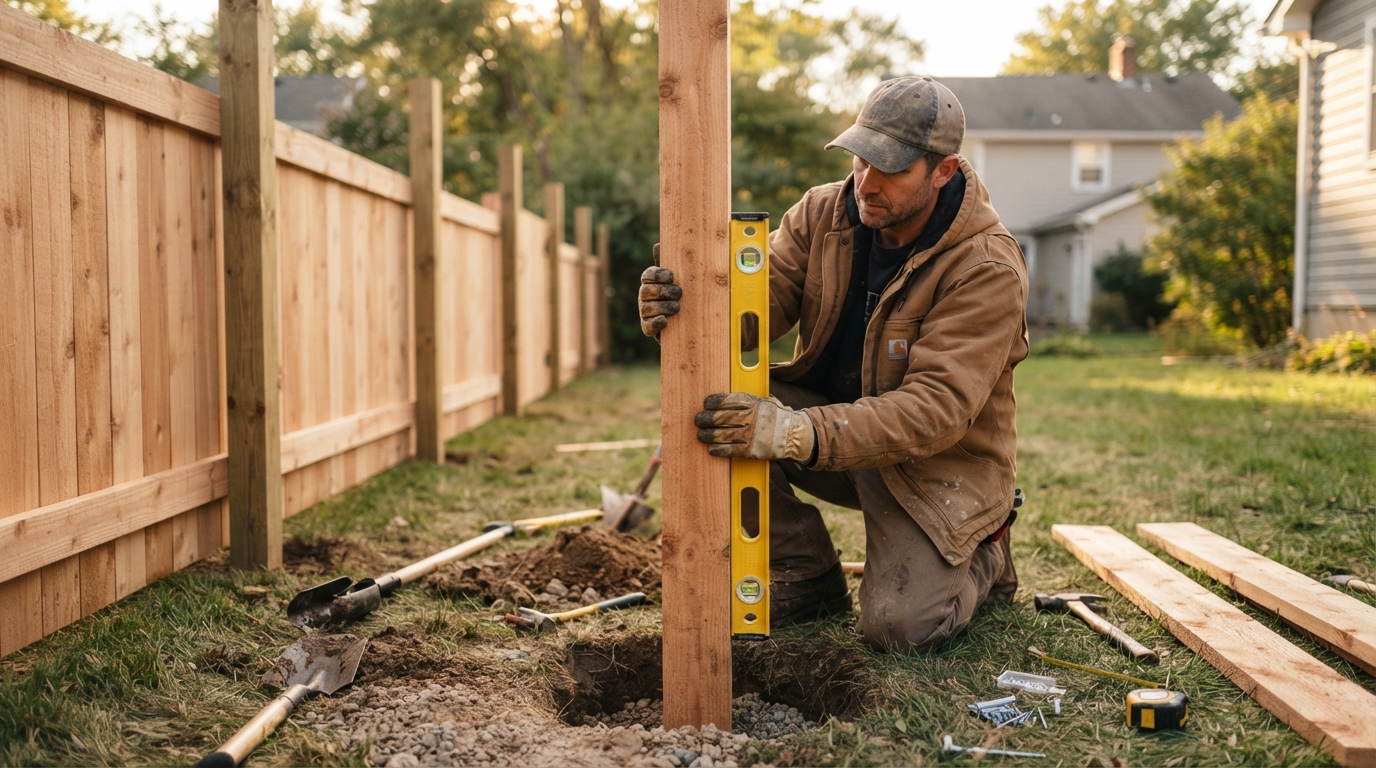
Iowa’s seasonal freeze-thaw cycle also affects post depth and footing requirements. The Iowa Department of Agriculture and Land Stewardship fencing construction specifications note that all six-inch wood posts shall be set a minimum of forty-two inches below grade, a standard that reflects how deep footings need to go to resist frost heave in the region.
Installation Process Overview
A typical wood fence project moves through a sequence of defined steps rather than a single visit.
1. Site assessment and layout – marking the fence line and identifying any underground utilities.
2. Permit filing – submitting plans to the local building department where required.
3. Post setting – digging and setting posts below the frost line, often with concrete footings.
4. Rail and panel installation – attaching horizontal rails followed by pickets or panels.
5. Gate installation and finishing – hanging gates and checking that all hardware operates smoothly.
Work backed by a one-year workmanship warranty and custom fabrication rather than mass production are features some area homeowners weigh when comparing installation options for their property.
Comparing Wood Fence Styles
Different wood fence styles serve different purposes, from full privacy to decorative boundary marking.
| Fence Style | Typical Height | Best Use | Privacy Level |
| Privacy panel | 6 feet | Backyards, pool areas | High |
| Picket | 3-4 feet | Front yards, decorative borders | Low |
| Shadowbox | 6 feet | Shared property lines | Medium |
| Horizontal slat | 6 feet | Modern-style homes | Medium-High |
Each style carries different material and labor requirements, which affects both cost and installation time.
Frequently Asked Questions
Does Johnston, IA require a permit for every wood fence? Most projects need one, though exact requirements depend on fence height, location, and the specific property. Checking with the City of Johnston Building Department before construction begins is the most reliable way to confirm.
How deep should wood fence posts be set in Iowa? Posts are commonly set well below the frost line to prevent shifting during freeze-thaw cycles, with specifications varying by post size and soil type.
What wood species holds up best to Iowa weather? Cedar is widely used for its natural resistance to moisture, rot, and insect damage compared to untreated lumber.
How long does a typical wood fence project take to complete? Timelines depend on fence length, site conditions, and permit processing, though most residential projects are completed within a few days once work begins.
A wood fence adds lasting value and privacy when it accounts for local permitting rules, proper post depth, and wood selection suited to Iowa’s climate. Homeowners who plan ahead for these factors typically avoid delays and costly rework later.
Current service details for Fencing Solutions are available for review by homeowners comparing wood fence options in the area.