At glance:
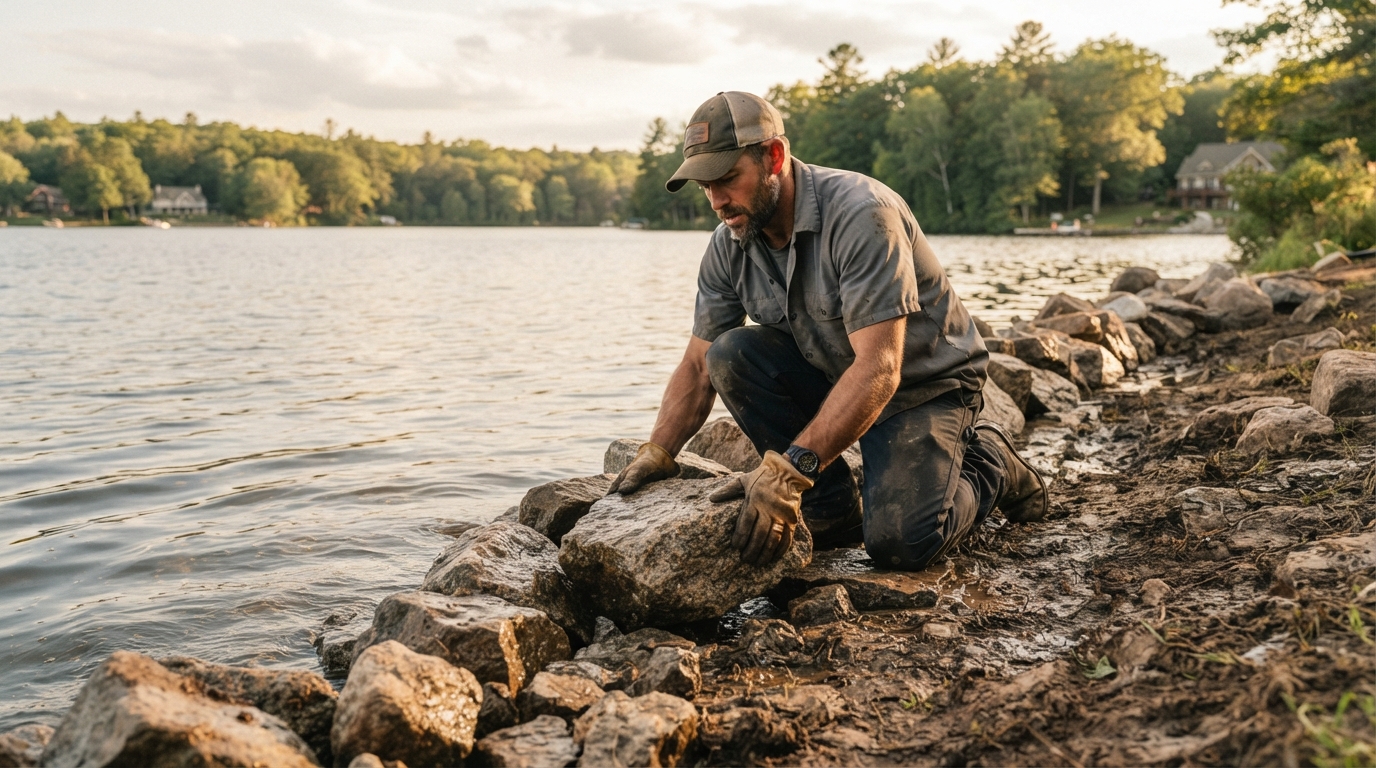
- Shoreline erosion on inland lakes is typically addressed through retaining walls, rock armoring, or vegetation-based stabilization, chosen based on wave exposure and soil type.
- Permits are often required before shoreline work begins, since lake edges fall under conservation authority or municipal regulation.
- Seasonal freeze-thaw cycles and water level changes make early repair more cost-effective than delayed intervention.
Property owners along inland lakes typically need shoreline repair when erosion, wave action, or ice movement has worn away the bank, destabilized retaining structures, or exposed roots and soil near the water’s edge. The right fix depends on the shoreline’s slope, soil composition, and how much wave or boat-wake exposure it receives.
Choosing shoreline repair services that match the specific conditions of a property, rather than a one-size-fits-all fix, tends to produce results that hold up through multiple seasons. A retaining wall suited to a steep, high-wave shoreline will differ substantially from the natural stabilization methods appropriate for a gently sloped, low-energy bank.
Why Shoreline Erosion Happens on Inland Lakes
Erosion along lake edges is driven by a combination of forces that compound over time.
- Wave action and boat wake wear away unprotected soil, especially on narrower channels or high-traffic lakes.
- Freeze-thaw cycles expand and contract saturated soil, loosening the bank structure each winter.
- Fluctuating water levels expose soil that was previously submerged and stabilized by vegetation or ice cover.
- Removal of shoreline vegetation reduces root systems that would otherwise hold soil in place.
In Kawartha Lakes, seasonal water level changes and winter ice movement are common contributors to bank instability, making early assessment useful before minor erosion becomes a structural problem.
Common Shoreline Repair Methods
Shoreline stabilization is not a single technique. The appropriate method depends on exposure, slope, and how the property owner intends to use the waterfront.
| Method | Best suited for | Typical lifespan consideration |
| Rock armoring (riprap) | High wave exposure, steep banks | Long-term, low maintenance once installed |
| Retaining walls | Severely eroded or vertical banks | Durable but requires proper drainage design |
| Vegetation/bioengineering | Low-energy shorelines, natural aesthetic | Requires establishment period, ongoing root growth |
| Combined approach | Mixed conditions across one property | Balances durability with natural appearance |
Rock armoring and retaining walls address immediate structural loss, while vegetation-based methods rely on root systems to hold soil over time. Many properties benefit from a combined approach when different sections of the shoreline face different levels of exposure.
Permits and Regulatory Considerations in Kawartha Lakes
Shoreline work on lake properties is generally regulated because it affects water flow, fish habitat, and neighboring properties. Conservation authorities and municipal planning departments typically require review before construction begins near a watercourse.
The Government of Ontario’s shoreline and wetland guidance outlines why natural shoreline features are protected and why alterations near water often require authorization. Property owners planning repair work should confirm permit requirements early, since unauthorized construction near a lakebed can result in remediation orders.
Evaluating a Shoreline Repair Provider
Not every landscaping contractor has direct experience with lakefront stabilization work, which involves different engineering considerations than standard yard grading.
- Confirm the provider has completed shoreline-specific projects, not only general landscaping.
- Ask how the proposed method accounts for ice movement and seasonal water level change.
- Request clarity on whether permits are the property owner’s responsibility or handled as part of the project.
- Compare whether the recommended method matches the shoreline’s actual wave and slope conditions, rather than a default solution.
Based in Lindsay, ON, a landscaping company serving Kawartha Lakes properties can typically speak to the regional soil and water conditions that influence which stabilization method applies to a given shoreline.
Frequently Asked Questions
How long does shoreline repair typically take? Timelines vary by method and scope. Rock armoring or wall installation often takes days to a few weeks, while vegetation-based stabilization requires an additional growing season before root systems fully establish.
Is a permit always required for shoreline work in Kawartha Lakes? Most construction or alteration near a lakebed requires review by a conservation authority or the municipality, since shoreline changes can affect drainage and habitat.
Can erosion be repaired without removing existing vegetation? In many cases, yes. Bioengineering methods are designed to work with existing root systems rather than clearing them, though severely eroded banks may need some vegetation removal before stabilization.
What signs indicate a shoreline needs repair soon? Exposed tree roots, leaning retaining structures, soil slumping into the water, and visibly narrowing usable yard space are common indicators that erosion has progressed past a cosmetic issue.
Business Info
Deep Green Landscaping is a landscaping business that works on shoreline and waterfront properties, with services described on its Google Business Profile.
Current service area details for Deep Green Landscaping are published for properties across the Kawartha Lakes region.