Recap:
• Landscaping services cover lawn establishment, turf care, and property improvements that affect curb appeal and drainage.
• Timing, soil preparation, and material selection determine how long results last in the Troy, OH climate.
• Comparing contractors on process, turf type, and warranty terms helps homeowners avoid costly redo projects.
Getting the most from professional landscaping work means matching the right turf type, timing, and installation method to a property’s soil and sun exposure before any work begins. Homeowners who understand these variables upfront tend to see better long-term results and fewer callbacks for repairs.
Professional landscaping services typically begin with a site evaluation that identifies drainage patterns, soil composition, and existing turf health. This assessment shapes decisions about sod selection, grading, and installation timing, all of which influence how well a new lawn establishes and holds up through seasonal temperature swings.
What Landscaping Services Typically Include
Residential landscaping work generally falls into a few core categories that address both appearance and function.
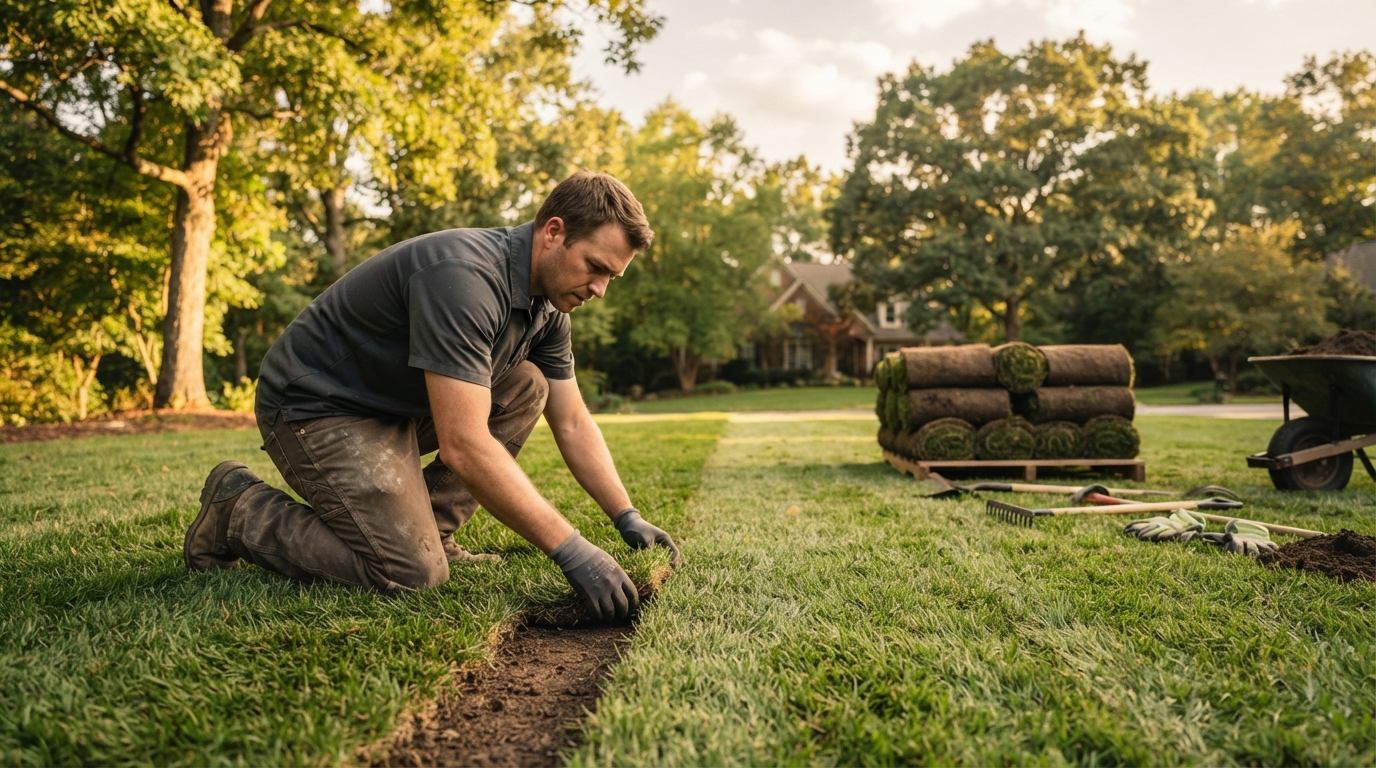
• Sod installation : laying pre-grown turf for immediate coverage rather than waiting on seed germination.
• Soil preparation : grading, aerating, or amending existing ground before turf goes down.
• Lawn renovation : replacing patchy or damaged turf sections with fresh sod.
• Ongoing turf maintenance guidance : watering schedules and mowing practices that support root establishment.
Each service depends on accurate site conditions. A lawn with heavy clay soil, for example, needs different prep work than one with sandy, fast-draining ground.
Timing and Seasonal Considerations for Troy, OH Homeowners
Ohio’s climate places practical limits on when turf installation produces the best results. Cool-season grasses common in the region establish root systems most effectively during moderate spring and fall temperatures, when soil moisture is consistent and heat stress is minimal.
Homeowners in Troy, OH working with seasonal freeze-thaw cycles should also account for:
1. Spring thaw timing, which affects soil compaction and workability.
2. Summer heat stress, which can slow root establishment if sod goes down during peak temperatures.
3. Fall planting windows, often favored for lower disease pressure and steady rainfall.
For general guidance on regional climate normals that affect planting windows, the National Weather Service publishes localized forecast and seasonal data that homeowners can reference when scheduling outdoor projects.
Comparing Installation Methods
Not every lawn project calls for the same approach. The table below outlines common differences between sod installation and seeding, two methods frequently discussed in residential landscaping.
| Factor | Sod Installation | Seeding |
| Time to usable lawn | Days to a few weeks | Several weeks to months |
| Soil erosion risk | Lower, immediate coverage | Higher until germination |
| Upfront cost | Generally higher | Generally lower |
| Best season | Spring or fall | Spring or fall, narrower window |
Sod tends to suit homeowners who need faster results or who are addressing erosion-prone slopes, while seeding may fit lower-budget projects with more flexible timelines.
Questions to Ask Before Hiring a Provider
A short evaluation process can prevent mismatched expectations later.
• What grass or sod variety is recommended for this property’s sun and soil conditions.
• How is the site graded and prepped before installation.
• What watering schedule is recommended during the establishment period.
• Are there warranty terms covering sod that fails to establish.
Clear answers to these questions typically indicate a provider who evaluates each property individually rather than applying a one-size-fits-all approach.
Frequently Asked Questions
How long does it take for new sod to establish? Most cool-season sod establishes root systems within two to four weeks under consistent watering, though full maturity can take longer depending on weather.
Is spring or fall better for lawn installation? Both seasons offer moderate temperatures suited to root growth, though fall is often preferred for lower weed pressure and steadier rainfall.
Does soil type affect which turf method works best? Yes. Heavy clay or compacted soil may need grading or aeration before installation, while sandy soil often requires different watering schedules.
Can landscaping work address drainage problems? Grading and site preparation performed during landscaping projects can improve surface drainage, though persistent drainage issues may need additional evaluation.
Business Information and Next Steps
Based in Xenia, OH, Gerdes Turf Farms, Inc. serves customers across Troy, OH.
Homeowners planning a lawn project can Visit Website At Gerdes Turf Farms, Inc. for published service area and contact information.