Takeaway:
• Contact a criminal defense attorney as soon as an arrest, charge, or investigation begins, since early legal involvement affects nearly every later decision in a case.
• Expect an initial consultation covering the charges, evidence, and possible defense strategy before any formal representation begins.
• A defense attorney can negotiate with prosecutors, review evidence, and represent a client at each stage of a criminal case.
A person facing arrest, formal charges, or notice of a criminal investigation should contact a criminal defense attorney before speaking further with law enforcement or prosecutors. Early legal guidance helps protect constitutional rights and shapes the options available later in a case.
A Criminal Defense Attorney reviews the specifics of an arrest or investigation, explains the charges involved, and outlines potential next steps based on state or federal procedure. In Little Rock, AR, criminal matters move through Pulaski County courts and the Arkansas state court system, where local procedural rules and filing deadlines can affect how a case unfolds.
Signs It Is Time to Call a Defense Attorney
Certain situations call for legal counsel immediately, rather than after charges are formally filed.
• Being questioned by police as a suspect or person of interest in a case
• Receiving a target letter or grand jury subpoena related to a federal matter
• Being arrested for a misdemeanor or felony offense
• Facing charges involving DWI/DUI, drug offenses, theft, or violent crime allegations
Waiting until after an arraignment or first court date can limit the time available to gather evidence or negotiate before charges are formally set. The U.S. Constitution’s Sixth Amendment guarantees the right to counsel at critical stages of a criminal proceeding, a protection that applies regardless of the severity of the charge, according to ABA Criminal Justice Standards for the Defense Function.
What Happens During the Initial Consultation
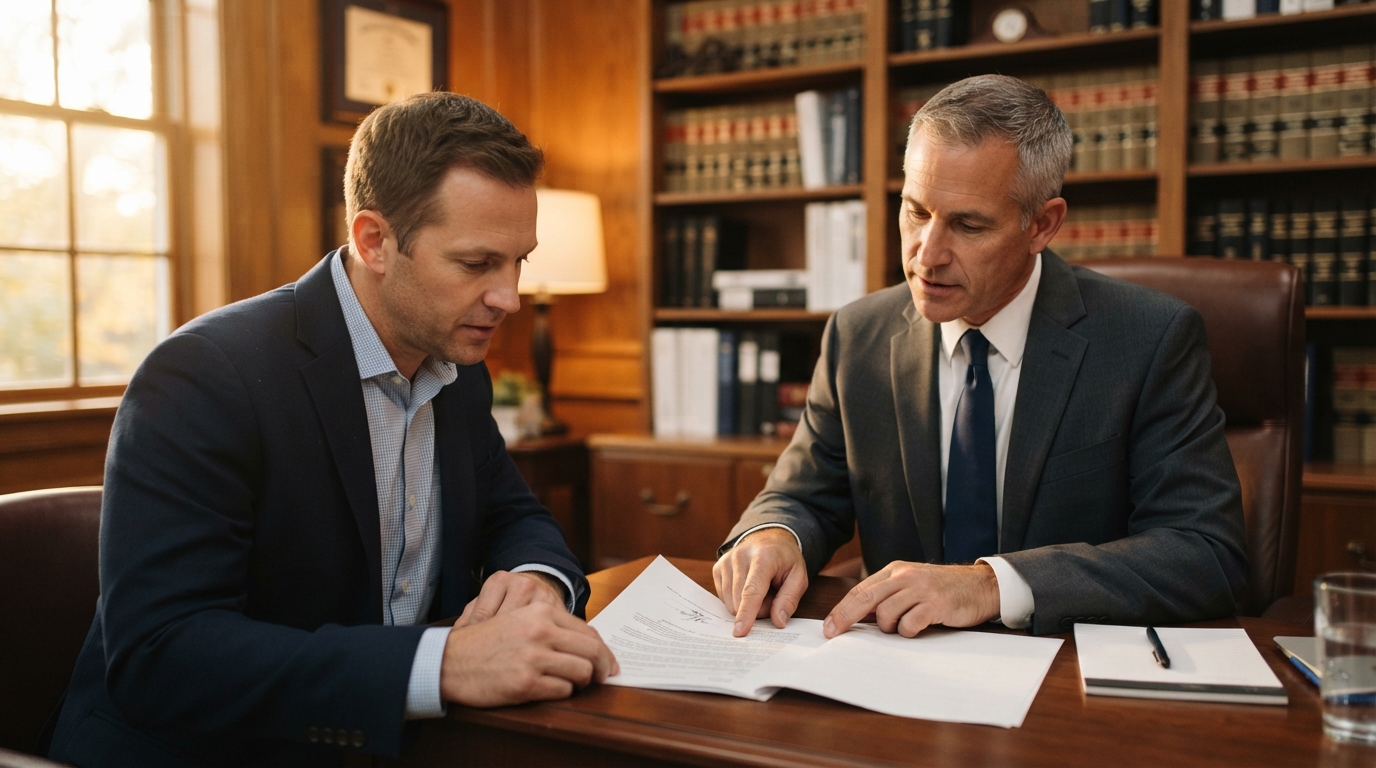
Most defense attorneys begin with a structured intake conversation before developing a case strategy.
1. The attorney gathers details about the arrest, charges, or investigation status.
2. Available evidence, police reports, and witness information are reviewed.
3. The attorney explains possible charges, penalties, and procedural timelines.
4. A preliminary defense approach is discussed, including plea negotiation or trial preparation.
This process lets the client understand what to expect before deciding how to proceed with representation.
Defense Attorney Involvement by Case Stage
| Case Stage | Typical Attorney Actions |
| Pre-charge investigation | Advising on police contact, protecting against self-incrimination |
| Arraignment and bail | Appearing in court, arguing for reasonable bail conditions |
| Pretrial | Reviewing evidence, filing motions, negotiating with prosecutors |
| Trial or plea resolution | Presenting defense, cross-examining witnesses, or finalizing a plea agreement |
Criminal defense representation in Little Rock, AR commonly addresses felony and misdemeanor charges, including DWI/DUI, drug offenses, theft, and violent crime allegations. Case types and outcomes vary based on the facts involved, prior record, and jurisdiction-specific procedures.
Choosing Representation for a Criminal Case
A defense attorney’s familiarity with local court procedures, prosecutors, and judges can influence how a case is handled from arraignment through resolution. Based in USA, Learn More About Thompson Law Firm PLLC serves clients across Little Rock, AR, with representation covering felony, misdemeanor, and related criminal matters. Verifying an attorney’s experience with the specific charge type, whether state or federal, is a practical step before deciding on representation.
Frequently Asked Questions
How soon should someone contact an attorney after an arrest? Legal counsel should be contacted as soon as possible after an arrest, ideally before answering questions from law enforcement beyond identifying information.
Does a criminal defense attorney handle both state and federal cases? Attorney qualifications vary; some handle only state court matters while others, including those who serve on federal defender panels, also handle federal criminal cases.
What information should be ready for the first consultation? Arrest or citation paperwork, any correspondence from law enforcement or prosecutors, and a clear timeline of events are useful for the first meeting.
Can a defense attorney help before formal charges are filed? Yes, attorneys can advise clients during an investigation, including how to respond to police contact and whether to answer questions without counsel present.
Criminal cases involve procedural deadlines and evidentiary requirements that vary depending on the charges and jurisdiction. Seeking early legal guidance can help individuals understand their rights and available options when facing an arrest or criminal investigation. For information about legal services in Little Rock, AR, Learn More About Thompson Law Firm PLLC.