Essentially:
- A water damage restoration contractor assesses structural damage, removes standing water, and dries materials to prevent mold growth after flooding.
- The process typically includes inspection, extraction, drying, cleaning, and repair phases completed in a set sequence.
- Acting within the first 24 to 48 hours reduces the risk of secondary damage such as mold and structural decay.
A flooded home or business needs more than a mop and a fan. A qualified water damage restoration contractor identifies how deep the damage goes, removes trapped moisture from walls and flooring, and documents the loss for insurance purposes before any repair work begins. This sequence matters because water that looks gone on the surface often remains inside drywall, subflooring, and insulation for days afterward.
Residents dealing with flooding in Vero Beach, FL face a specific set of conditions tied to coastal humidity and seasonal storm patterns, which makes professional assessment more than a precaution. Standing water left untreated for 48 hours or longer creates conditions favorable to mold colonization, according to guidance from the Environmental Protection Agency. That timeline is why contractors prioritize rapid extraction over cosmetic repairs in the first phase of any job.
What Happens During a Professional Assessment
Before any equipment is deployed, a contractor documents the scope of damage room by room. This step protects the property owner during insurance claims and establishes a baseline for drying progress.
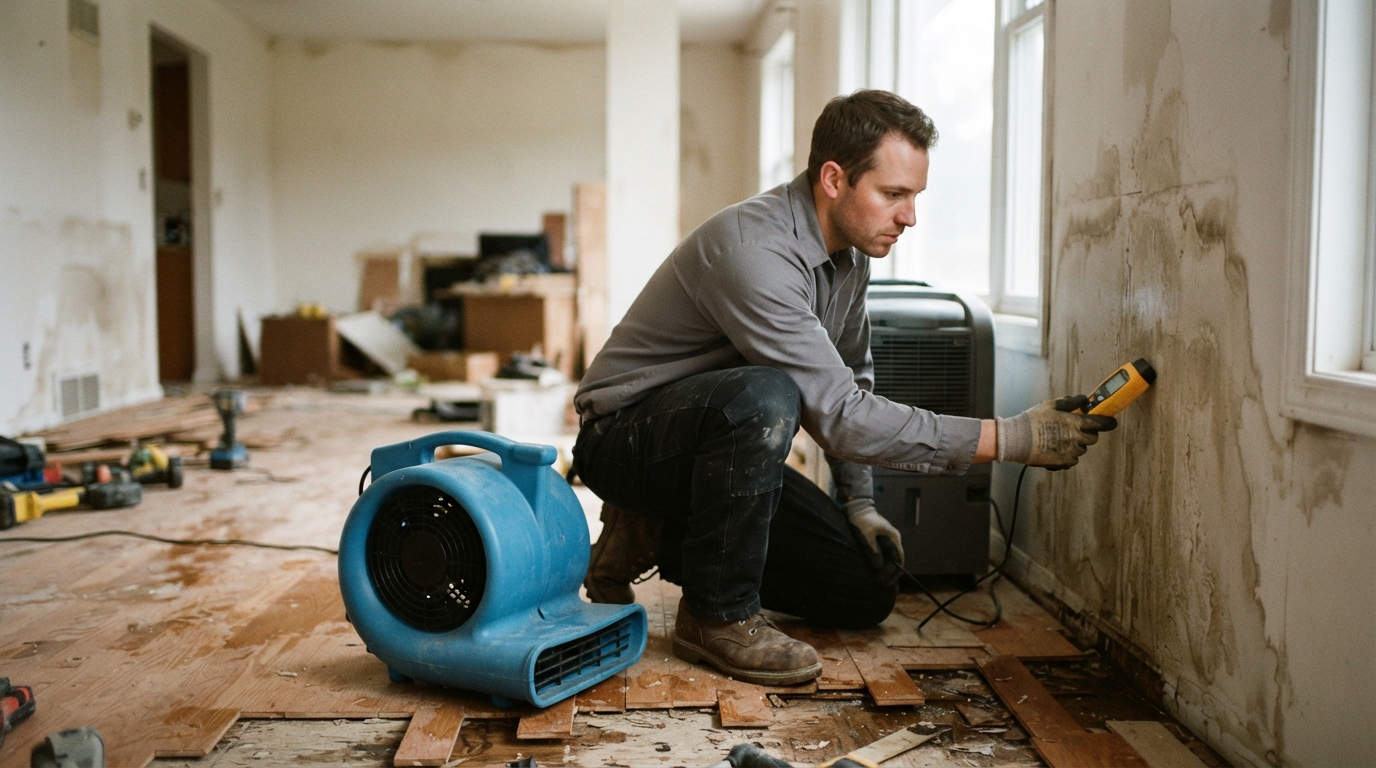
- Moisture readings are taken on walls, floors, and ceilings using calibrated meters.
- Photos and written notes record the condition of flooring, drywall, and personal belongings.
- Contamination level is classified, since floodwater from outside sources is treated differently than a clean supply-line leak.
- A drying plan is set based on material type and the extent of saturation.
This assessment phase typically takes a few hours depending on the size of the affected area. Skipping it often leads to incomplete drying and recurring odor or mold issues weeks later.
Water Extraction and Structural Drying
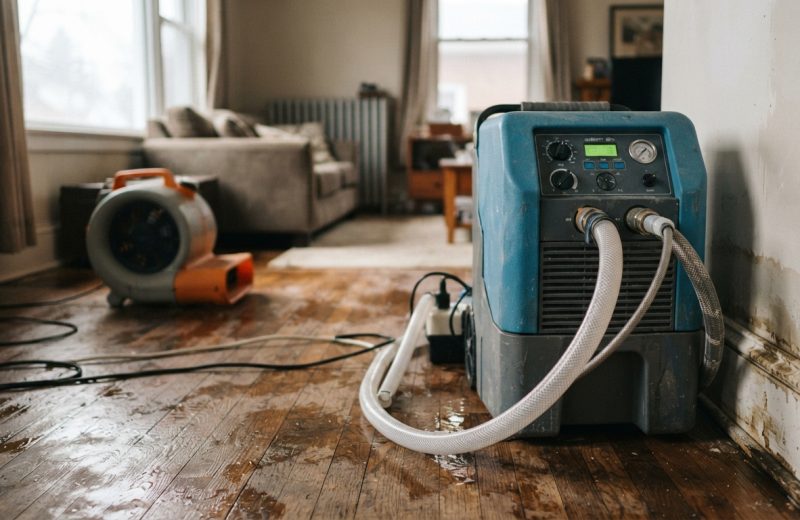
Once the assessment is complete, extraction equipment removes standing water from floors and carpeting. Industrial pumps and truck-mounted vacuums handle larger volumes faster than portable units, which shortens the window during which mold spores can establish themselves.
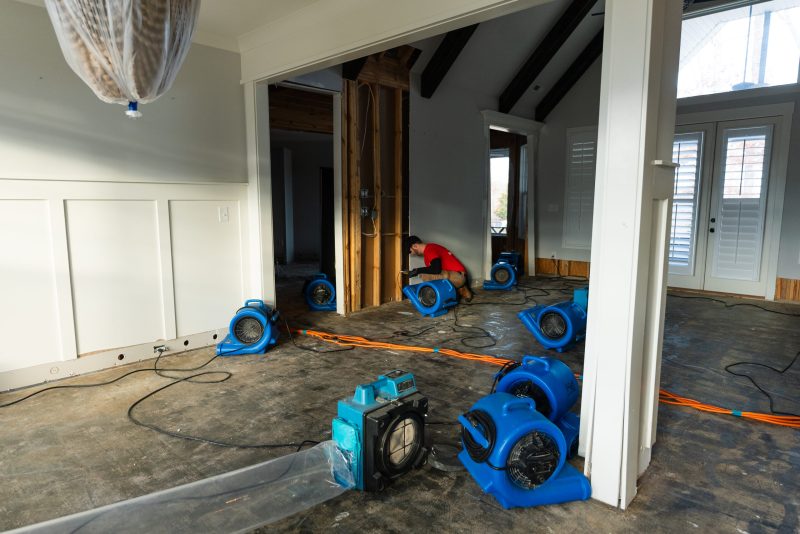
Drying follows extraction and usually takes three to five days, though this varies with humidity, airflow, and the type of building materials involved. Commercial-grade air movers and dehumidifiers are positioned to pull moisture from wood framing, drywall, and subflooring rather than just surface water. Contractors monitor moisture levels daily with meters to confirm materials are returning to a normal dry-standard range before moving to the next phase.
| Restoration Phase | Typical Duration | Primary Goal |
| Inspection and assessment | A few hours | Document damage and plan drying strategy |
| Water extraction | Same day | Remove standing water from surfaces |
| Structural drying | 3 to 5 days | Reduce moisture in framing and flooring |
| Cleaning and repair | Varies by scope | Restore affected materials and finishes |
Cleaning, Sanitizing, and Repair Work
After materials reach acceptable dryness, cleaning and sanitizing address contamination risks, particularly when floodwater came from outside the structure. Antimicrobial treatments are applied to surfaces that contacted water to limit bacterial and mold growth.
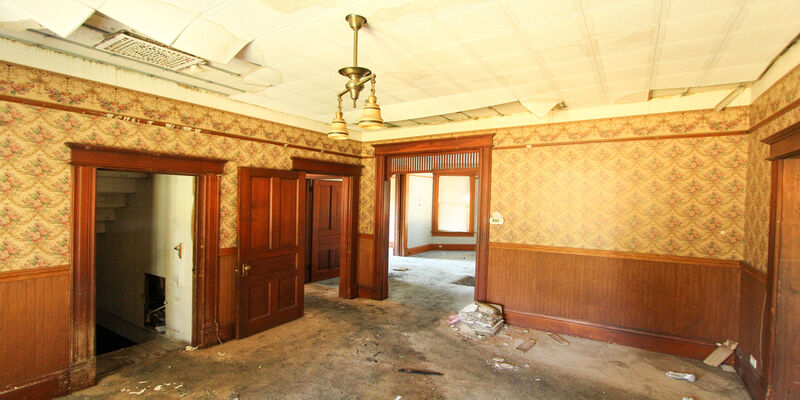
Repair work is the final phase and may include replacing drywall, flooring, or trim that could not be salvaged. Some jobs only need drying and cleaning; others require rebuilding sections of a wall or floor system. The distinction depends on how long materials sat wet and what they are made of, since porous materials like particleboard often cannot be dried to a safe standard once saturated.
Frequently Asked Questions
How soon should a contractor be contacted after flooding? Within the first 24 to 48 hours is generally recommended, since this window is when mold risk begins to increase significantly in wet building materials.
Does homeowner insurance typically cover this type of work? Coverage depends on the policy and the source of the water, which is why many contractors document damage thoroughly for claims purposes. Specific coverage questions should be directed to the insurance provider.
What is the difference between extraction and drying? Extraction removes visible standing water using pumps or vacuums, while drying uses air movers and dehumidifiers over several days to remove moisture absorbed into materials.
Can all water-damaged materials be saved? Not always. Porous materials saturated for an extended period, such as particleboard or certain insulation types, often need replacement rather than drying.
Finding Local Support After Water Damage
Hazard Clean Restoration serves customers across Vero Beach, FL.
Current service details for Hazard Clean Restoration are published for residents reviewing options after flood damage. Learn More About Hazard Clean Restoration.