Summary first:
- Commercial snow removal covers plowing, sidewalk clearing, and de-icing for parking lots and walkways at business properties.
- Burlington, VT enforces municipal rules on where cleared snow can be placed, which affects how commercial lots and sidewalks must be serviced.
- Contracts typically specify response times, de-icing methods, and liability coverage, all of which matter more for commercial sites than residential ones.
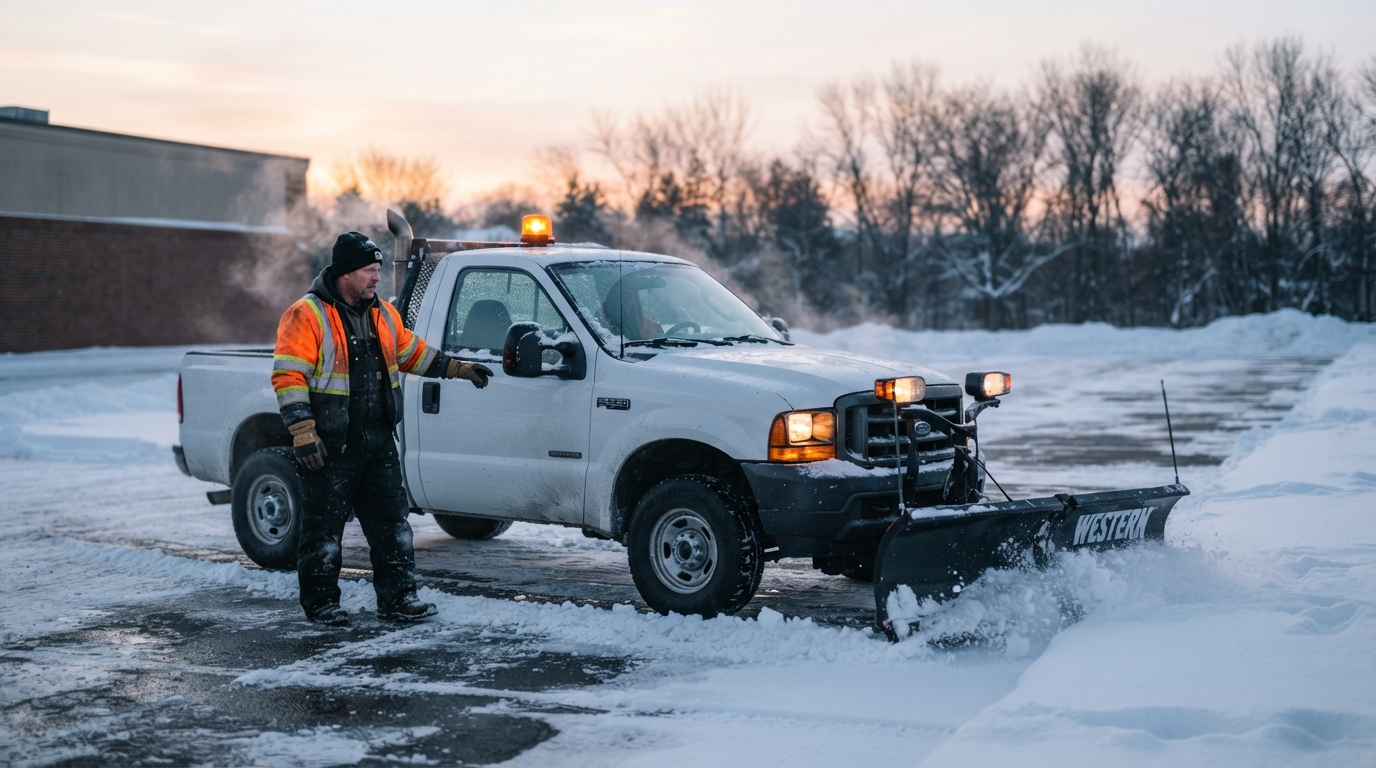
Commercial snow removal refers to the plowing, shoveling, and de-icing of parking lots, sidewalks, and building entrances at business properties, typically under a seasonal service contract. For companies operating in Burlington, VT, this service determines whether employees, customers, and delivery vehicles can safely reach a building during winter months.
Property managers and business owners researching commercial snow removal usually want to know what the service includes, how pricing works, and what local rules apply to clearing snow from commercial lots. The sections below address each of these questions directly.
What Commercial Snow Removal Typically Includes
A commercial snow and ice contract generally covers more than a single pass with a plow. Most providers structure service around three core tasks:
- Parking lot plowing – clearing drive lanes and parking stalls, often triggered automatically once snowfall reaches a set depth.
- Sidewalk and entrance clearing – shoveling or snow-blowing walkways, loading docks, and building entry points where pedestrian traffic is heaviest.
- De-icing and pretreatment – applying salt or other de-icing material before and after a storm to reduce ice buildup on pavement.
Response during active storms is usually continuous rather than a single visit, since lots and walkways can refreeze or refill with snow multiple times in one event.
Local Rules That Affect Commercial Properties in Burlington, VT
Snow removal for commercial properties in Burlington, VT is shaped in part by municipal ordinance, not just weather conditions. City code addresses where cleared snow can legally be placed and who is responsible for clearing abutting walkways.
- Burlington’s municipal code prohibits throwing or putting snow or ice into the travel portion of a street or onto a sidewalk.
- The same ordinance requires the occupant, tenant, or owner of land bordering a street to remove snow from an awning or shade within four hours in the daytime, or by noon the following day if it falls at night.
- Building owners also carry responsibility for roof-related snow hazards: owners of a building from which snow, ice, or water slides or falls onto a street or sidewalk must maintain guards on the roof to prevent that from happening.
Full text of these requirements is available through the City of Burlington code of ordinances, which outlines the city’s snow and ice removal article in detail.
These rules matter for commercial sites specifically because improperly piled snow that later melts and refreezes on a sidewalk can create a liability issue for the property owner, separate from any contract terms with a snow removal vendor.
Comparing Service Models for Commercial Properties
Commercial properties generally choose between a few common service structures. Each has tradeoffs in cost predictability and responsiveness.
| Service Model | How It Works | Best Suited For |
| Per-push contract | Billed each time plowing occurs above a snowfall threshold | Properties with variable winter budgets |
| Seasonal flat-rate contract | Fixed price for the full winter season regardless of storm count | Businesses wanting predictable costs |
| On-call / as-needed service | Scheduled only when requested | Smaller lots or infrequent needs |
A seasonal contract is the most common choice for larger commercial lots because it removes billing uncertainty during a heavy snow year, though it may cost more in a light winter.
Business Info
Based in Essex, VT, landscape and grounds maintenance operations extend to commercial clients throughout Burlington, VT, with services that include seasonal di Stefano Landscaping snow and ice management alongside other property upkeep offerings.
Frequently Asked Questions
How quickly should a commercial lot be cleared after a storm? Most commercial contracts specify trigger depths and response windows rather than waiting until a storm ends, since lots need to stay passable for employees and customers throughout an active snowfall.
Who is liable if someone slips on a commercial sidewalk in Burlington, VT? Liability generally falls to the property owner or occupant responsible for the abutting sidewalk, and commercial property owners may face greater liability if someone is injured due to snow or ice conditions on their property.
Can snow from a parking lot be pushed onto the street or public sidewalk? No. City ordinance prohibits throwing or putting snow or ice in the travel portion of a street or on a sidewalk, so cleared snow must be piled on the property itself or hauled off-site.
Does a seasonal contract cost more than per-push billing? It depends on the winter. A seasonal flat rate protects against cost spikes during heavy snow years, while per-push billing can be cheaper in a mild season but less predictable for budgeting.
Next Steps for Commercial Properties
Property managers evaluating providers for the coming winter season can review current contract terms and service availability before the first storm arrives. Current service area information for di Stefano Landscaping is published for commercial properties in the region.