The gist:
• A warm refrigerator is most often caused by dirty condenser coils, a blocked air vent, a worn door seal, or a failing fan rather than a dead compressor.
• Checking coils, seals, and vent paths first can resolve many cooling complaints before a technician visit is needed.
• Refrigerators should hold 40 degrees Fahrenheit or below to keep stored food safe, according to federal food safety guidance, so if yours runs warmer, it’s time to look into refrigerator repair in Colorado Springs CO.
A refrigerator that runs warm, cycles constantly, or makes new noises usually points to a specific mechanical cause rather than total failure, and knowing the common culprits helps homeowners decide what to check first and when to call for Refrigerator repair. Dust buildup, door seal wear, and airflow blockages account for the majority of cooling complaints technicians encounter. Based in USA, Service First Appliance Repair serves customers across Colorado Springs, CO, where seasonal dust, dry air, and temperature swings can accelerate wear on refrigerator components.
Common Causes Behind a Warm Refrigerator
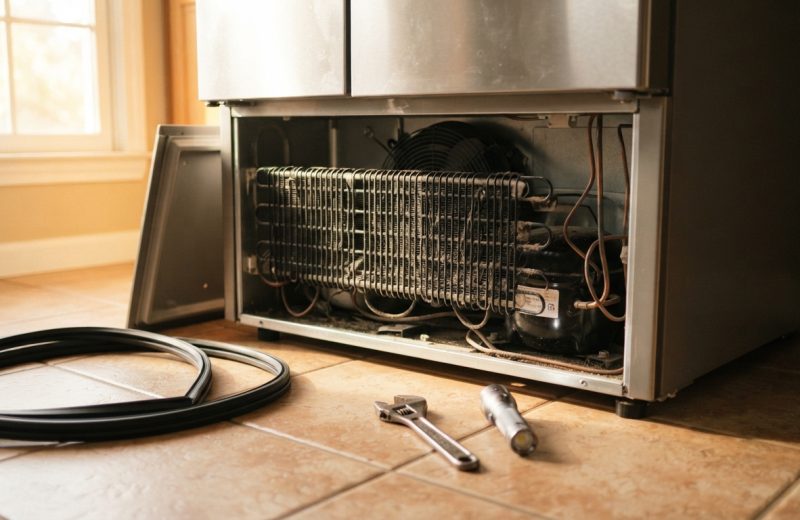
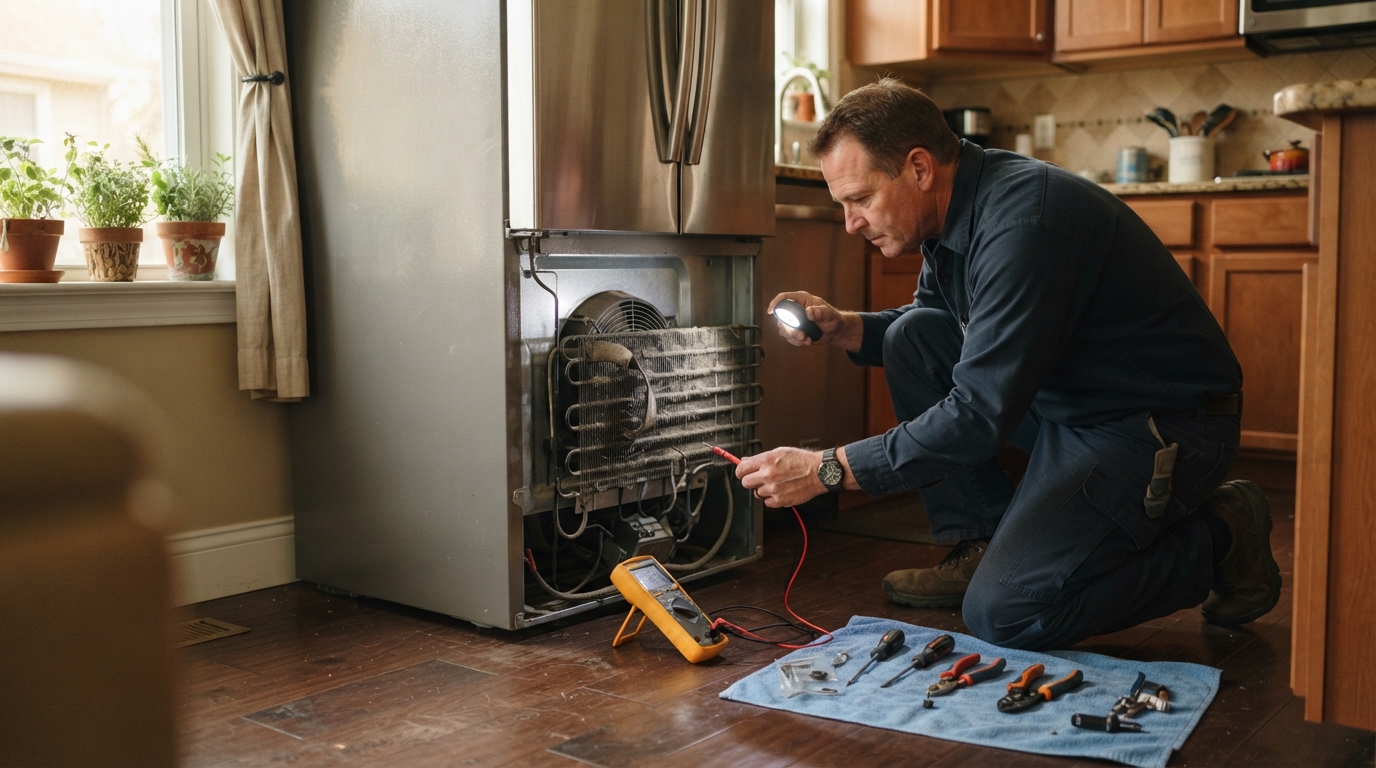
Most cooling failures trace back to a short list of mechanical issues rather than a failed compressor. The most common causes are dirty condenser coils, a failed evaporator fan, or a defrost system failure, with dirty coils being the easiest to fix by vacuuming them. When dust and pet hair build up on the coils underneath or behind the unit, the refrigerator cannot release heat effectively, forcing longer run time and weaker cooling.
Other frequent triggers include:
• Blocked vents — if food packages block vents inside the fridge or freezer, cold air cannot circulate evenly, causing warm spots and inconsistent temperatures.
• Worn door gaskets — worn-out, loose, damaged, or dirty door gaskets let warm air seep into the fridge, overworking the cooling system.
• Fan or sensor failure — fans move air through the system, and if a fan fails, cooling performance drops fast, sometimes with unusual noises or no fan sound at all.
When the Freezer Is Cold but the Fridge Is Warm
This split symptom has a distinct explanation separate from general cooling loss. This is almost always an airflow problem rather than a cooling problem, since a failed fan or frost from a failed defrost system blocks the evaporator coils, leaving the freezer cold while the refrigerator slowly warms. A stuck air damper produces the identical symptom, which is why diagnosis matters more than guesswork.
Food safety becomes a concern once internal temperatures drift upward. The temperature in a refrigerator should be 40 degrees Fahrenheit or below throughout the unit, so that any place is safe for storage of any food, according to USDA food safety guidance. Food held warmer than that threshold for more than two hours should be discarded rather than risked.
Repair or Replace: A Practical Comparison
Age and symptom severity both factor into whether a repair makes sense.
| Situation | Typical Path | Notes |
| Dirty coils, minor vent blockage | DIY cleaning first | Often resolves cooling within hours |
| Worn gasket, single failed fan | Professional repair | Parts are commonly available |
| Sealed system or compressor issue | Professional diagnosis required | May involve refrigerant work |
| Unit over 12-15 years old with rising energy use | Replacement consideration | Repair cost may approach replacement value |
Some basic checks are safe for homeowners, but internal cooling system repairs should always be handled by a professional, since sealed-system work involves refrigerant handling and specialized testing.
Steps Before Calling for Service
A short inspection routine can rule out the simplest causes:
1. Check that the door seal closes fully and has no visible tears or warping.
2. Vacuum condenser coils, located either under the front grille or behind the unit depending on age.
3. Clear food items blocking internal vents, especially near the back wall of the fridge compartment.
4. Confirm the unit has not been overloaded, which restricts airflow around stored items.
If cooling does not improve within a few hours after these checks, the issue likely involves a fan, control board, or sealed-system component that requires diagnostic tools. Colorado Springs, CO households running appliances through wide seasonal temperature shifts may notice these issues more often as gaskets and fans age unevenly across the year.
Frequently Asked Questions
How long should it take for a refrigerator to cool again after fixing a problem?
Answer: Recovery time depends on how warm the unit became and how full it is, since a loaded refrigerator holds heat longer than an empty one.
Can I clean condenser coils myself?
Answer: Yes, vacuuming visible dust from coils is a routine homeowner task and does not require opening any sealed components.
Is a clicking noise from the back of the fridge serious?
Answer: A clicking sound near the compressor area can indicate a start relay issue, which generally needs professional diagnosis rather than a DIY fix.
Does an old refrigerator make repair less worthwhile?
Answer: Once a unit is well past a decade old and energy costs have risen noticeably, replacement often becomes more cost-effective than continued repair.
A Note on Local Service Availability
Refrigerator issues tend to surface without much warning, and having a general sense of when to troubleshoot versus when to call a technician helps limit food loss and repeat repairs. Current listings for Service First Appliance Repair include published hours and service area details relevant to appliance owners nearby.
Homeowners comparing options for diagnosing a warm refrigerator can review scheduling and area details through Service First Appliance Repair.