Key takeaway:
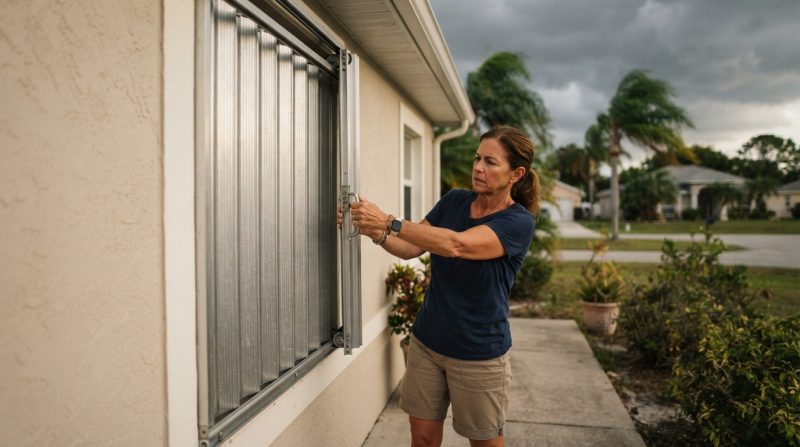
- Storm shutters reduce the risk of window breakage from wind-borne debris during tropical storms and hurricanes.
- Shutter types differ in cost, deployment speed, and long-term durability.
- Local building codes in coastal areas often set minimum wind-resistance standards for approved shutter systems.
Selecting the right storm protection for windows depends on matching a shutter type to a home’s wind exposure, budget, and how quickly it needs to be deployed before a storm. For residents weighing options, the decision to Ditch Plywood in favor of engineered shutters often comes down to reliability and reusability rather than one-time emergency prep.
Plywood has long served as a stopgap for boarding up windows, but it carries real limitations. Cut sheets must be stored, measured, and re-fitted each time a storm approaches, and repeated exposure to moisture weakens the material over multiple seasons. Engineered shutter systems are built to be installed and removed on a predictable schedule, which matters in a coastal market like St. Petersburg, FL, where storm warnings can arrive with only a few days of notice.
Types of Hurricane Shutters Worth Comparing
Homeowners generally choose among a handful of shutter categories, each with different trade-offs in cost, storage, and ease of use.
- Accordion shutters: Fold against the wall when not in use and extend across the window on a track, allowing fast deployment without separate panel storage.
- Roll-down shutters: Operate manually or by motor and retract into a housing above the window, offering year-round weather and light control.
- Bahama shutters: Mounted above the window and propped open at an angle, doubling as a shade feature in non-storm months.
- Colonial shutters: Hinged on the sides and fold inward to close, combining storm protection with a traditional architectural look.
| Shutter Type | Deployment Speed | Storage Needed | Typical Use Case |
|---|---|---|---|
| Accordion | Fast | None (folds in place) | Frequent storm activity |
| Roll-down | Fast (manual or motorized) | None (built-in housing) | Daily light/privacy control plus storms |
| Bahama | Moderate | None (fixed mount) | Combined shade and storm use |
| Colonial | Moderate | None (fixed mount) | Historic or traditional home exteriors |
Why Panel Material and Fastening Method Matter
The material and mounting hardware behind a shutter system affect how well it holds up against sustained wind pressure and flying debris. Aluminum and reinforced polycarbonate panels are common choices because they resist warping better than wood-based materials over repeated storm cycles. According to the National Oceanic and Atmospheric Administration, hurricane-force winds can exceed 74 mph at landfall, a threshold that unsecured or improperly fastened window coverings are not designed to withstand.
Fastening systems also matter as much as the panel itself. Track-mounted and permanently anchored shutters distribute wind load more evenly across the window frame than temporary clips or bolts drilled fresh before each storm. Homes in flood- or wind-prone zones should confirm that any shutter installation meets local wind-load requirements before relying on it for protection.
Matching Shutters to a Home’s Storm Exposure
Not every property faces the same level of risk, so shutter selection should reflect a home’s specific exposure.
- Review the home’s location relative to open water, tree cover, and prevailing storm paths.
- Check whether existing window frames can support the added weight of track-mounted shutters.
- Confirm any local permitting or code requirements tied to exterior storm hardware.
- Compare manual versus motorized operation based on how quickly the household can act before a storm arrives.
For many homes in St. Petersburg, FL, accordion or roll-down systems are a practical middle ground because they stay attached between storms and do not require separate panel storage or re-measuring each season.
Frequently Asked Questions
Are hurricane shutters better than plywood for long-term use? Engineered shutters are designed for repeated use across multiple storm seasons, while plywood is typically a single-use or short-term measure that degrades with moisture exposure.
Do all shutter types require professional installation? Track-mounted systems like accordion and roll-down shutters generally need secure anchoring into the wall or frame, which is why professional installation is common for these types.
How much notice is needed to deploy permanent shutters? Fixed or track-mounted shutters that stay on the home can typically be closed in minutes, unlike temporary boarding that requires cutting and fitting panels first.
Can shutters help with anything besides storm protection? Some styles, such as Bahama and colonial shutters, also provide shade and can reduce direct sun exposure on windows during non-storm months.
Business Info
Residents researching local storm-protection options can review listed details through Contact Ditch Plywood, a business based in St. Petersburg, FL.
Next Steps for Storm Preparedness
For published location and contact details, readers can Contact Ditch Plywood.