Key point:
- Brick pavers offer a durable, repairable surface for driveways, patios, walkways, and pool decks that holds up to Florida heat and heavy rain.
- Individual pavers can be replaced or releveled without redoing an entire surface, unlike poured concrete or asphalt.
- Proper base preparation and drainage planning matter more than material choice for long-term performance in Wesley Chapel, FL.
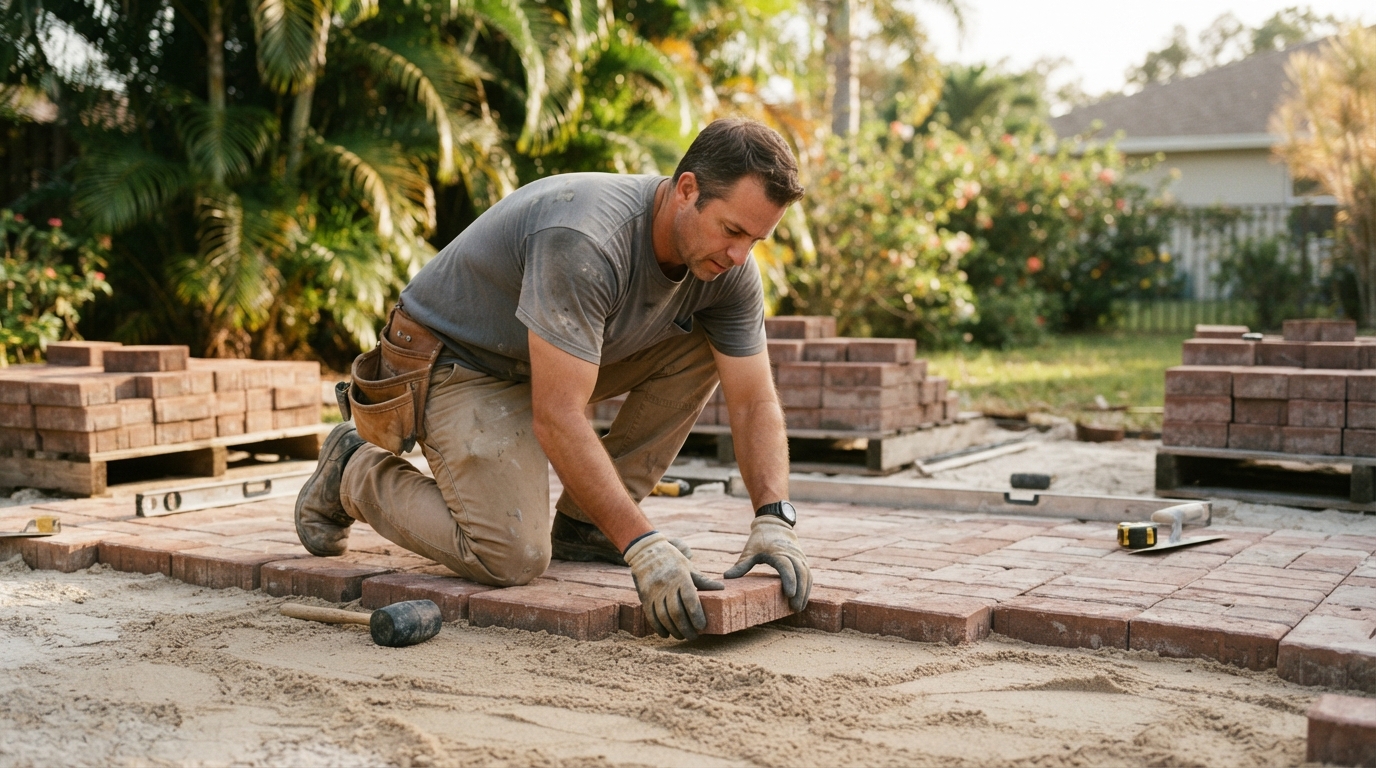
Outdoor surfaces in Central Florida face sun exposure, sandy soil, and seasonal downpours that test any paving material. Brick pavers address those conditions directly because each unit is installed as part of an interlocking system rather than a single poured slab, which allows sections to shift slightly with ground movement instead of cracking.
That same modular structure is why brick pavers remain a common choice for driveways, walkways, and patios in warm, humid climates where temperature swings and rain cycles stress rigid materials over time.
Why Material Choice Affects Long-Term Performance
Homeowners comparing paving options usually weigh upfront cost against how a surface will hold up over years of weather exposure. Brick pavers are manufactured from kiln-fired clay, giving them a dense, color-through composition that does not fade the way a surface coating might.
Three practical factors tend to drive the decision between pavers, poured concrete, and natural stone:
- Repairability: individual brick units can be lifted and replaced without matching a new concrete pour to old, weathered material.
- Surface traction: textured paver faces provide slip resistance around pool decks and walkways.
- Drainage behavior: paver joints allow some water movement between units, which can reduce surface pooling compared to a solid slab.
Comparing Common Paving Materials
| Feature | Brick Pavers | Poured Concrete | Natural Stone |
|---|---|---|---|
| Repair method | Replace individual units | Patch or repour section | Replace individual slabs |
| Surface texture | Textured, slip-resistant | Smooth, can be slick when wet | Varies by stone type |
| Color stability | Color-through clay, resists fading | Surface color can wear or stain | Natural variation, stable |
| Typical installation | Interlocking units over compacted base | Single continuous pour | Set units over base or mortar |
Interlocking paver systems, including those made from clay brick, are also recognized as part of broader permeable pavement practices. According to the U.S. Environmental Protection A gency, permeable pavements allow stormwater to infiltrate through porous surfaces, and EPA facilities use pervious interlocking concrete pavers or grid pavers as one method of managing runoff. While standard brick pavers are not the same as engineered permeable systems, the underlying principle of jointed, modular paving supporting better water movement is well documented by the agency.
Installation Considerations for Central Florida Properties
Soil composition and seasonal rainfall patterns in Wesley Chapel, FL influence how a paver base should be prepared before installation begins. A compacted aggregate base and proper edge restraint are what keep pavers level over time, regardless of the surface material chosen on top.
Homeowners planning a paver project should account for a few site-specific factors:
- Soil type: sandy soil common in the area drains well but may need deeper base compaction in low-lying yards.
- Grading: surfaces should slope away from the home’s foundation to direct rainwater runoff properly.
- Edge restraints: plastic or concrete edging keeps paver fields from shifting during heavy rain events.
- Joint sand: polymeric sand resists washout better than standard sand during intense summer storms.
Based in Chapel, FL, services from Lira Outdoor Living extend to homeowners across Wesley Chapel, FL who are planning driveway, patio, walkway, or pool deck paver projects.
Frequently Asked Questions
Are brick pavers more expensive than poured concrete? Material and labor costs vary by project size and design complexity, so homeowners should request a site-specific estimate rather than relying on general pricing comparisons.
How long does a typical paver installation take? Installation timelines depend on project size, with smaller walkways generally completed faster than full driveways or pool deck areas.
Can damaged brick pavers be fixed without replacing the whole patio? Individual pavers can typically be lifted, leveled, or swapped out without disturbing the surrounding surface, which is one of the material’s practical advantages over a continuous concrete slab.
Do brick pavers need regular maintenance? Paver surfaces generally benefit from periodic cleaning, joint sand replenishment, and resealing to maintain appearance and prevent shifting over time.
Current service area details for Lira Outdoor Living are published for homeowners researching paver projects in the region.