• Natural stone tile requires pH-neutral cleaners and sealing to prevent etching, staining, and surface erosion.
• Professional stone tile cleaning near Madison, WI, removes embedded grime and restores the stone’s finish without damaging its surface.
• Routine maintenance between deep cleanings extends the lifespan of marble, granite, travertine, and limestone flooring.
Stone tile floors bring lasting value to a home, but their porous surfaces demand different care than ceramic or porcelain. Acidic cleaners, abrasive pads, and standing water can etch or discolor natural stone within a single cleaning session if the wrong products are used.
Homeowners searching for stone tile cleaning near Madison, WI, are often dealing with dull grout lines, mineral buildup, or surface scratches that household cleaners cannot fix. These issues typically require equipment and techniques beyond a standard mop-and-bucket routine, especially on honed or polished finishes.
Understanding how stone reacts to moisture, temperature swings, and common cleaning agents makes it easier to protect the investment and avoid costly refinishing later.
Why Stone Tile Needs Specialized Care
Natural stone is often calcium-based, meaning vinegar, bleach, and other acidic or ammonia-based products can etch the surface on contact. Unlike manufactured tile, stone is porous and absorbs liquids, allowing stains to penetrate below the surface if spills are not addressed quickly.
Common problems homeowners encounter include:
• Etching from acidic spills such as citrus juice or wine
• Grout discoloration from trapped dirt and moisture
• Dulling of polished finishes from abrasive scrubbing pads
• Efflorescence, a white mineral haze caused by moisture pushing salts to the surface
The National Park Service guidance on stone conservation notes that stone surfaces are vulnerable to chemical weathering from improper cleaning agents, a principle that applies to interior stone flooring and historic masonry.
Seasonal Factors That Affect Stone Flooring in Madison, WI
Madison, WI, experiences cold winters with road salt and sand tracked indoors, along with humid summers that can trap moisture in grout lines. These seasonal shifts create specific maintenance challenges for stone floors in entryways, kitchens, and bathrooms.
• Winter: Salt and sand act as abrasives, scratching polished stone if not swept or vacuumed promptly.
• Spring and summer humidity: Increased moisture can worsen efflorescence or encourage mildew in grout.
• Year-round: Sealant wears down faster in high-traffic zones near doors and hallways.
Routine inspection of sealant condition, especially after winter, helps homeowners catch wear before stains set in permanently.
DIY Maintenance vs. Professional Deep Cleaning
Daily upkeep and occasional professional service serve different purposes. The table below outlines where each approach fits.
| Task | DIY Maintenance | Professional Deep Cleaning |
| Frequency | Daily to weekly | Periodic, based on traffic and wear |
| Tools | Soft mop, pH-neutral cleaner | Specialized equipment and stone-safe solutions |
| Addresses | Surface dust, light spills | Embedded grime, grout discoloration, sealant renewal |
| Risk if skipped | Minor dulling | Permanent staining or etching |
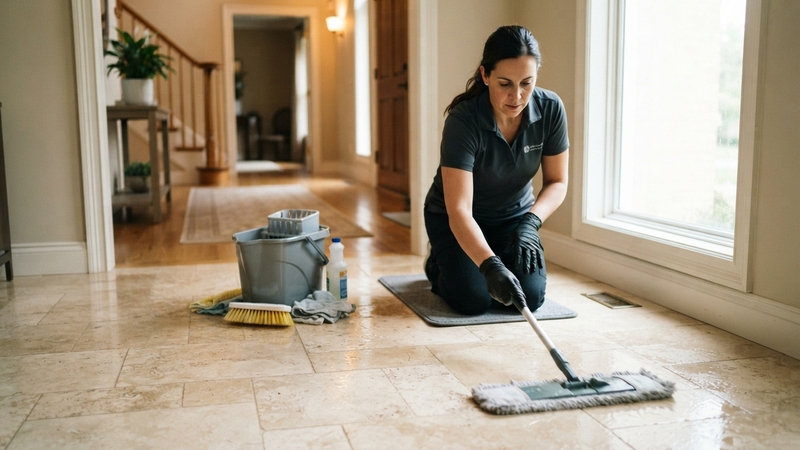
Daily sweeping and pH-neutral cleaning solutions handle surface-level dirt, but they cannot remove grime that has settled into grout lines or porous stone over months of foot traffic. Periodic professional attention addresses the buildup that routine mopping leaves behind, particularly in entryways and kitchens where spills are frequent.
Choosing the Right Cleaning Products
The wrong cleaner can cause more damage than no cleaning at all. A few guidelines help protect stone surfaces:
1. Use only pH-neutral cleaners formulated for natural stone.
2. Avoid vinegar, lemon-based products, and bleach on marble, travertine, and limestone.
3. Test any new product in an inconspicuous area before applying it fully.
4. Reapply sealant as recommended by the stone type and traffic level, since sealant breakdown is a leading cause of staining.
Based in Janesville, WI, SE Cleaners LLC serves customers across Madison, WI, offering a point of reference for residents comparing local stone-surface cleaning options.
Frequently Asked Questions
How often should stone tile be professionally cleaned? This depends on foot traffic and the stone type, but entryways and kitchens typically need more frequent attention than low-traffic rooms because sealant wears faster and dirt accumulates more quickly.
Can I use a steam mop on natural stone? Steam can force moisture into porous stone and weaken sealant over time, so manufacturers of natural stone products generally recommend avoiding steam cleaning on unsealed or lightly sealed surfaces.
What causes a white haze on stone tile? This is usually efflorescence, caused by moisture drawing mineral salts to the surface, and it often signals that sealant needs attention or that moisture is penetrating from beneath the tile.
Is sealing necessary for all stone types? Most natural stone, including marble, travertine, and limestone, benefits from sealing because of its porous structure, while density and porosity levels vary by stone type and should guide resealing frequency.