In brief:
- Clearing access, marking utility lines, and confirming lot boundaries ahead of time speeds up drilling day and reduces site damage.
- North Carolina requires permits before a well can be drilled, and site evaluation affects well placement relative to septic systems and property lines.
- Working with an experienced, licensed driller helps homeowners avoid costly delays tied to access issues or utility conflicts.
Preparing a property for a new water well mainly means clearing a path for heavy equipment, confirming where underground utilities run, and lining up required permits before the drill rig arrives. Homeowners who handle these steps early typically see fewer delays once drilling begins.
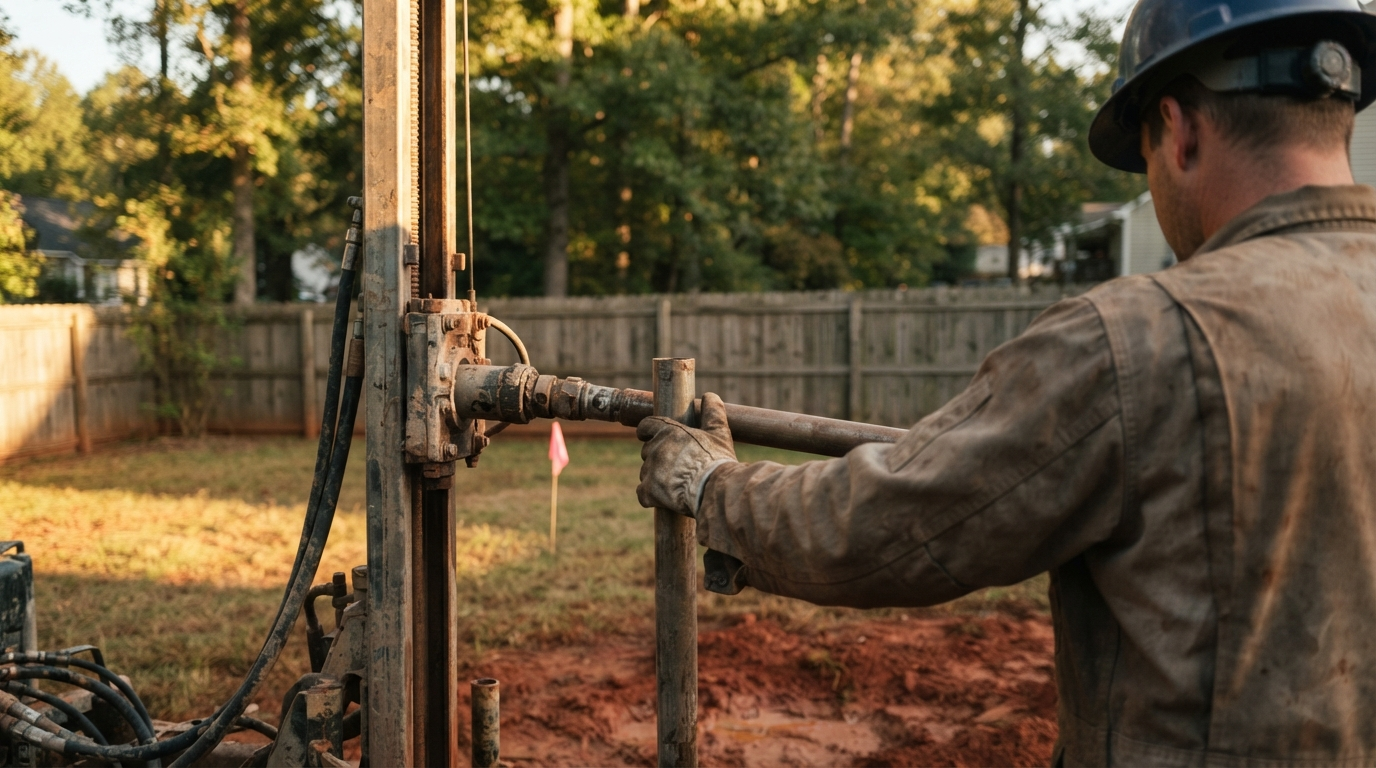
Anyone planning Residential Well Drilling in Greensboro NC should start by thinking about site access. Drill rigs and support trucks are large and need a clear, reasonably level path from the road to the drilling site, so overgrown brush, low-hanging branches, or soft ground can all slow the process down.
Confirm Permits and Site Requirements First
North Carolina regulates private well construction at the county and state level, and a permit is required before drilling starts. The North Carolina Department of Environmental Quality oversees private well construction standards, including setback distances from septic systems, property lines, and other potential contamination sources.
Before scheduling a drill date, property owners should:
- Check with the Guilford County environmental health office about local permitting requirements.
- Confirm setback distances between the proposed well location and septic tanks, drain fields, or neighboring wells.
- Review any homeowners association rules that might affect equipment access or well placement.
Skipping this step can mean relocating a drill site mid-project, which adds time and cost.
Clear Access and Mark Utility Lines
Drill rigs typically need at least 10 to 12 feet of clearance along the access path, plus enough open space at the well site itself for the rig, mud pits, and support vehicles. Removing fencing sections, trimming trees, or temporarily moving landscaping features ahead of time keeps the crew working instead of waiting.
Underground utilities are another critical piece of preparation:
- Call 811 before any digging begins to have gas, electric, and water lines marked.
- Note the location of septic tanks and leach fields, since drilling too close can violate setback rules.
- Flag any irrigation lines or buried cables that might not show up on a standard utility locate.
A clearly marked site reduces the chance of damaging existing infrastructure during drilling.
Evaluate Soil, Terrain, and Well Placement
Site conditions influence both where a well can be placed and how drilling proceeds once equipment is on-site. Rocky subsurface layers, steep grades, or high water tables common in parts of the Piedmont region can all affect drilling approach and timeline.
| Site Factor | Why It Matters | Homeowner Action |
|---|---|---|
| Soil and rock type | Affects drilling speed and casing needs | Ask driller about expected subsurface conditions |
| Slope and grade | Impacts equipment access and drainage | Identify flattest practical area near access road |
| Proximity to septic | Required setback distances apply | Measure distance before finalizing well location |
| Existing utilities | Risk of damage during excavation | Call 811 and mark all lines in advance |
A licensed well contractor typically reviews these factors during an initial site visit before confirming the final drilling location.
Plan for the Day of Drilling
Once permits are approved and the site is cleared, a few additional steps make the drilling day go smoothly. Property owners should plan for noise, equipment traffic, and temporary disruption to the yard near the drill site.
Helpful preparation includes:
- Securing pets and keeping children away from the active work zone.
- Providing clear access for delivery of casing materials and equipment.
- Confirming water disposal plans for drilling fluids, since local runoff rules may apply.
Most residential wells take one to a few days to drill and complete, depending on depth and subsurface conditions, though exact timelines vary by site.
Frequently Asked Questions
Do I need a permit before drilling a well in Greensboro? Yes. North Carolina requires a well construction permit, and local county environmental health offices review setback distances from septic systems and other structures before approving a site.
How much space does a drill rig need? Most rigs need a clear access path of at least 10 to 12 feet and open space at the well site for the rig and support equipment, though exact requirements vary by equipment type.
Can I choose exactly where my well is drilled? Placement depends on required setbacks from septic systems, property lines, and existing wells, so the final location is often a result of both homeowner preference and regulatory limits.
How long does residential well drilling typically take? Most projects take one to a few days depending on depth, subsurface conditions, and site accessibility.
Preparing a property correctly before drilling day can mean the difference between a smooth installation and unexpected delays. Homeowners who confirm permits, clear access, and mark utility lines early give their drilling crew the best chance to complete the job efficiently. For property owners in the area, Aqua Drill Inc. offers residential well drilling services and can help evaluate site conditions before work begins.