Simply put:
• A qualified masonry contractor should demonstrate verifiable experience, insurance coverage, and a clear scope of work before any project begins.
• Look for contractors who specialize in the specific service needed, whether that is chimney repair, tuckpointing, or retaining wall construction.
• Ask for references, written estimates, and documentation of licensing before signing an agreement.
Selecting a qualified masonry contractor means evaluating experience with brick, block, and stone work, confirming insurance status, and reviewing past projects similar to the one being planned. Homeowners who skip this verification step risk hiring someone unqualified to handle structural repairs or costly chimney work.
In Greenwood, IN, where seasonal temperature swings put regular stress on brick and mortar, choosing a contractor with regional experience matters more than it might in milder climates. Cade Masonry, Inc is one example of a firm offering brick, block, and stone work, chimney repair and cleaning, fire pits, retaining walls, tuck pointing, and concrete services in the area.
What to Verify Before Hiring
A masonry project involves structural work, so verification steps matter more than they would for cosmetic home updates. Before signing any contract, homeowners should confirm the following:
• Insurance coverage. A contractor should carry liability insurance to protect the property owner if damage occurs during the job.
• Specialization match. Some contractors focus on chimney and fireplace work, while others handle retaining walls or concrete flatwork; confirm the contractor’s listed services match the project.
• Written estimates. A detailed quote should outline materials, labor, and timeline rather than a vague lump sum.
• Local project history. Contractors familiar with regional soil and climate conditions are better positioned to recommend durable solutions.
Skipping any of these checks increases the risk of delays, budget overruns, or substandard workmanship that becomes apparent only after a freeze-thaw season.
Why Climate Conditions Shape the Work
Indiana’s freeze-thaw cycles are a recurring factor in regional masonry damage. Water that seeps into brick or mortar during warmer periods can freeze and expand, a process that puts pressure on the masonry and widens cracks, causing it to weaken, flake, and crumble over repeated cycles. This is why mortar joints and chimney crowns are often the first areas to show wear in homes across Greenwood, IN.
Because the more freeze-thaw cycles occur, the worse the damage becomes, especially in areas with frequent temperature swings, annual inspections are a practical way to catch deterioration before it spreads. A contractor familiar with these seasonal patterns can identify vulnerable mortar joints, chimney crowns, and retaining wall foundations during a routine visit rather than waiting for visible cracking.
Comparing Common Masonry Services
Different masonry needs call for different scopes of work. The table below outlines common service categories and what each typically addresses.
| Service Type | Typical Scope | When It’s Needed |
| Chimney repair and cleaning | Inspection, mortar repair, cleaning, crown sealing | Visible cracks, smoke smell, or reduced draft |
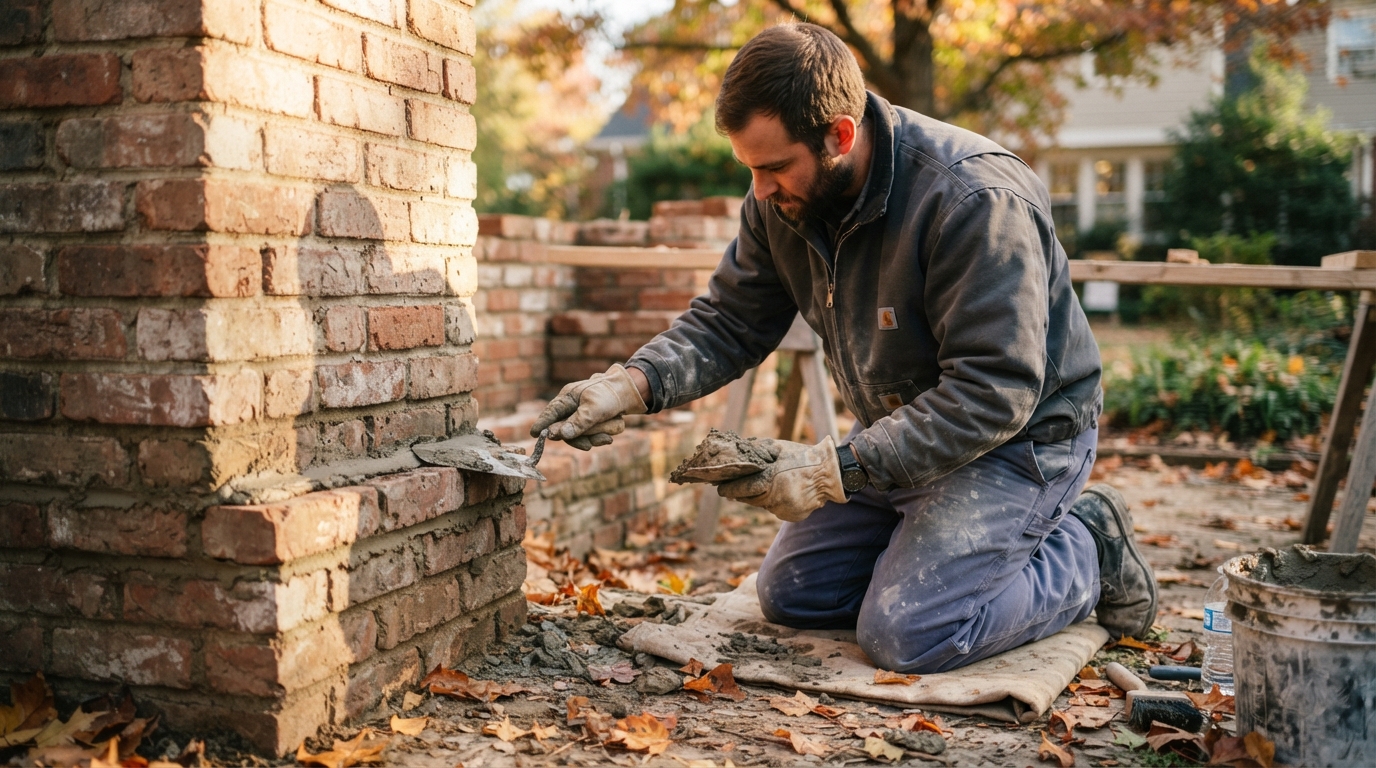
| Tuck pointing | Removing and replacing deteriorated mortar joints | Crumbling or missing mortar between bricks |
| Retaining walls | Design and construction of load-bearing stone or block walls | Sloped yards or erosion control needs |
| Concrete work | Pouring, finishing, or repairing flatwork and foundations | Cracked walkways, patios, or driveways |
Matching the project to the right service category helps homeowners request accurate quotes and avoid paying for work outside the actual need.
Frequently Asked Questions
How long does a typical chimney repair take? Timeframes vary based on damage extent, but most mortar repair and crown sealing projects are completed within a few days, weather permitting.
Is a permit required for retaining wall construction? Permit requirements depend on wall height and local building codes in Greenwood, IN; homeowners should confirm requirements with their municipality before construction begins.
What is the difference between tuckpointing and repointing? Both terms generally describe replacing deteriorated mortar joints, though some contractors use tuckpointing to refer specifically to a decorative finishing technique applied after repointing.
Can masonry repairs be done in winter? Cold-weather masonry work is possible but often requires temperature-controlled mortar mixes and additional curing precautions, so scheduling flexibility is worth discussing with a contractor.
Based in Whiteland, IN, Cade Masonry, Inc extends its masonry services to properties throughout Greenwood, IN, without maintaining a separate office or location there.
For published location and contact information, readers can Visit Cade Masonry Inc.
Choosing a masonry contractor involves more than comparing price quotes. Verifying insurance, matching service specialization to the project, and understanding how regional freeze-thaw conditions affect brick and mortar all contribute to a repair or installation that holds up over time. Homeowners who take these steps before hiring are better positioned to avoid costly rework and ensure the finished project meets both safety and durability standards.