Essentially:
• Residential solar energy lowers household electricity costs over time by generating on-site power and reducing grid reliance.
• Long-term value depends on system quality, correct sizing, panel orientation, and ongoing maintenance.
• National uptake data shows solar adoption and battery storage are both accelerating across New South Wales.
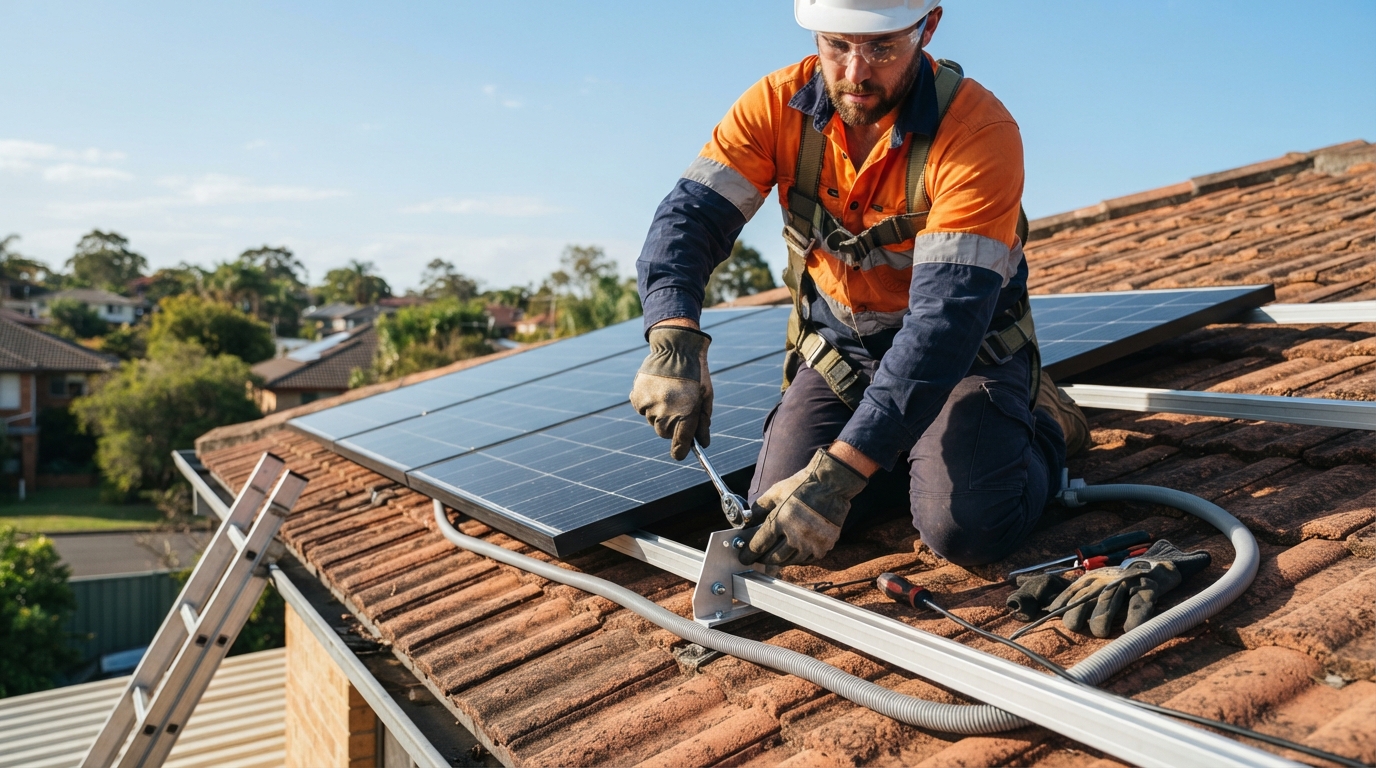
Residential solar energy reduces a household’s dependence on grid electricity by converting sunlight into usable power, which lowers energy bills and provides longer-term protection against rising tariffs. The value compounds over years rather than months, making it a long-horizon investment rather than a quick fix.
For homeowners in Lismore, NSW, weighing whether Residential Solar Energy is worth the upfront cost, the answer generally comes down to how the system is sized, installed, and maintained relative to actual household consumption. A correctly specified system pays dividends well beyond the first few years, particularly as electricity prices continue to shift.
How Residential Solar Energy Delivers Value Over Time
The financial case for solar strengthens the longer a system remains in operation, provided it continues performing close to its rated output. Panels typically carry performance warranties spanning two decades or more, which means the savings generated in later years are effectively “free” once the initial investment is recovered.
Several factors influence how quickly that payback occurs:
• Daily household energy consumption patterns
• System size relative to roof space and sun exposure
• Inverter efficiency and panel quality
• Local electricity tariff structures
• Availability of government rebates at time of installation
National data reinforces the scale of this shift. More than 4.3 million Australian households now have rooftop solar, with 2.6 GW of new rooftop capacity installed in 2025. Rooftop solar made up 14.2 per cent of the energy supplied to the grid in 2025, almost doubling over recent years. This growth reflects a broader pattern of households treating solar as a long-term utility offset rather than a short-term experiment.
Battery Storage and Its Role in Long-Term Returns
Pairing solar panels with battery storage changes the long-term equation significantly, since stored energy can be used after sunset instead of being exported to the grid at lower rates. More than 183,245 battery units were sold in the second half of 2025 alone, a four-fold increase compared to the same period in 2024. That surge suggests battery storage is becoming a standard companion to solar rather than an optional add-on.
Households with rooftop solar and a battery pay on average 323 dollars per quarter for their energy bills, according to the ACCC’s Inquiry into the National Electricity Market report from July 2025. For context on how this fits into the national renewable energy framework, the Clean Energy Council publishes ongoing data on rooftop solar and storage trends across Australia.
Comparing System Choices for Long-Term Performance
| Consideration | Standard Solar Only | Solar Plus Battery | Minimal/Undersized System |
| Daytime bill offset | Moderate to high | High | Low |
| Evening/night usage coverage | None | Significant | Minimal |
| Upfront cost | Lower | Higher | Lowest |
| Long-term savings potential | Moderate | Strongest | Limited |
This comparison is a general guide rather than a fixed outcome, since actual savings depend on household usage, roof conditions, and local climate factors specific to Lismore, NSW.
Maintenance Factors That Protect Long-Term Returns
Long-term performance is not automatic. Panels accumulate dust, pollen, and debris, while inverters and wiring can degrade without periodic checks. Regular maintenance helps sustain output closer to the system’s original specification, which directly affects the return generated over a 15 to 25 year lifespan.
Key maintenance practices include:
1. Periodic panel cleaning, especially after storms or extended dry periods
2. Inverter performance checks to confirm output matches expected generation
3. Inspection of wiring and connections for wear or corrosion
4. Monitoring system software or apps to catch underperformance early
Skipping these steps can quietly erode the savings a system was expected to deliver, which is why ongoing servicing is often treated as part of the original investment rather than an afterthought.
Frequently Asked Questions
How long do residential solar systems typically remain effective? Most panels carry manufacturer performance warranties of 20 to 25 years, though actual output gradually declines over that period rather than stopping abruptly.
Does solar still make financial sense without a battery? Yes, though savings are generally concentrated around daytime usage, since excess power is exported to the grid rather than stored for evening use.
What affects how quickly a solar system pays for itself? Household consumption habits, system size, panel orientation, and local tariff rates all influence payback timing, which varies by property.
Is maintenance really necessary for solar panels? Yes. Dust buildup, inverter faults, and wiring wear can reduce output over time, so periodic checks help protect the system’s long-term performance.
Local Context and Next Steps
Based in Ballina NSW, Col Groves Electrics serves customers across Lismore, NSW.
Current service area information for Click Here is published for households considering a long-term switch to solar.