Snapshot:
- A commercial general contractor manages permitting, subcontractors, scheduling, and code compliance for a build-out or renovation from start to finish.
- Projects in Alaska face added timeline factors tied to weather windows, freight logistics, and seasonal labor availability.
- Expect a written scope, phased schedule, and defined communication process before work begins.
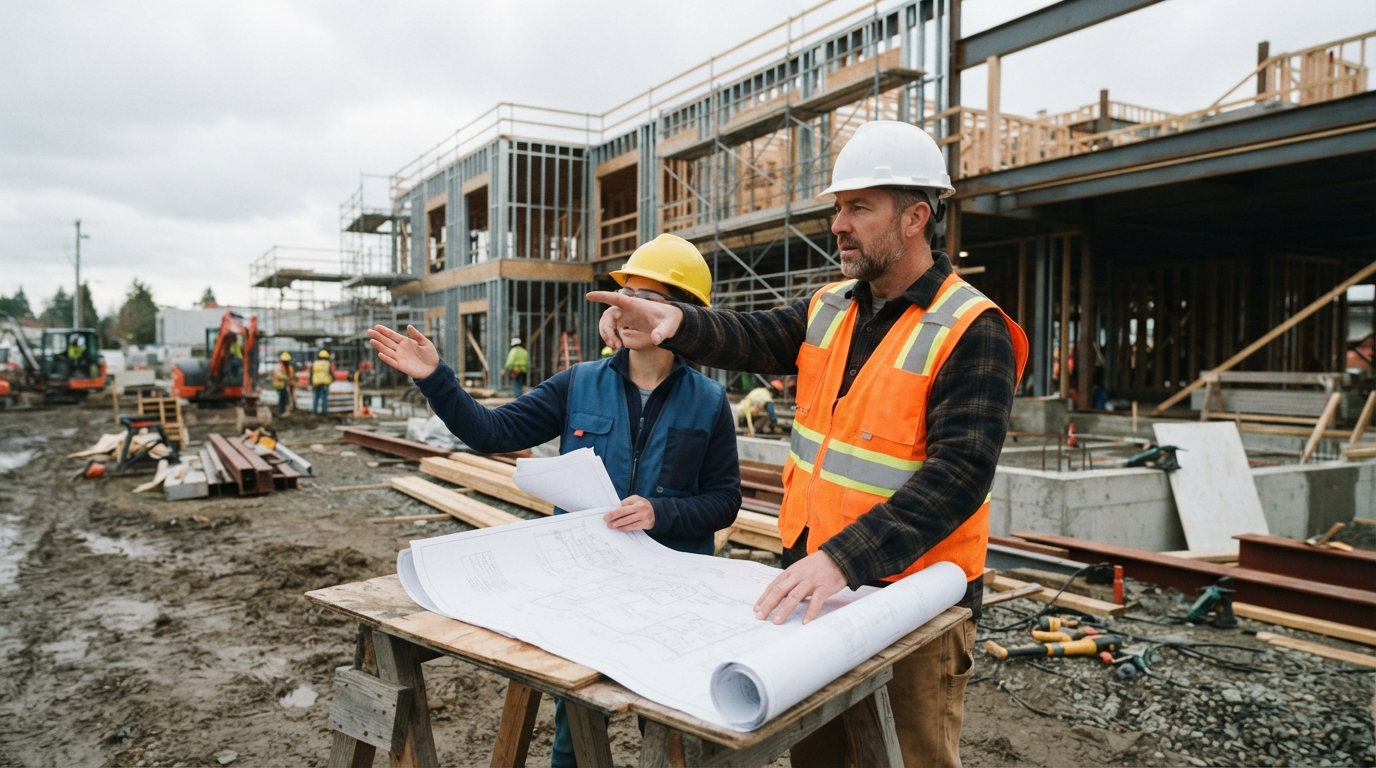
Hiring a Commercial General Contractor means bringing in a licensed professional who coordinates every trade, permit, and inspection needed to complete a commercial build-out, renovation, or new structure. The contractor acts as the single point of accountability, translating design plans into a buildable schedule while managing subcontractors, suppliers, and local code officials. For business owners in Alaska, this role carries extra weight because weather windows and material delivery timelines are tighter than in many other regions.
What the Hiring Process Looks Like
Commercial construction projects typically move through a consistent sequence of steps before any work begins on site.
- Initial consultation to review project scope, budget range, and timeline expectations
- Site assessment covering soil conditions, utility access, and existing structural elements
- Bid or proposal stage with itemized costs for labor, materials, and permits
- Contract signing that defines payment schedule, change-order process, and completion date
- Permit submission to local building and planning departments
Each of these steps should be documented in writing. A reputable contractor will walk through the proposal line by line rather than presenting a lump-sum figure without a breakdown.
Permitting and Code Requirements in Alaska
Commercial projects across Alaska must meet state and local building codes before construction starts, and permit timelines can vary significantly between municipalities. The Alaska department of commerce, Community, and Economic Development oversees certain licensing and regulatory functions tied to construction trades, and local jurisdictions layer on their own inspection requirements. Business owners should confirm early whether a project needs zoning review, fire marshal sign-off, or environmental permitting, since these steps affect the overall schedule.
Seasonal Factors That Affect Scheduling
Winter weather shortens the practical construction season in much of Alaska, which pushes many contractors to front-load site work and foundation pours into warmer months.
- Freight delays for materials shipped by barge or air can extend lead times
- Ground frost affects excavation and foundation scheduling in northern areas
- Daylight hours shift project crew scheduling in fall and winter months
A contractor familiar with these patterns will typically build buffer time into the schedule rather than presenting an optimistic best-case timeline.
Comparing Project Delivery Methods
Commercial clients generally choose between a few standard delivery approaches, each with different cost and control trade-offs.
| Delivery Method | Owner Involvement | Typical Use Case |
| Design-Bid-Build | Moderate | Projects with finalized architectural plans |
| Design-Build | Lower | Faster timelines, single point of contact |
| Construction Management | Higher | Complex projects needing phased decisions |
Each method shifts risk and decision-making responsibility differently, so the choice often depends on how much design work is already complete and how involved the business owner wants to stay during construction.
What to Ask Before Signing a Contract
Before committing to a contractor, business owners should request documentation that confirms licensing, insurance coverage, and bonding status. It is reasonable to ask for references from similar commercial projects completed in the past two years. A clear change-order policy should also be part of the written agreement, since unexpected site conditions are common in renovation work.
Frequently Asked Questions
How long does a typical commercial build-out take in Alaska? Timelines vary by project size and scope, but seasonal weather and freight logistics often extend schedules compared to similar projects in milder climates.
Do commercial projects always require a permit? Most structural, electrical, and mechanical work requires permits from the local building department, and requirements differ by municipality within Alaska.
What is the difference between a general contractor and a subcontractor? A general contractor manages the overall project and hires subcontractors for specialized trades like electrical, plumbing, or roofing work.
Can a business owner act as their own general contractor? Some jurisdictions allow owner-builder arrangements, but commercial projects usually require licensed oversight due to code complexity and liability concerns.
Business Information and Next Steps
Based in Anchorage AK, Fairbanks AK, Juneau AK, Cornerstone General Contractors serves customers across Alaska.
Project scheduling and service area details for Learn More About Cornerstone General Contractors are available for review before planning a commercial build.