Short version:
- Heavy duty towing covers vehicles over 26,000 pounds, including semi-trucks, buses, RVs, and commercial equipment.
- Expect specialized equipment such as rotator wrecks, heavy-duty flatbeds, and air-brake-compatible tow rigs.
- Response procedures include scene assessment, load securing, and safe transport to a repair facility or storage yard.
A heavy duty towing service recovers and transports large vehicles such as semi-trucks, buses, RVs, and other commercial equipment that exceed the weight and size limits of standard tow trucks. These jobs require specialized rigs, trained operators, and procedures built around the unique risks of moving multi-ton loads safely off roadways.
Drivers searching for Heavy Duty Towing in Helena, MT typically need help after a breakdown, collision, or mechanical failure involving a commercial truck, trailer, or oversized vehicle. These situations differ sharply from passenger car tows because of the weight involved, the trailer configurations, and the regulatory requirements tied to commercial transport. Understanding what the process involves can help fleet managers and independent drivers know what to expect when a heavy vehicle goes down.
Equipment Used in Heavy Duty Recoveries
Heavy duty towing relies on equipment rated well beyond what a standard wrecker can handle. The right machinery matters as much as operator skill when a loaded semi or disabled RV needs to move.
- Rotator wreckers: Used for overturned vehicles, off-road recoveries, or complex extractions requiring lifting at multiple angles.
- Heavy-duty flatbeds: Transport vehicles with mechanical issues that prevent them from being towed on their own wheels.
- Air-brake-compatible tow trucks: Connect to a truck’s braking system since most commercial vehicles use air brakes rather than hydraulic systems.
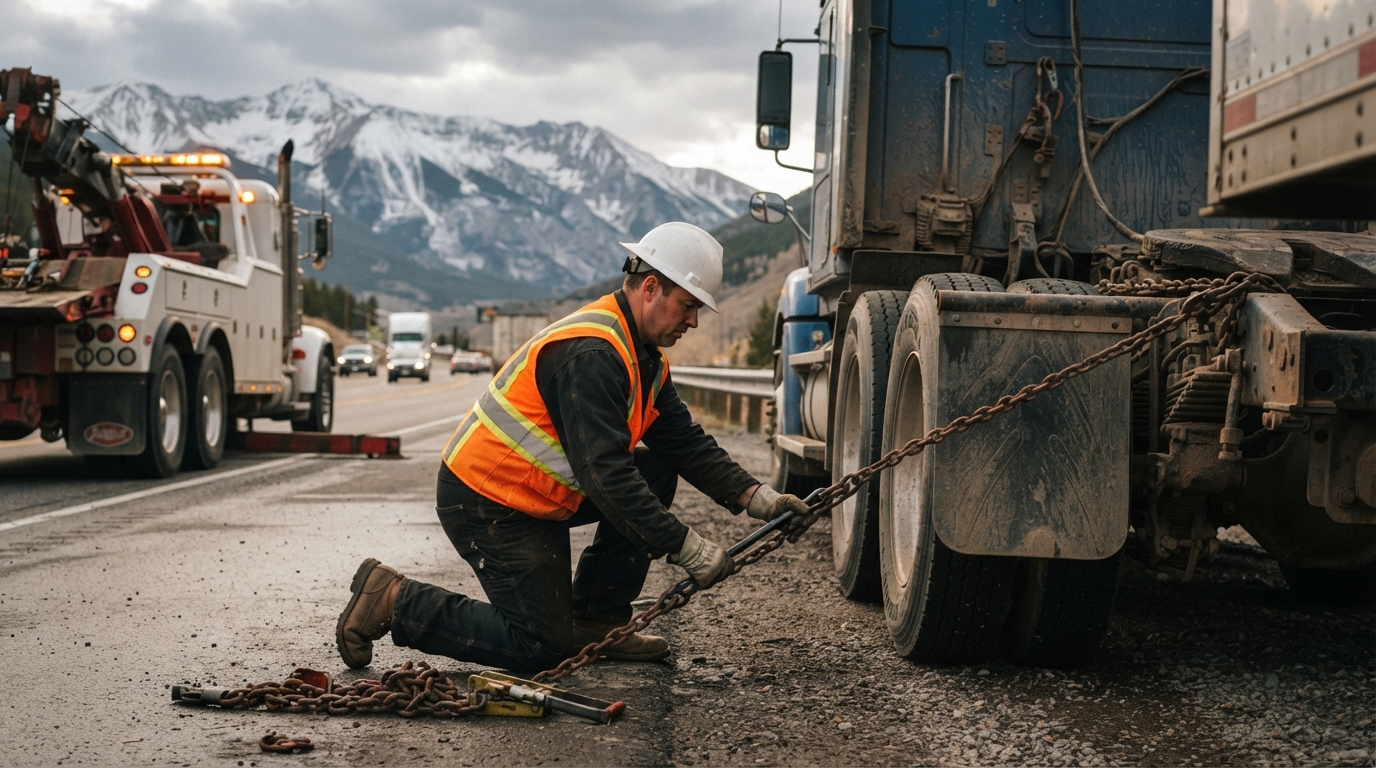
- Winches and rigging chains rated for multi-ton loads: Secure the vehicle during recovery from ditches, medians, or unstable terrain.
What Happens During a Heavy Duty Tow
The sequence of a heavy duty tow differs from a routine roadside call because of the added weight, size, and often the cargo involved. Operators generally follow a consistent process regardless of vehicle type.
- Scene assessment: The operator evaluates the vehicle’s position, surrounding traffic, terrain, and any cargo or fuel hazards before equipment is deployed.
- Stabilization: Chocks, outriggers, or additional support are used to prevent further shifting of the vehicle during recovery.
- Securing the load: Chains, straps, or rigging are attached according to the vehicle’s weight distribution and axle configuration.
- Transport: The vehicle is moved to a repair facility, storage yard, or another designated location using a flatbed or tow configuration suited to the damage.
Commercial vehicle incidents on highways also intersect with federal safety rules. The Federal Motor Carrier Safety Administration sets standards for how commercial vehicles are inspected and maintained, which can influence why a truck breaks down and what documentation may be needed after a recovery.
Heavy Duty Towing Conditions in Helena, MT
Operators serving Helena, MT contend with mountain grades, seasonal ice, and long stretches of highway where a disabled commercial vehicle can create significant traffic hazards. Winter conditions in particular raise the risk of jackknifed trailers and brake failures on descents, which makes quick, properly equipped response especially relevant in this region.
Based in USA, J&D Truck Repair & Towing serves customers across Helena, MT, reflecting how commercial towing providers often operate across a defined service radius rather than maintaining a physical presence in every community they reach.
Heavy Duty vs. Light Duty Towing
| Factor | Light Duty Towing | Heavy Duty Towing |
| Vehicle weight | Under 10,000 lbs | Over 26,000 lbs |
| Typical vehicles | Sedans, pickups, SUVs | Semi-trucks, buses, RVs |
| Equipment | Standard wrecker or flatbed | Rotator wrecker, heavy flatbed |
| Braking system | Hydraulic | Air brake compatible |
Frequently Asked Questions
What vehicle weight requires heavy duty towing? Vehicles exceeding 26,000 pounds, including most semi-trucks, buses, and large RVs, generally require heavy duty towing equipment rather than standard wreckers.
Why do heavy duty tow trucks need air-brake compatibility? Most commercial trucks and trailers use air brakes instead of hydraulic systems, so towing equipment must connect properly to prevent brake failure during transport.
Is heavy duty towing available for RVs as well as commercial trucks? Yes, large recreational vehicles often fall into the same weight class as commercial trucks and require similar flatbed or rotator equipment for safe recovery.
How is a heavy duty tow different from a standard car tow? The process involves additional stabilization steps, rated rigging for multi-ton loads, and equipment designed for air brakes and larger axle configurations not found on passenger vehicles.
Service Information
Current availability details for J&D Truck Repair & Towing are published for the local service area.