Short version:
• Squealing, grinding, pulsing, or a soft brake pedal are the clearest signs that brake pads, rotors, or fluid need attention.
• Cold-weather driving in Whitehorse, YT can accelerate brake wear due to road salt, grit, and frequent stop-and-go conditions.
• Catching Auto Brakes wear early helps prevent costlier rotor or caliper damage later.
A vehicle’s brakes rarely fail without warning. Most worn components send clear signals through sound, feel, or dashboard alerts well before stopping power is seriously compromised, which is why recognizing the earliest symptoms matters for everyday safety.
Catching problems with auto brakes early typically means a simpler, less expensive repair. Waiting until grinding sets in or the pedal sinks to the floor often turns a routine pad replacement into a rotor or caliper repair, which adds both cost and downtime.
Common Warning Signs of Brake Wear
Brake wear tends to show up through a predictable set of symptoms. Drivers who know what to listen and feel for can usually catch problems before they become safety hazards.
• Squealing or high-pitched noise while braking, often from a built-in wear indicator
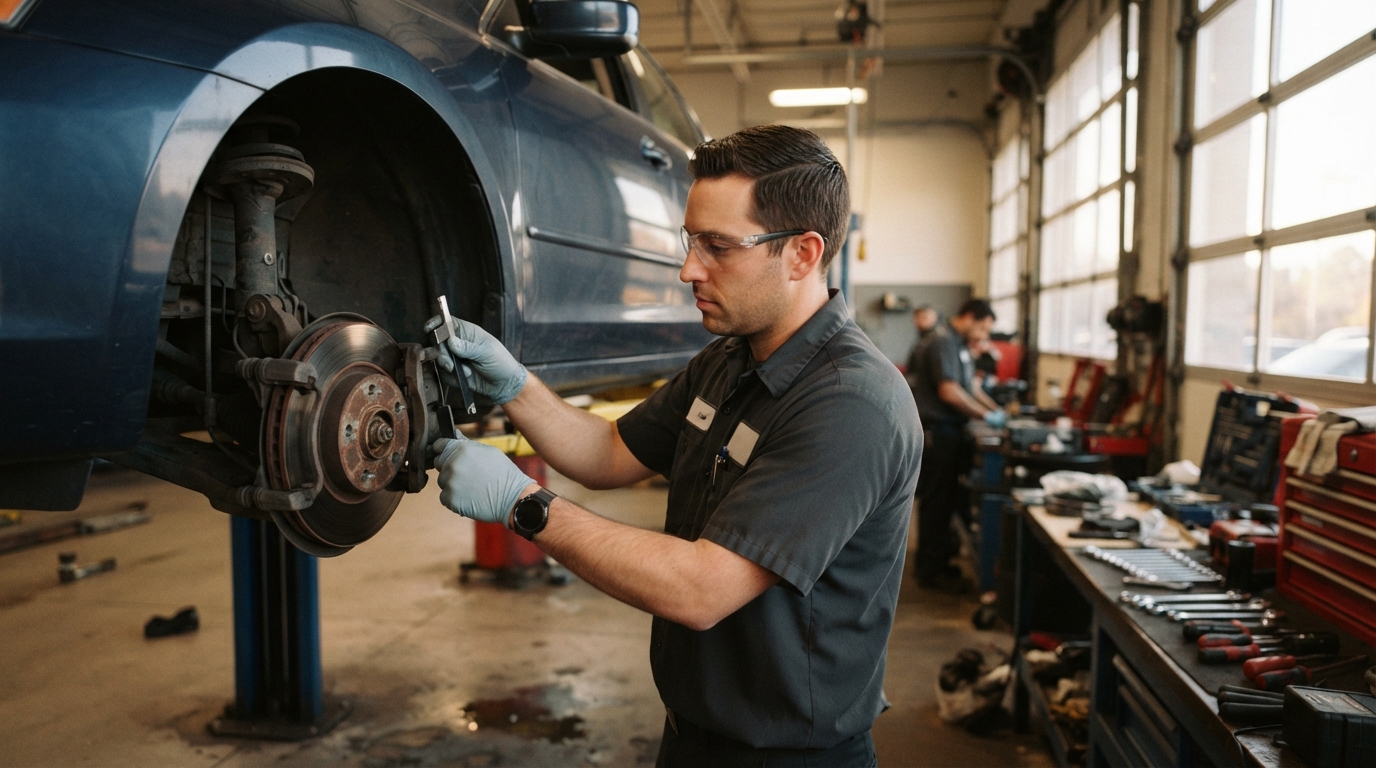
• Grinding or metal-on-metal sound, signaling pads worn past the lining
• Vibration or pulsing in the brake pedal or steering wheel during stops
• A soft, spongy, or sinking brake pedal
• The vehicle pulling to one side when braking
• A burning smell near the wheels after repeated stops
These symptoms align with widely cited guidance on brake inspection. Warning signs include squealing noises, pedal vibrations, longer stopping distances, and a dashboard brake light. When brake pads are worn out, a vibration can often be felt in the brake pedal when braking.
Why Cold-Climate Driving Accelerates Wear
Seasonal road conditions in Whitehorse, YT place extra demand on braking systems. Winter grit, salt, and frequent short trips combine to wear pads and corrode hardware faster than mild-climate driving.
• Road salt and sand accelerate corrosion on rotors and calipers
• Short, frequent stops in stop-and-go traffic generate extra heat cycling
• Cold starts can stiffen brake fluid and rubber seals over time
• Snow and ice buildup around wheels can mask early wear symptoms
Seasonal vehicle checks are part of standard cold-weather safety guidance. The NHTSA winter driving tips page recommends that drivers familiarize themselves with the vehicle’s safety technologies and how they perform in wintry conditions, including knowing whether the vehicle has an antilock brake system and learning how to use it properly.
How Brake Wear Shows Up on the Dashboard
Modern vehicles increasingly rely on electronic sensors to flag brake wear before a driver notices sound or feel changes. These indicators are not a substitute for a visual or physical inspection, but they do provide an early alert.
| Warning Type | What It Usually Means | Recommended Action |
| Squeal or chirp | Wear indicator contacting rotor | Schedule inspection soon |
| Grinding sound | Pad material fully worn | Stop driving, inspect immediately |
| Pedal vibration | Warped or uneven rotor | Have rotors checked |
| Dashboard brake light | Low fluid or worn pad sensor | Check fluid level, inspect pads |
As one technical summary notes, the red brake warning light can indicate low brake fluid level, engagement of the parking brake, hydraulic system pressure loss, or in vehicles with electronic pad wear sensors, excessively worn brake pads. A soft or spongy pedal deserves particular attention, since a soft or spongy brake pedal may indicate air in the brake lines or a fluid leak, and in some cases it could mean low brake fluid levels.
Frequently Asked Questions
How often should brake pads be inspected? Inspection intervals vary by vehicle and driving conditions, but checking pads, rotors, and fluid during routine maintenance visits helps catch wear before it becomes a safety issue.
Is it safe to keep driving with squealing brakes? Squealing is typically an early warning and not an immediate emergency, but it should prompt an inspection soon rather than being ignored indefinitely.
What does grinding during braking usually mean? Grinding generally indicates the pad material has worn through, allowing metal-to-metal contact, which can damage rotors and reduce stopping power.
Can cold weather make brake problems worse? Yes. Road salt, grit, and frequent short stops common in colder climates can accelerate corrosion and wear on brake components.
Business Info and Next Steps
Based in Edmonton, AB, Buzz Box Liners & Truck Accessories serves customers across Whitehorse, YT.
A current listing of brake system parts and related components for Click here is published for reference.