Briefly:
• Cracking, potholes, and drainage failures are the most common pavement problems in Frankfort properties, often caused by freeze-thaw cycles and poor water runoff.
• A qualified contractor diagnoses the root cause (base failure, moisture, or age) before choosing between patching, resurfacing, or full replacement.
• Addressing small cracks and drainage issues early prevents costly structural repairs later.
Frankfort’s freeze-thaw winters and heavy seasonal rain put constant stress on asphalt and concrete surfaces, leading to cracking, potholes, and drainage failures that worsen quickly without attention. A Local Paving Contractor Frankfort NY can identify which problems are cosmetic and which signal deeper structural damage before recommending a repair plan.
Property owners who understand the warning signs can act before a minor issue becomes a major expense. The sections below cover the pavement problems most frequently reported on residential driveways, commercial lots, and local roadways, along with how a qualified crew typically addresses each one.
Cracking Patterns and What They Signal
Not all cracks mean the same thing, and the repair approach depends heavily on the type observed. According to the FHWA Distress Identification Guide, pavement cracking falls into several distinct categories, each tied to a different cause.
• Fatigue (alligator) cracking : Interconnected cracks resembling reptile skin, usually caused by repeated heavy traffic loading over a weakened base.
• Block cracking : Large rectangular sections caused by asphalt shrinkage during temperature swings.
• Longitudinal and transverse cracking : Straight-line cracks often linked to poor joint construction or seasonal contraction rather than traffic load.
Left untreated, cracks allow water to seep beneath the surface, which accelerates base deterioration and eventually produces potholes. Industry guidance on understanding asphalt pavement distresses notes that identifying the crack type and cause correctly is necessary before selecting an appropriate repair method.
Potholes and Surface Deterioration
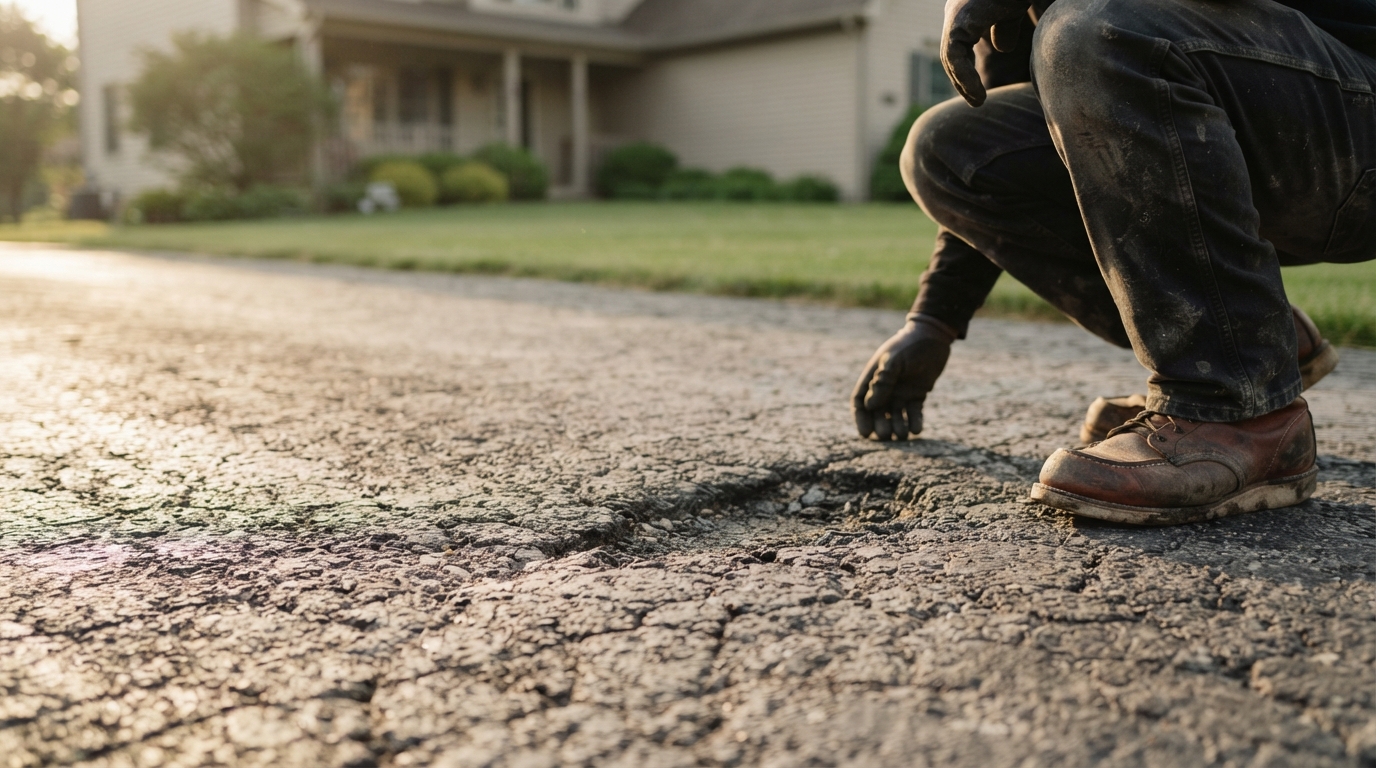
Potholes form when water-weakened pavement layers break apart under vehicle weight, creating bowl-shaped depressions that expand with every freeze-thaw cycle. Research compiled by the Transportation Research Board describes potholes as forming when fragments of asphalt concrete are displaced by traffic, usually after cracking has already compromised the surface.
Common contributors to pothole formation include:
1. Thin asphalt layers that cannot support heavy or repeated loads.
2. Standing water that infiltrates through existing cracks.
3. Age-related binder breakdown that weakens surface cohesion.
A contractor repairing potholes typically removes the damaged material down to a stable base, then compacts new asphalt in layers rather than simply filling the hole, since surface patches without proper base repair tend to fail again within a season.
Drainage and Base Failures
Poor drainage is one of the most overlooked causes of pavement failure in the region. Water trapped beneath a driveway or parking lot softens the subgrade, leading to sinking, rutting, and accelerated cracking even on relatively new pavement.
| Problem | Likely Cause | Typical Fix |
| Standing water pools | Inadequate slope or clogged drains | Regrading and drainage system installation |
| Edge cracking | Soil movement beneath pavement perimeter | Edge reinforcement and base repair |
| Sinking or rutting | Weak subgrade saturated by moisture | Excavation and base reconstruction |
Correcting drainage issues often involves regrading the surface or installing a dedicated system to route water away from the pavement structure before any resurfacing work begins.
Choosing Between Patching, Resurfacing, and Replacement
Deciding how to repair a damaged surface depends on the extent of the problem and the condition of the base layer underneath.
• Patching works for isolated potholes or small cracks where the base remains intact.
• Resurfacing adds a new asphalt layer over an existing surface that has moderate wear but a sound foundation.
• Full replacement becomes necessary when the base has failed, when cracking covers most of the surface, or when drainage problems have caused widespread subgrade damage.
A contractor familiar with Frankfort’s soil and climate conditions can usually determine which option offers the most durable, cost-effective outcome for driveways, parking lots, or roadways.
Frequently Asked Questions
How can I tell if a crack needs professional repair? Cracks wider than a quarter inch, those forming interconnected patterns, or cracks near pavement edges typically indicate structural issues that benefit from professional assessment rather than DIY filler.
Why does my driveway develop potholes every winter? Freeze-thaw cycles force water trapped in existing cracks to expand and contract repeatedly, which breaks apart the surrounding asphalt and creates the bowl-shaped holes.
Is sealcoating enough to fix surface cracking? Sealcoating helps prevent new moisture damage on a sound surface but does not repair existing structural cracks or base failures, which require patching or resurfacing first.
How often should a parking lot be inspected for pavement issues? Annual inspections, ideally after winter, help catch cracking and drainage problems early before they expand into larger, costlier repairs.
Getting a Professional Assessment
Pavement problems rarely improve on their own, and the right repair approach depends on an accurate diagnosis of what is happening beneath the surface. Central Paving provides residential, commercial, and road paving, concrete, and drainage services for properties throughout the Frankfort area. Property owners weighing repair options can Click Here to review service details and request an assessment of current pavement conditions.