Quick take:
- Selecting the right elevator service plan protects building occupants, keeps you compliant with Texas state law, and reduces costly unplanned repairs.
- Buildings in Dickinson and the greater Houston area have access to full-service elevator providers offering maintenance, repair, modernization, and emergency response.
- Matching your plan to your building type and usage frequency is the most practical starting point.
The right elevator service in Houston, TX plan depends on your building’s elevator type, traffic volume, and compliance obligations under Texas state law. Getting that match right from the start prevents downtime and keeps costs predictable.
What Texas Law Requires Before You Choose a Plan
Before comparing service tiers, building owners in Dickinson need to understand the legal baseline. Elevators and related equipment must be inspected every 12 months, and the inspection report along with all required documents and fees must be submitted to the Texas Department of Licensing and Regulation (TDLR) to receive a Certificate of Compliance.
Failure to have an annual inspection may subject the building owner to administrative penalties of up to $5,000 per day for each violation. That makes routine maintenance more than a best practice; it is a legal requirement.
Every five years, a Category 5 full-load test must also be performed. This testing is required only on electric traction elevators under the ASME Safety Code A17.1, as adopted by Texas. You can review the full TDLR elevator inspection requirements on the TDLR Elevator Safety FAQ.
Core Services to Look for in Any Elevator Plan
A full-service elevator provider should cover maintenance, service, repair, emergency response, modernizations, upgrades, and new installations. Not every building needs all of those at once, but your provider should be capable of handling each as your needs evolve.
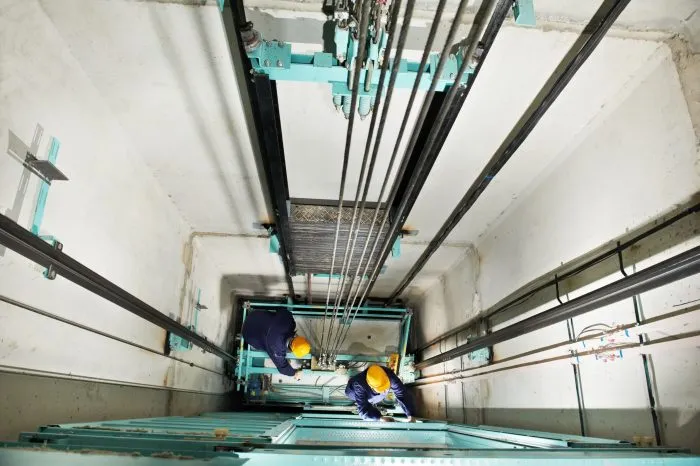
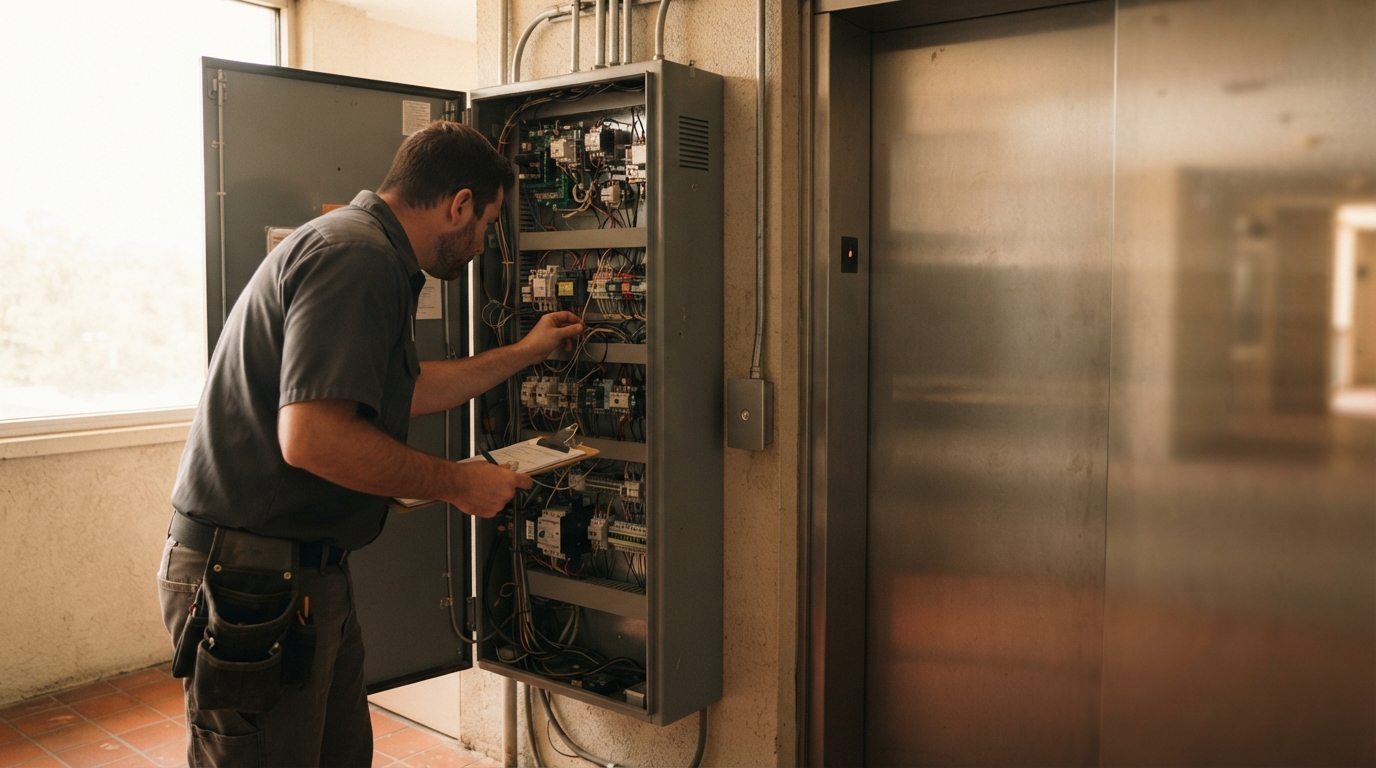
A professional maintenance plan typically includes routine inspections of hoist cables, belts, and sheaves; testing of door operators and safety edges; lubrication of moving components; checking electrical connections and control panels; reviewing emergency communication systems; and verifying proper leveling and ride performance.
For industrial and commercial buildings specifically, look for a provider that works across multiple equipment types. Services should cover hydraulic, electric traction, rack and pinion, dumbwaiters, elevating platforms, limited use limited application elevators, and custom cabs and doors.
Comparing Service Plan Tiers for Commercial Buildings
The right tier depends on how frequently your elevators run and how many units you operate. The table below outlines how plan scope typically scales with building needs.
| Plan Type | Best For | Typical Coverage |
|---|---|---|
| Basic Maintenance | Low-traffic buildings, single unit | Annual inspection, lubrication, safety checks |
| Standard Service | Mid-size commercial or multi-unit | Monthly visits, parts monitoring, compliance docs |
| Full-Service Contract | High-traffic or industrial facilities | All of the above plus 24/7 emergency response |
| Modernization Add-On | Aging equipment, traction systems | Component upgrades, control system replacement |
Commercial elevators typically require monthly maintenance, while residential elevators may only need quarterly service. High-traffic buildings benefit from more frequent inspections.
One feature worth prioritizing is digital service tracking. A proprietary customer portal that lets clients track service history, schedule maintenance, and receive inspection reminders adds meaningful transparency to the service relationship.
How to Evaluate a Provider for Your Dickinson Building
Not all elevator contractors operating in the Houston and Galveston corridor are registered with TDLR. Businesses that install, repair, maintain, or alter elevators in Texas must register with TDLR as an Elevator Contractor. Confirm registration before signing any service agreement.
Beyond licensing, consider the provider’s equipment range. Experienced technicians should work on all brands and types of equipment, ensuring compliance with state and local requirements. A provider limited to one brand or system type may not be the right fit for a mixed-equipment building.
Emergency response capability is another differentiator. 24/7 emergency response availability is a standard expectation for any full-service contract covering a commercial or industrial facility. Confirm response time commitments in writing before committing to a plan.
Finally, ask about the provider’s industry background. A veteran-owned company that positions itself as an industrial and commercial elevator specialist brings a different depth of field experience than a general contractor who handles elevators as a secondary service.
Frequently Asked Questions
How often do commercial elevators need maintenance in Texas? The frequency of elevator maintenance depends on the system type and usage level. In most commercial properties, service is scheduled monthly.
What happens if my building misses its annual inspection? Texas Health and Safety Code Section 754.019 requires annual inspections, and failure to comply may subject the building owner to administrative penalties of up to $5,000 per day for each violation.
What types of elevators should a full-service provider be able to handle? A capable provider should specialize in electric traction elevators, rack and pinion elevators, electric dumbwaiters, elevating platforms, custom elevator cabs and doors, elevator equipment and controls, limited use limited application elevators, and hydraulic elevators.
Does my service plan need to cover modernization? It depends on your equipment age. If you operate electric traction elevators, the five-year Category 5 load test may reveal components that need upgrading. For needs such as modernizations, upgrades, refurbishments, or new installations, your provider should be equipped to handle those as part of a long-term service relationship.
Get a Service Plan That Fits Your Building
Buildings in Dickinson sit in a service corridor that runs between Galveston and Houston, giving property managers access to specialized elevator contractors without traveling far. Located between Galveston and Houston, the area supports providers that specialize in vertical transportation and lift equipment. Choosing a local contractor with direct knowledge of TDLR compliance timelines and regional building conditions is a practical advantage.
Dynamic Elevators is a veteran-owned elevator company based in Dickinson that serves commercial, industrial, and institutional buildings across the Houston and Galveston area. Contact them to discuss a service plan matched to your building’s equipment type and usage requirements.