At glance:
• Steel rollers are the preferred choice for heavy industrial material handling because of their high strength, long service life, and ability to support substantial loads.
• Key selection factors include roller diameter, wall thickness, bearing type, and finish (standard steel, galvanized, or stainless).
• Custom-sized options are widely available to match specific conveyor frame dimensions and application requirements.
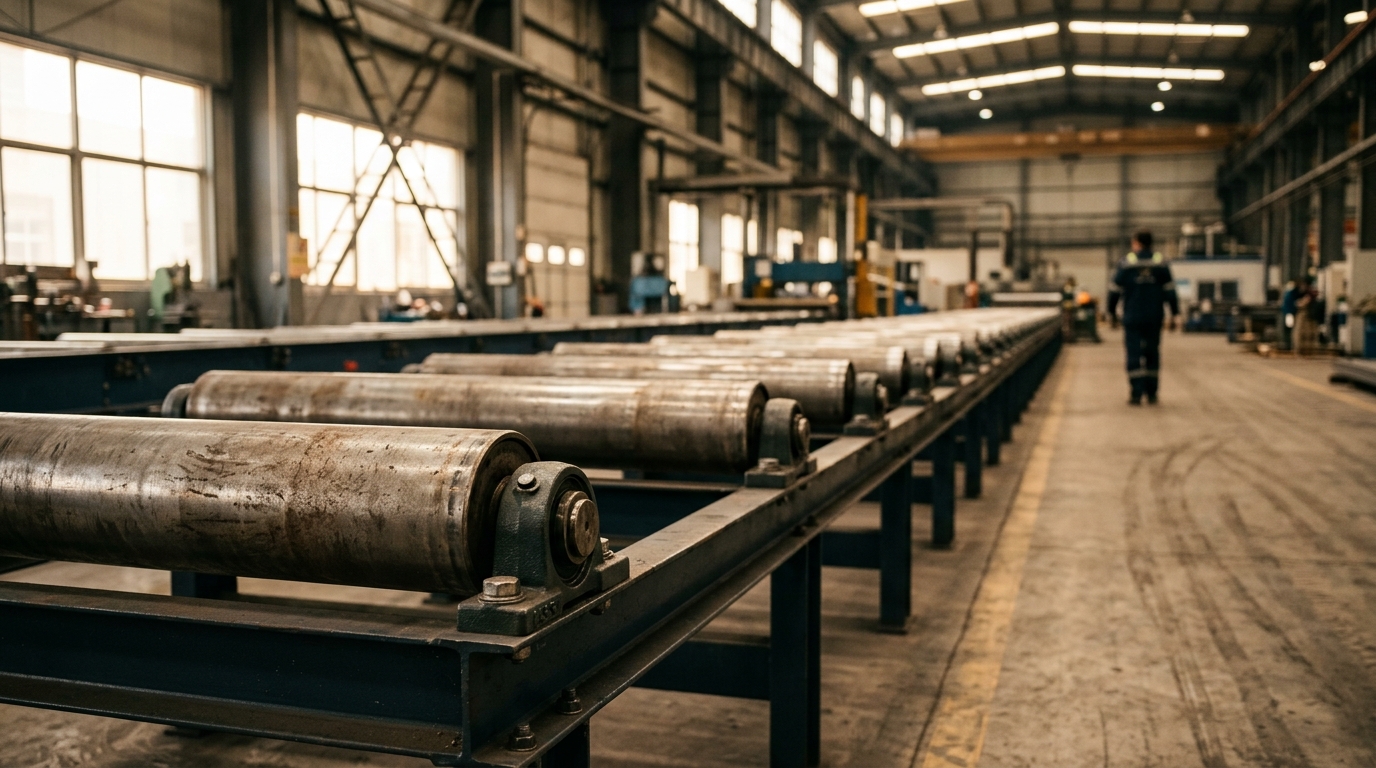
When a facility needs a conveyor component that can handle continuous heavy loads without frequent replacement, steel is consistently the top material choice. Steel rollers provide high strength, durability, and load-bearing capacity, making them ideal for heavy-duty industrial use.
Metal conveyor rollers are employed to move heavy loads across warehouses, factories, and plants, giving high strength, durability, and service life that make them best for demanding operations like automotive assembly, mining, and material handling, where high load capacity and wear resistance are absolute requirements. When selecting steel rollers for your operation, matching the roller specifications to your actual load and environment is what separates reliable long-term performance from premature failure.
How Load Capacity Is Determined
Steel conveyor rollers can support loads from hundreds to thousands of pounds based on diameter, wall thickness, and bearing strength. These three variables work together, and adjusting any one of them changes the overall capacity of the system.
The load capacity of industrial conveyor rollers depends on multiple interconnected factors. Roller materials influence strength and resistance to wear. Steel conveyor rollers comfortably manage heavier loads compared to plastic alternatives. Roller bearings equally impact load capacities, and quality bearings handle rotational friction better, resulting in smoother operations and higher permissible loads.
Key sizing principles to follow:
• Selecting the proper size involves coordinating roller length with conveyor frame width and diameter with load capacity requirements. Heavy loads are accommodated with large diameters, while lightweight product applications use smaller rollers.
• Heavy-duty units with strengthened parts provide maximum capacity.
• Bearing selection (precision vs. semi-precision) directly affects both speed rating and axle deflection tolerance.
Comparing Steel Roller Finish Options
The finish applied to a steel roller determines how it performs in specific environments. Metal rollers are available in steel, stainless steel, and galvanized finishes. Steel provides strength, stainless steel offers resistance to corrosion, and galvanized rollers offer additional protection.
|
Finish Type |
Best Environment |
Primary Advantage |
|
Standard Steel |
Dry indoor facilities |
Maximum load strength |
|
Galvanized Steel |
Outdoor or humid areas |
Added corrosion protection |
|
Stainless Steel |
Food, chemical, washdown |
Hygiene and corrosion resistance |
The choice depends on load capacity, environment, and conveyor system use. For facilities that handle food products or require frequent washdowns, stainless is the practical choice. For general warehousing or manufacturing in dry environments, standard steel or galvanized options deliver the best value.
Gravity vs. Powered Roller Systems
Both gravity-fed and powered configurations use steel rollers, but the application requirements differ significantly.
• Gravity systems rely on incline and product weight to move items. They are lower cost and require less maintenance, making them well-suited for loading docks and assembly staging areas.
• Powered systems use motorized drives to move items at controlled speeds, which is critical for high-throughput operations or lines that require precise timing.
Options include gravity-driven and powered choices, in addition to rollers that can carry a very diverse selection of materials. Steel conveyor rollers can work on both temporary and permanent installations; for outdoor options, steel can be a great choice.
Compliance is also a consideration. ANSI B20.1-57 is the industry standard Safety Code for Conveyors, Cableways, and Related Equipment, which OSHA references for various aspects of conveyor safety. Ensuring your roller system meets applicable standards protects both your workforce and your operation.
Custom Rollers and What to Ask Before Ordering
Off-the-shelf rollers cover most standard applications, but custom sizing is often necessary for non-standard conveyor frames or specialized loads.
Custom-sized steel conveyor rollers can be made. Steel conveyor roller manufacturers customize length, diameter, and axle size to fit particular conveyor configurations. This customization is done to ensure compatibility, increase efficiency, and comply with industry standards.
Before placing an order, confirm these specifications:
1. Frame width and required roller face length
2. Maximum load per roller (not just total system load)
3. Operating environment (temperature, moisture, chemical exposure)
4. Drive method (gravity, belt-driven, chain-driven, or motorized)
5. Required bearing type and axle diameter
Proper system design allows safe and efficient material handling under severe industrial and warehouse operating conditions.
Frequently Asked Questions
What industries use steel conveyor rollers most often?
The automotive, mining, and industrial industries use custom rollers for material handling and durability. Warehousing, food processing, and chemical handling are also common sectors.
Can steel rollers be used outdoors?
Yes. Steel conveyor rollers can work on both temporary and permanent installations, and for outdoor options, steel can be a great choice. Galvanized or coated finishes add extra protection against moisture.
How do I know if I need heavy-duty rollers?
If your application involves continuous operation, high unit weights, or abrasive materials, heavy-duty rollers with thicker walls and higher-capacity bearings are the appropriate choice. Due to the inherent strength of steel, these rollers can handle extreme weights and harsh conditions without significant wear.
Are replacement parts readily available?
Along with steel conveyor rollers, high-quality parts and replacements are available, making it easy to maintain or upgrade your system at competitive prices.
For facilities across the USA that need dependable material handling components, working with an experienced supplier makes a measurable difference in system longevity and uptime. View Conveyor Systems & Engineering, Inc. to learn about its decades of hands-on expertise in standard and custom roller projects, with consultative support from specification through delivery. Reach out to discuss your application requirements and find the right roller solution for your operation.