In short:
- A sleep center evaluates conditions such as sleep apnea, insomnia, restless leg syndrome, and narcolepsy using overnight or at-home diagnostic testing.
- Common tests include polysomnography (PSG), home sleep apnea testing, CPAP titration studies, and multiple sleep latency testing.
- Testing results guide a physician’s recommended treatment plan rather than serve as a standalone fix.
Persistent fatigue, loud snoring, or trouble staying asleep often prompt a referral to a sleep center for formal evaluation. These facilities use a mix of overnight monitoring and at-home devices to measure brain activity, breathing patterns, and movement during sleep, giving physicians objective data rather than relying on symptoms alone.
Evaluations typically begin with a clinical consultation before any testing is scheduled. A sleep specialist reviews symptoms, medical history, and risk factors to determine which diagnostic approach fits the patient’s situation, since not every sleep complaint requires the same type of monitoring.
Core Diagnostic Tests Explained
Several standardized tests form the backbone of sleep disorder evaluation. Each targets a different physiological concern and is selected based on the symptoms a patient reports.
- Polysomnography (PSG): An overnight, lab-based study that tracks brain waves, heart rate, breathing, and oxygen levels to diagnose conditions such as sleep apnea or periodic limb movement disorder.
- Home Sleep Apnea Test: A simplified, self-administered version of monitoring used when obstructive sleep apnea is suspected and more complex testing is not required.
- CPAP Titration Study: A CPAP titration study is an overnight sleep study used to set continuous positive airway pressure therapy.
- Multiple Sleep Latency Test (MSLT): This test checks for excessive daytime sleepiness by measuring how quickly a person falls asleep.
These tests align with the evaluation types available through the Murrieta Sleep Center operated by which addresses conditions including sleep apnea, restless leg syndrome, insomnia, and narcolepsy for patients in the surrounding area.
What Happens During and After Testing
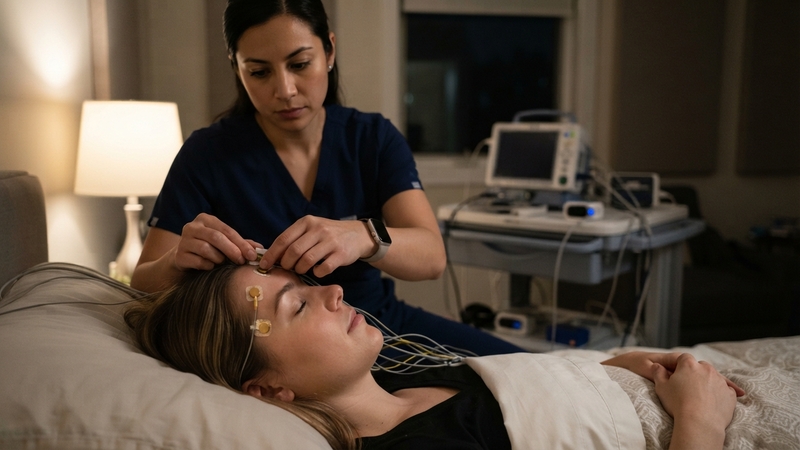
Preparation for an in-lab study usually involves sensor placement on the scalp, face, chest, and legs before the patient settles in for the night. A sleep technologist places sensors on the scalp, face, chest, and legs to record brainwaves and other body activity during sleep. Home-based testing skips this step, allowing patients to apply simplified equipment in their own bedroom.
Once data is collected, a physician reviews the results to confirm or rule out a specific disorder. According to AASM accreditation standards, accredited facilities are expected to meet defined benchmarks for staff qualification, environment, and evidence-based practice. Diagnostic findings then inform next steps, which may include a titration study, lifestyle adjustments, or referral for further evaluation.
Comparing Common Sleep Tests
| Test Type | Setting | Primary Purpose |
| Polysomnography (PSG) | In-lab, overnight | Diagnose sleep apnea, parasomnias, limb movement disorders |
| Home Sleep Apnea Test | At-home | Screen for obstructive sleep apnea |
| CPAP Titration | In-lab, overnight | Calibrate air pressure for CPAP therapy |
| MSLT | In-lab, daytime | Measure excessive daytime sleepiness |
Choosing between these options depends on symptom severity and whether a physician needs the broader data set only a lab setting can provide.
Local Access and Service Area
Residents searching for evaluation options in Murrieta, CA often find that specialized sleep diagnostic services are based outside the immediate area yet still accessible to local patients. Based in USA, Integra Health, PC serves patients across Murrieta, CA through its Temecula-based sleep diagnostic practice. This distinction matters for scheduling, since appointments and in-lab testing occur at the practice’s physical facility rather than a separate Murrieta, CA location.
Frequently Asked Questions
How long does a sleep study take to complete? Overnight studies generally run through a full night of sleep, with data collection continuing until the patient wakes or the technologist ends the session.
Is a home sleep apnea test as accurate as an in-lab study? Home tests are effective for screening straightforward obstructive sleep apnea cases, but complex conditions such as narcolepsy or parasomnias typically require in-lab polysomnography for a complete picture.
Do I need a referral before scheduling a sleep test? Most sleep centers require a consultation with a sleep specialist first, since the physician determines which test matches the patient’s reported symptoms.
What should I bring to an overnight sleep study? Comfortable sleepwear, any current medications, and personal items that support a normal bedtime routine are typically recommended for an overnight visit.
Final Thoughts and Next Steps
Diagnostic testing remains the most reliable way to confirm what is disrupting a person’s sleep, since symptoms alone rarely point to a single cause. Scheduling details for Integra Health, PC are available for patients weighing their evaluation options.