Briefly:
• Tile and grout restoration may include cleaning, grout repairs, caulk replacement, and suitable sealing.
• A shower assessment should distinguish surface wear from leaks or damage beneath the tile.
• The scope, products, and curing conditions determine when the bathroom can be used again.
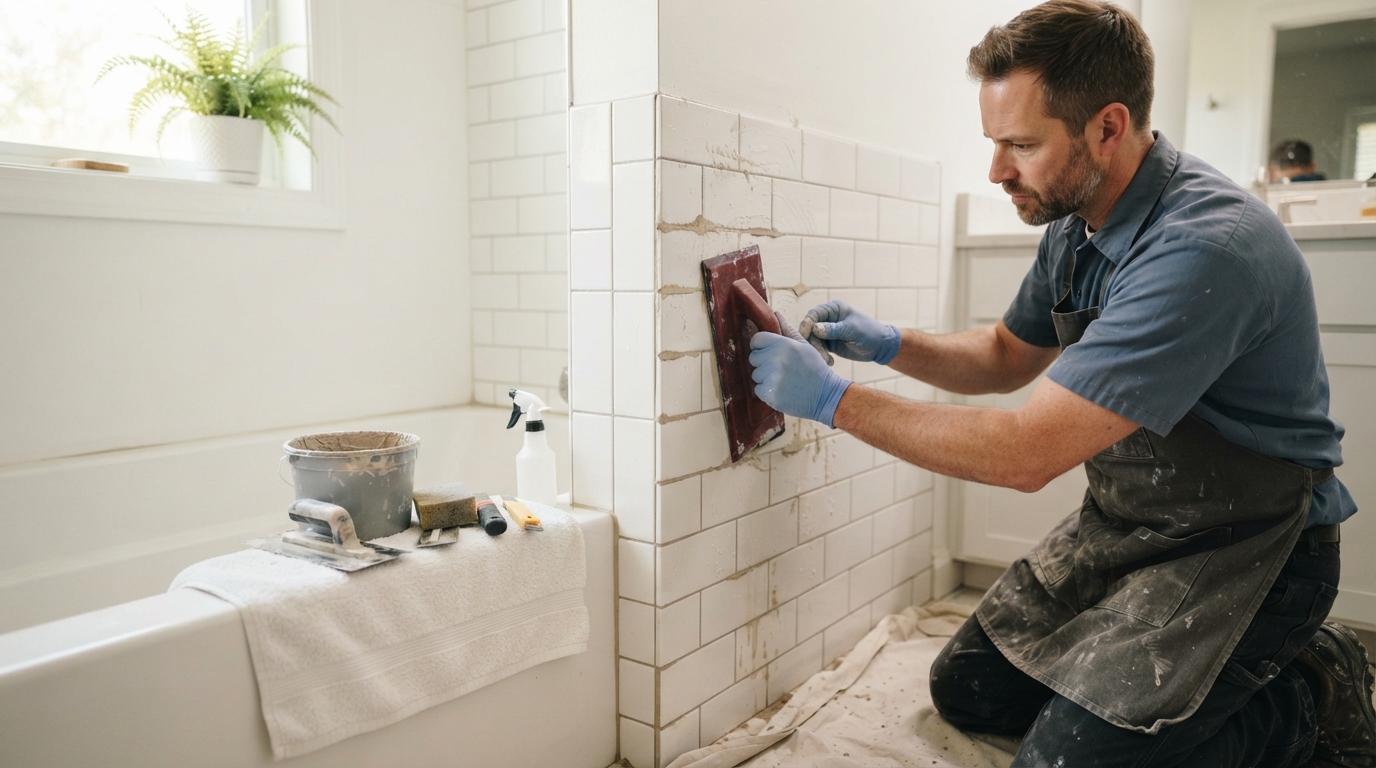
Bathroom tile and grout restoration addresses worn or damaged finishes without necessarily replacing the whole bathroom. It may improve appearance and repair localized surface problems. Leaks, loose substrates, or failed waterproofing can require additional work beyond cleaning, regrouting, or sealing.
Shower surfaces face frequent moisture and wear. Groutsmith of NW Florida offers shower repair and restoration services. Before approving work, ask whether the problem is limited to tile, grout, or caulk, or whether a leak or underlying defect needs separate repair.
Initial Assessment and Problem Identification
The first step is to assess the surface and discuss symptoms such as staining, repeated cracking, loose tiles, or leaks. Areas to check include:
• Cracked or crumbling grout between tiles
• Discolored or moldy caulk around tub and shower edges
• Loose or hollow sounding tiles, which can have several causes and need further assessment.
• Soft flooring, damaged drywall, or signs of persistent leakage that may require investigation beyond surface restoration.
The assessment should guide the repair scope. The Environmental Protection Agency advises addressing moisture sources as well as cleaning up mold. Replacing stained grout alone will not solve an ongoing leak or other moisture problem.
Surface Preparation and Repair Work
Preparation depends on the condition of the tile and the proposed repair. The contractor should explain which grout or caulk will be removed, how adjacent surfaces will be protected, and whether damaged tiles need replacement.
1. Clean and prepare the areas selected for restoration.
2. Remove failed grout or caulk where replacement is needed, using methods appropriate to the tile and joints.
3. Complete agreed tile or grout repairs after any underlying problems have been addressed.
4. Allow surfaces and repair materials to dry or cure as specified before the next step.
Pensacola’s humidity can affect drying conditions. Follow the product instructions and the contractor’s written directions rather than assuming every bathroom is ready on the same schedule.
Regrouting Caulking and Sealing
Replacement grout restores the joints between tiles where appropriate. Flexible joints, such as changes of plane, may need a suitable sealant rather than rigid grout. Ask which materials will be used and whether the chosen grout or tile requires a sealer.
|
Stage |
Main work |
What to confirm |
|---|---|---|
|
Assessment |
Review surfaces and reported symptoms |
Whether underlying damage needs investigation |
|
Surface repairs |
Replace failed grout, caulk, or selected tiles |
Which areas and materials are included |
|
Sealing if suitable |
Treat grout or tile as specified |
Product compatibility and cure requirements |
|
Final review |
Check the agreed work and cleanup |
Written care and return to use instructions |
A grout sealer can help resist stains and absorption, but it is not a substitute for the waterproofing system beneath a shower. Sealing will not repair a failed shower pan, hidden leak, or damaged substrate.
Timeline and Maintenance Expectations
Some surface work may be completed in one visit, while larger repairs need several stages. Completion time and the time before water exposure are separate questions. Confirm both when approving the estimate.
• Localized repairs depend on the size of the area and access to sound surrounding material.
• Regrouting may involve preparation, installation, cleaning, and curing before the shower can be used.
• Sealing, when appropriate, must follow the grout and sealer manufacturers’ timing requirements.
Use cleaning products suited to the tile, grout, and sealant, and ventilate the bathroom to reduce lingering moisture. Follow product specific maintenance guidance and have recurring cracks or leaks assessed rather than repeatedly covering them.
Frequently Asked Questions
When is more than surface restoration needed?
Repeated leaks, loose tiles, soft flooring, or damaged walls can indicate a problem beneath the finish. Ask what investigation or repair is needed before restoring grout.
Does restoration always require removing tile?
No. Sound tiles may remain in place during cleaning or localized grout work. Damaged tiles or underlying failures can change the scope.
How long should a shower stay dry after the work?
Follow the written instructions for the products used. Drying and curing depend on the materials and conditions, so there is no single wait time for every project.
Groutsmith of NW Florida offers shower repair and restoration in the Pensacola area. Ask for an assessment that explains the work included, any excluded repairs, and the care instructions afterward.
For published contact and location information, Find Groutsmith of NW Florida on Google.