The gist:
- An engine machine shop performs precision machining on blocks and cylinder heads, including resurfacing, boring, crack repair, and welding, that most general repair garages cannot handle in-house.
- These services restore flatness, sealing surfaces, and structural integrity needed before an engine is reassembled.
- In Jacksonville, FL, shops offering this work typically serve both gasoline and diesel engines across multiple vehicle makes.
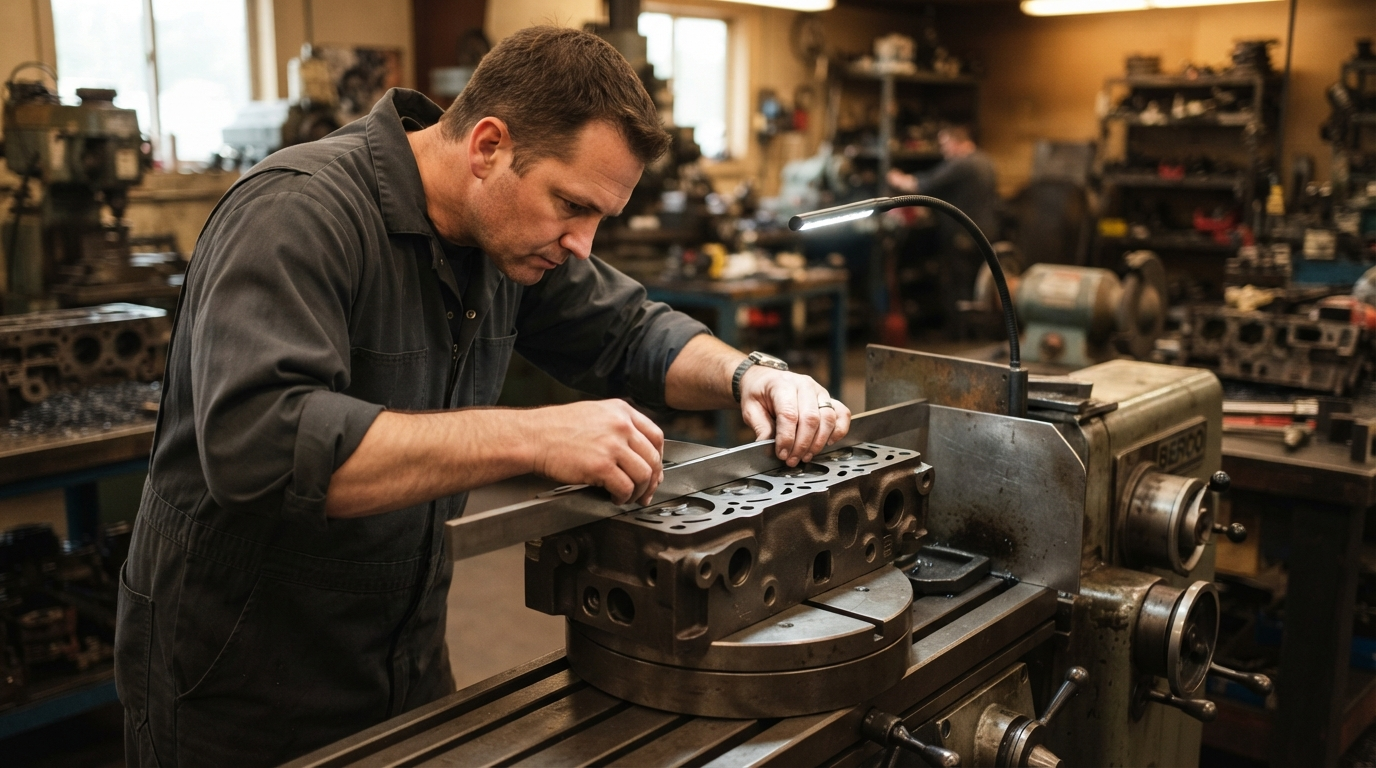
An engine machine shop specializes in precision work on engine blocks and cylinder heads that falls outside the scope of a typical repair garage, such as resurfacing, boring, and crack repair. This distinction matters because general mechanics usually diagnose and replace parts, while a dedicated Engine Machine Shop has the specialized equipment to recondition the metal components themselves rather than simply swapping them out.
Vehicle owners searching for this type of service are often dealing with a cracked block, a warped cylinder head, or a full engine rebuild after overheating or gasket failure. Machine shops that handle this work use large stationary equipment, such as surfacing mills and boring machines, that is not typically found in a standard auto repair bay, according to a Wikipedia overview of automobile repair shops.
What an Engine Machine Shop Actually Does
The core function of this type of shop is restoring worn or damaged metal engine components to a usable condition instead of replacing them outright.
- Block inspection, cleaning, and crack detection
- Cylinder head welding to repair cracks and restore structural integrity
- Cylinder boring and sleeve installation
- Valve grinding and seat installation
- Surface resurfacing for both blocks and heads
Several of these processes appear consistently across industry guidance on cylinder head service, which notes that cylinder head gaskets rely on deck surface finish in order to properly seal combustion force and coolant, and if resurfacing is required, shops often need to send the work to a local engine machine shop equipped for it.
Why Resurfacing and Flatness Matter
Surface flatness is one of the most technical parts of engine machining, and getting it wrong can cause a repair to fail quickly.
- A straightedge and feeler gauge are used to measure warpage before any cutting begins.
- Flatness must be measured before reinstalling a cylinder head, with typical diesel guidelines allowing maximum warpage of about 0.002 to 0.004 inches across the surface, though exact tolerances vary by engine manufacturer.
- Milling is generally preferred over wet grinding for resurfacing because milling is faster, allows greater cutting depths per pass, and does a superior job of achieving a fine surface finish.
- Once resurfaced, the head is checked against OEM thickness minimums, since removing too much material can compromise the component.
Skipping these checks risks a repeat gasket failure, which is why this stage is treated as a precision process rather than a quick cosmetic fix.
Service Scope and Local Considerations
| Service Category | Typical Work Performed | Equipment Involved |
|---|---|---|
| Block repair | Crack welding, boring, sleeve fitting | Boring bars, welding rigs |
| Cylinder head service | Resurfacing, valve jobs, crack welding | Surfacing mills, pressure testers |
| Full engine rebuild | Combined block and head machining plus reassembly | Multiple precision stations |
Shops offering this kind of machining in Jacksonville, FL commonly work across a range of makes and both gasoline and diesel platforms, since the underlying machining principles (flatness, bore tolerance, crack repair) apply broadly regardless of engine brand. Vehicle owners in the area typically bring in a block, head, or full engine for inspection before a shop determines whether resurfacing, welding, or replacement is the more practical path forward.
Automotive Block and Head Welder, a long-standing machine shop in the Jacksonville, FL area, is listed as working on makes including Chevrolet, Ford, Honda, Jeep, Nissan, and Toyota, alongside diesel and marine engine work.
Frequently Asked Questions
How is an engine machine shop different from a regular auto repair shop? A machine shop focuses on reconditioning the metal engine components themselves, using specialized milling and boring equipment, while a general repair shop more often diagnoses issues and replaces parts.
When does a cylinder head need resurfacing instead of replacement? Resurfacing is appropriate when warpage and surface damage fall within manufacturer tolerances; if the head is too thin after repeated machining or has severe cracking, replacement is usually recommended instead.
What engine types can be serviced at a machine shop in Jacksonville, FL? Shops in the area commonly handle both gasoline and diesel engines across multiple vehicle makes, along with some marine engine applications, depending on the equipment available.
Is engine machining only needed after a breakdown? Not always. Machining work is also performed during planned engine rebuilds, performance builds, or routine reconditioning when a block or head is disassembled for other reasons.
Final Note on Engine Machining Services
Engine machining is a technical process that depends on precise measurement and the right equipment, which is why this work is typically handled by a dedicated shop rather than a general repair garage. Current availability details for Automotive Block and Head Welders are published for the local service area.