Recap:
- Countertop replacement involves removing old surfaces and installing new material such as quartz, granite, or marble, with costs tied to size, material, and labor.
- Homeowners in Cincinnati, OH can expect material selection, measuring, fabrication, and installation as the core steps in a typical project.
- Comparing material durability, maintenance, and price per square foot helps narrow choices before requesting a quote.
Replacing a kitchen or bathroom countertop means removing the existing surface and installing a new slab or panel in materials like quartz, granite, quartzite, or marble, typically completed through measuring, fabrication, and professional installation. A countertop replacement service generally includes removal of the old surface, precise measuring for cutouts such as sinks and cooktops, slab or panel fabrication, and final installation and sealing. Homeowners in Cincinnati, OH researching this type of project often want to understand how material choice, kitchen size, and labor affect the final cost before requesting quotes.
What a Kitchen Countertop Upgrade Project Typically Involves
A standard replacement follows a sequence that keeps disruption to the kitchen or bathroom to a minimum.
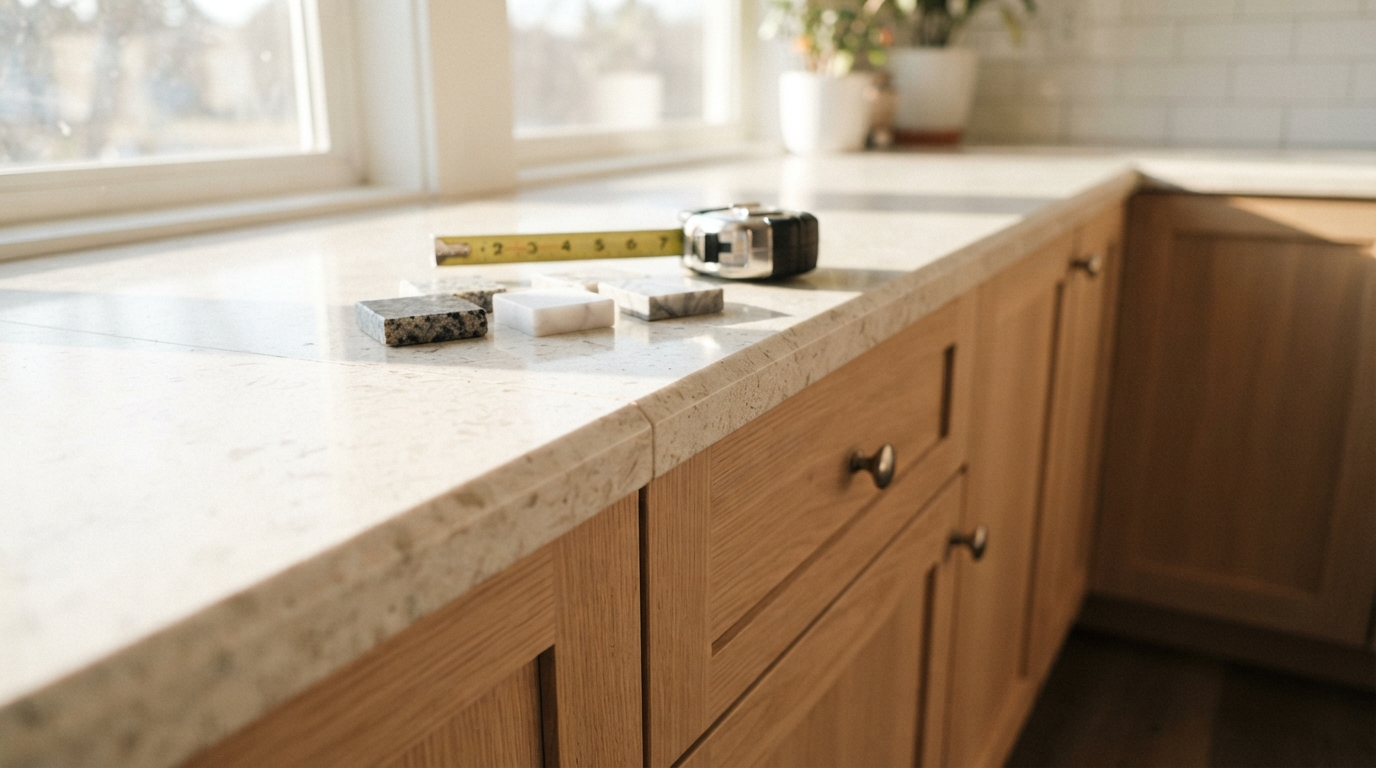
- Initial measurement of the existing countertop footprint, including sink and appliance cutouts
- Material selection among options such as granite, quartz, quartzite, or marble
- Removal and disposal of the old countertop
- Fabrication of the new slab to match the measured template
- Installation, leveling, and sealing of seams and edges
According to HomeAdvisor’s 2025 cost data, installing new kitchen surfaces costs an average of $3,160, with most homeowners paying between $1,882 and $4,484 depending on the material and size. Removal and disposal fees typically add another $50 to $300 to the overall material and labor costs.
Comparing Common Countertop Materials
Material choice affects not only upfront cost but also long-term maintenance and durability. The table below summarizes general characteristics of materials commonly used in replacement projects.
| Material | Typical Use Case | Maintenance Level | Relative Cost Position |
| Granite | Natural stone look, heat resistant | Medium (periodic sealing) | Mid to high |
| Quartz | Engineered stone, consistent pattern | Low | Mid to high |
| Quartzite | Natural stone, durable surface | Medium | High |
| Marble | Classic appearance, softer stone | High (prone to etching) | High |
Granite, quartz, quartzite, and marble each offer different trade-offs between appearance, upkeep, and price, which is why many providers walk homeowners through samples before fabrication begins.
Questions to Ask Before Hiring a Provider
Selecting a provider involves more than comparing price quotes. A few practical questions can clarify what is included in a project estimate.
- Does the quoted price include removal and disposal of the old countertop?
- Are sink and cooktop cutouts factored into the estimate, or billed separately?
- What is the expected timeline between template measurement and final installation?
- Is sealing included for natural stone materials such as granite or marble?
- What warranty, if any, covers the installed material and labor?
Clear answers to these questions help homeowners in Cincinnati, OH avoid unexpected charges once fabrication and installation begin. Kitchen renovation projects that include new countertops are also a common part of broader remodeling work, and the U.S. Census Bureau’s American Housing Survey tracks kitchen remodeling activity as part of its ongoing housing data collection, offering context on how common these updates are among existing homes.
Frequently Asked Questions
How long does a typical countertop installation take? Most projects move from initial measurement to installation within one to three weeks, depending on material availability and fabrication schedules.
Can kitchen surfaces be upgraded without replacing cabinets? Yes, new surfaces can be installed independently of cabinet work, provided the existing cabinet base is structurally sound and level.
Is quartz or granite better for a kitchen countertop? Quartz requires less sealing and maintenance, while granite offers natural stone variation; the better choice depends on maintenance preference and budget.
Do kitchen surface installation projects require permits? Interior surface upgrades generally do not require permits, though plumbing or electrical changes associated with the project may require separate approval.
Finding a Provider for Kitchen Surface Installation
Home Collective Direct is based in Covington, KY and serves customers in Cincinnati, OH for cabinet, countertop, flooring, and related home improvement projects.
Published project and service area details are available through Home Collective Direct for homeowners comparing providers before scheduling a consultation. Replacing a countertop is a defined project with predictable steps, and understanding material options, cost ranges, and the typical installation sequence allows homeowners to plan a realistic budget and timeline before work begins.