Summary first:
• Residential gutters protect a home’s foundation, siding, and landscaping by channeling roof runoff away from the structure.
• Seamless aluminum K-style systems are the most common residential choice, with half-round and designer styles available for specific architectural needs.
• Choosing the right size, material, and installer matters more in Alexandria’s climate, where heavy spring rain and winter snow load put extra stress on drainage systems.
Homeowners searching for residential gutters in Alexandria, MN are usually trying to solve one problem: water pooling near the foundation, spilling over fascia boards, or damaging landscaping after a storm. The right gutter system, sized and installed correctly for the home’s roofline, resolves that problem by directing rainwater into downspouts and away from the structure.
Minnesota’s seasonal swings make gutter selection more than a cosmetic decision. Heavy spring rainfall and winter ice buildup put real stress on drainage systems, and an undersized or poorly seamed gutter can let water back up under shingles or run down exterior walls. A resource guide on gutters and downspouts from the Pacific Northwest National Laboratory’s Building America Solution Center notes that a few inches of rain on a roof can generate thousands of gallons of runoff, which is why properly sized gutters and downspout placement matter as much as material choice.
What Residential Gutter Styles Are Available
Not every home needs the same gutter profile. Roofline pitch, architectural style, and runoff volume all influence which style performs best.
• 5-inch K-style gutters : The standard choice for most residential homes, balancing capacity and cost.
• 6-inch K-style gutters : Built for steeper roofs or larger homes that generate heavier runoff.
• Half-round gutters : Often chosen for older or historic-style homes where a rounded profile fits the architecture.
• Designer series gutters : A higher-end option for homeowners prioritizing curb appeal alongside function.
Seamless construction is the common thread across these styles. A gutter run with no seams along its length has fewer joints where leaks typically start, which reduces the long-term risk of water escaping before it reaches the downspout.
How Material and Size Affect Long-Term Performance
Material choice affects how a gutter system holds up against Minnesota winters, ice formation, and repeated freeze-thaw cycles.
| Material/Style | Typical Use | Maintenance Consideration |
| 5-inch aluminum K-style | Standard residential roofs | Low maintenance, resists rust |
| 6-inch aluminum K-style | Larger roofs, heavier rainfall | Handles higher water volume |
| Half-round | Period or traditional-style homes | Smooth profile, fewer debris pockets |
| Designer series | Homes prioritizing appearance | Premium look, similar upkeep needs |
Sizing a gutter correctly depends on roof square footage, pitch, and local rainfall intensity rather than guesswork. An undersized system on a larger roof will overflow during heavy storms regardless of how well it is installed.
Protecting Gutters With Guards and Routine Maintenance
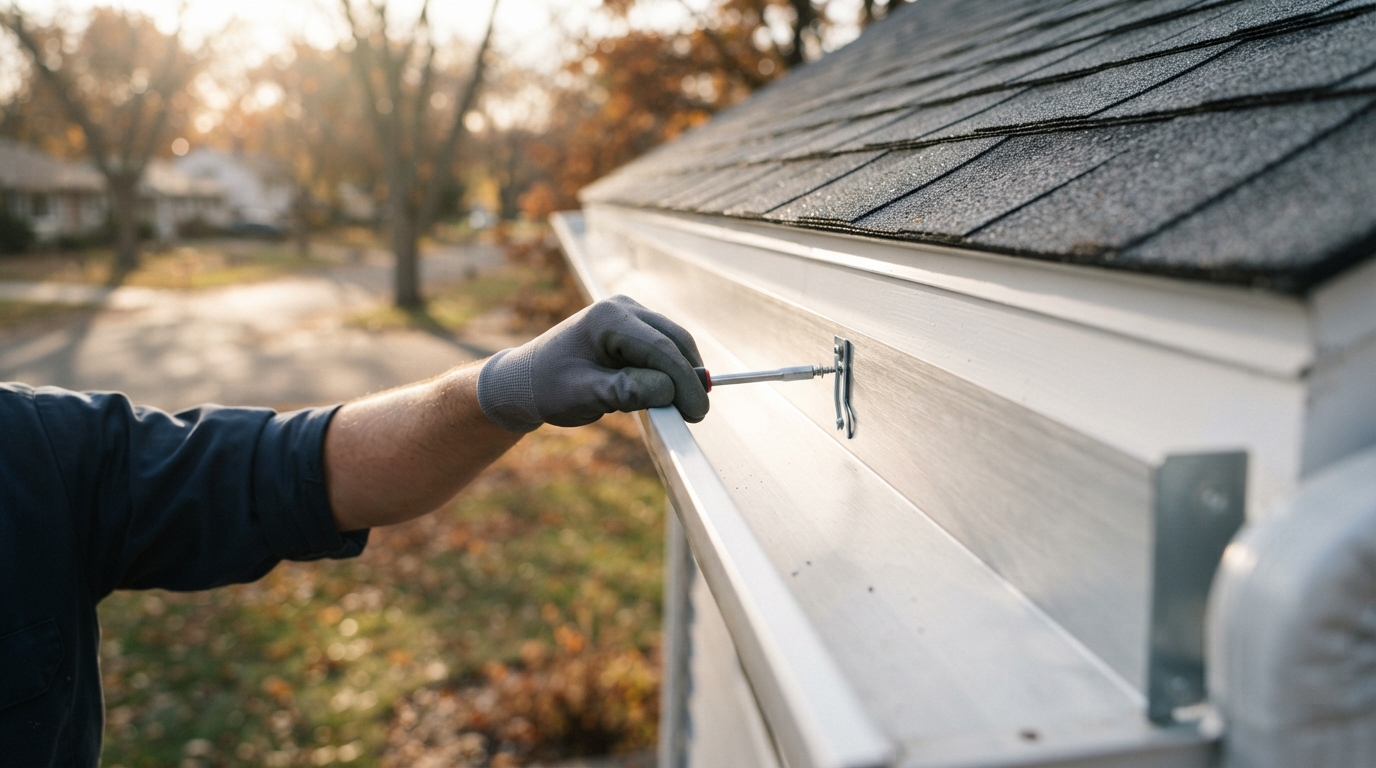
Gutter guards and regular cleaning extend the life of any residential gutter system by keeping debris from blocking water flow.
1. Install gutter guards to reduce leaf and debris buildup between cleanings.
2. Schedule cleaning at least twice a year, more often near heavy tree cover.
3. Inspect for sagging sections or separated seams after major storms.
4. Confirm downspouts discharge water well away from the foundation.
Skipping maintenance does not just risk clogs. It can shorten the lifespan of the entire system and lead to water intrusion that affects siding, fascia, and basement walls.
Choosing a Gutter Style That Fits Your Home
Matching a gutter system to a home’s roofline and budget is easier when a homeowner understands the trade-offs between standard and premium options.
• Standard 5-inch K-style gutters suit most single-story and moderate-pitch homes.
• Larger roofs or steep pitches often perform better with 6-inch systems.
• Homes with traditional or historic design elements may benefit from half-round profiles.
• Designer series gutters work well when exterior appearance is a priority alongside function.
A seamless gutter contractor can evaluate roof pitch, fascia condition, and drainage needs before recommending a specific profile, which avoids the guesswork of selecting a system based on price alone.
Frequently Asked Questions
How often should residential gutters be cleaned in Minnesota? Most homes benefit from cleaning at least twice a year, typically in spring and fall, with additional checks after major storms or heavy leaf drop.
What is the advantage of seamless gutters over sectional ones? Seamless gutters have fewer joints along the straight run, which reduces the number of potential leak points compared to sectional systems assembled from multiple short pieces.
Do gutter guards eliminate the need for cleaning? No. Gutter guards reduce debris buildup and extend time between cleanings, but they do not remove the need for periodic inspection and maintenance.
What size gutter is right for my home? Gutter sizing depends on roof square footage, pitch, and local rainfall patterns, so a professional evaluation is the most reliable way to confirm the correct profile.
Alexandria homeowners dealing with overflow, sagging sections, or an aging gutter system have practical options ranging from standard K-style profiles to designer series upgrades. Advantage Home Pros has worked on residential gutter installations throughout the Alexandria, Minnesota area and can walk through style, sizing, and maintenance questions specific to a given roofline. Reviewing roof condition and drainage needs before the next heavy rain or snow season is a practical step toward avoiding costly water damage later.