Recap:
• Shock wave therapy uses sound wave pulses to stimulate healing in tendons, ligaments, and soft tissue affected by chronic pain.
• Treatment is typically delivered in a series of short, in-office sessions with little to no downtime.
• Patients considering this option should confirm candidacy with a licensed provider familiar with musculoskeletal conditions.
Shock wave therapy is a non-invasive treatment that delivers acoustic pulses to injured or chronically painful tissue, aiming to jump-start the body’s natural repair process without surgery or long recovery times. For residents dealing with stubborn tendon or joint pain that has not responded to rest or basic physical therapy, it is often raised as a next step before considering more invasive options.
Patients researching Shock Wave Therapy in Louisville CO are usually looking for a clear answer on how the treatment works, who it is appropriate for, and what the actual sessions involve. This guide breaks down the clinical basics, what a typical course of care looks like, and the questions worth asking before starting treatment. Rock Creek Spine & Rehabilitation Center lists shockwave therapy as one of its treatment offerings for musculoskeletal pain conditions.
How Shock Wave Therapy Works
The treatment applies focused or radial acoustic pulses through the skin to a targeted area of tissue. These pulses are designed to increase blood flow and stimulate cellular activity in the region being treated.
The theory behind the approach is that controlled microtrauma from the pulses encourages the body to ramp up its own repair response in tissue that has stalled in a chronic inflammatory state. According to the National Institutes of Health, extracorporeal shock wave therapy has been studied as a treatment modality for various chronic tendon and soft tissue conditions, with research continuing to evaluate outcomes across different applications. This is why it is frequently discussed alongside other conservative, non-surgical pain management strategies.
What a Typical Session Involves
Sessions are generally brief and performed in an outpatient clinical setting. Patients can usually expect the following general structure, though specifics vary by provider and condition:
• A short evaluation to confirm the treatment area and rule out contraindications
• Application of a gel or coupling medium over the target site
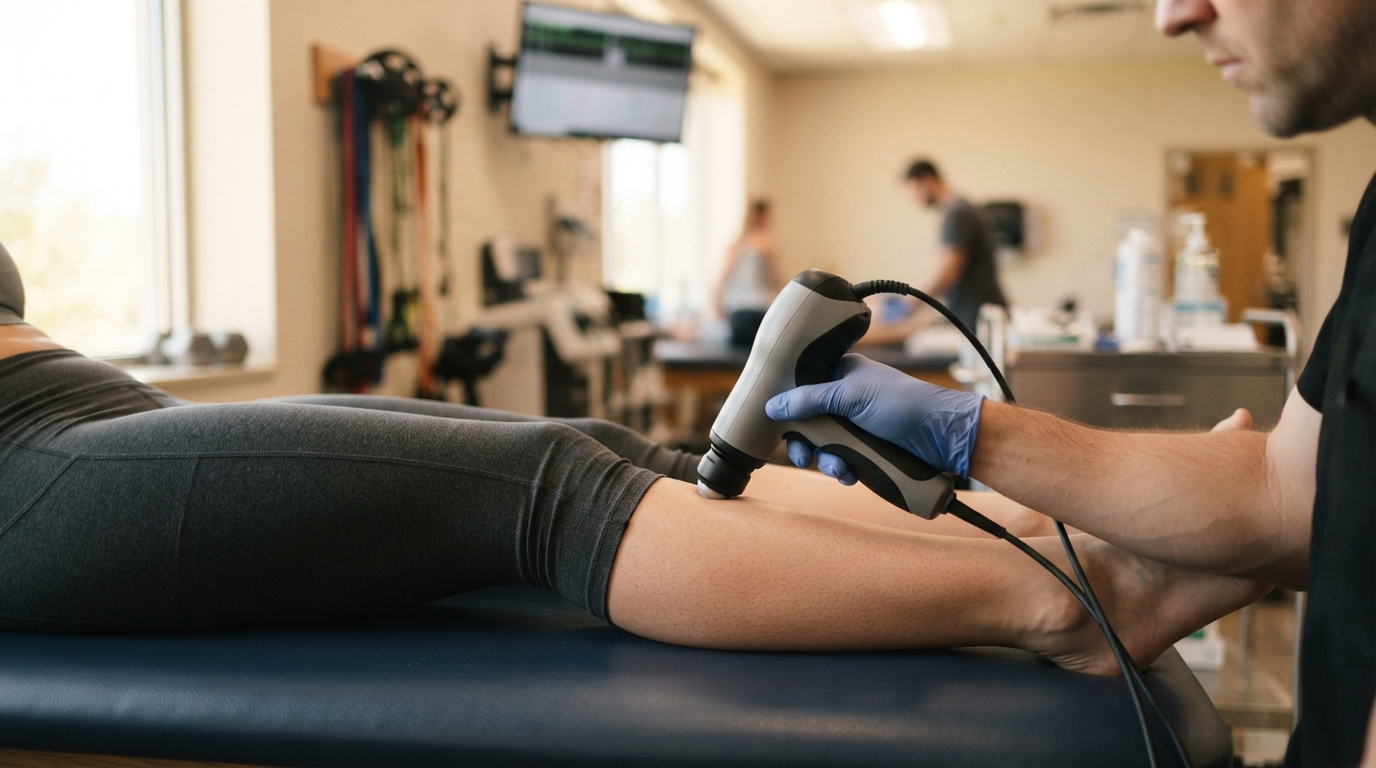
• Delivery of acoustic pulses using a handheld device, typically lasting several minutes per area
• Minimal to no anesthesia required, since discomfort is usually mild and brief
• No incisions, so most patients resume normal activity the same day
Because the treatment is cumulative, providers often recommend a series of sessions spaced over several weeks rather than a single visit. The exact number of sessions depends on the condition being treated and how the tissue responds.
Who Might Consider This Treatment
Shock wave therapy is most often discussed in the context of chronic, non-acute soft tissue pain that has not resolved with rest, stretching, or basic physical therapy. It is not typically positioned as a first-line treatment for brand-new injuries or acute trauma.
A qualified provider will usually want to review a patient’s history and prior treatment attempts before recommending this approach. The table below outlines how shock wave therapy generally compares to two other common conservative options for chronic musculoskeletal pain.
| Treatment Approach | Invasiveness | Typical Session Length | Recovery Time |
| Shock Wave Therapy | Non-invasive | Short (minutes per area) | Same-day return to activity |
| Physical Therapy | Non-invasive | Longer, ongoing sessions | Gradual, progressive |
| Corticosteroid Injection | Minimally invasive | Brief | Short, but effects may be temporary |
This comparison is general and not a substitute for an individualized evaluation. The right option depends on the specific diagnosis, tissue involved, and how long symptoms have persisted.
Questions to Ask Before Starting Treatment
Before committing to a course of shock wave therapy, patients should have a clear conversation with their provider. Useful questions include:
1. What specific condition or tissue is being targeted, and why is this treatment recommended over alternatives.
2. How many sessions are typically needed, and how will progress be measured.
3. Are there any activity restrictions between sessions.
4. What are the realistic expectations for pain reduction and functional improvement.
A provider who can answer these clearly, and who takes time to explain the rationale for treatment, is generally a good sign of a thoughtful clinical approach. Patients should feel comfortable asking for this level of detail before any treatment begins.
Finding the Right Provider
Not every clinic that offers shock wave therapy approaches it the same way, so it is worth asking how the provider structures evaluation and follow-up care. A provider who integrates this treatment into a broader plan, rather than offering it as a standalone fix, tends to produce a more coordinated approach to recovery.
Rock Creek Spine & Rehabilitation Center includes shockwave therapy among its clinical offerings for patients dealing with chronic musculoskeletal pain. Those exploring this option should reach out directly to confirm candidacy, discuss treatment goals, and understand what a personalized session plan would involve.
Frequently Asked Questions
Is shock wave therapy painful? Most patients describe the sensation as mild discomfort or pressure rather than significant pain, and sessions are typically brief.
How soon do results appear? Response times vary by individual and condition, and providers generally recommend completing the full recommended series before evaluating overall results.
Is this treatment covered by insurance? Coverage varies by insurer and plan, so patients should confirm details directly with their insurance provider and the treating clinic before starting care.
Can shock wave therapy be combined with other treatments? It is often used alongside physical therapy or other conservative measures as part of a broader recovery plan, depending on the provider’s clinical recommendation.
Chronic tendon and soft tissue pain can be frustrating to manage, especially after other conservative treatments have not delivered lasting relief. Shock wave therapy offers another option worth discussing with a qualified provider, particularly for patients hoping to avoid more invasive procedures. Rock Creek Spine & Rehabilitation Center provides information about shock wave therapy as a potential treatment option for certain musculoskeletal conditions. Anyone considering this treatment should schedule a consultation to review their specific condition and determine whether it fits their overall care plan.