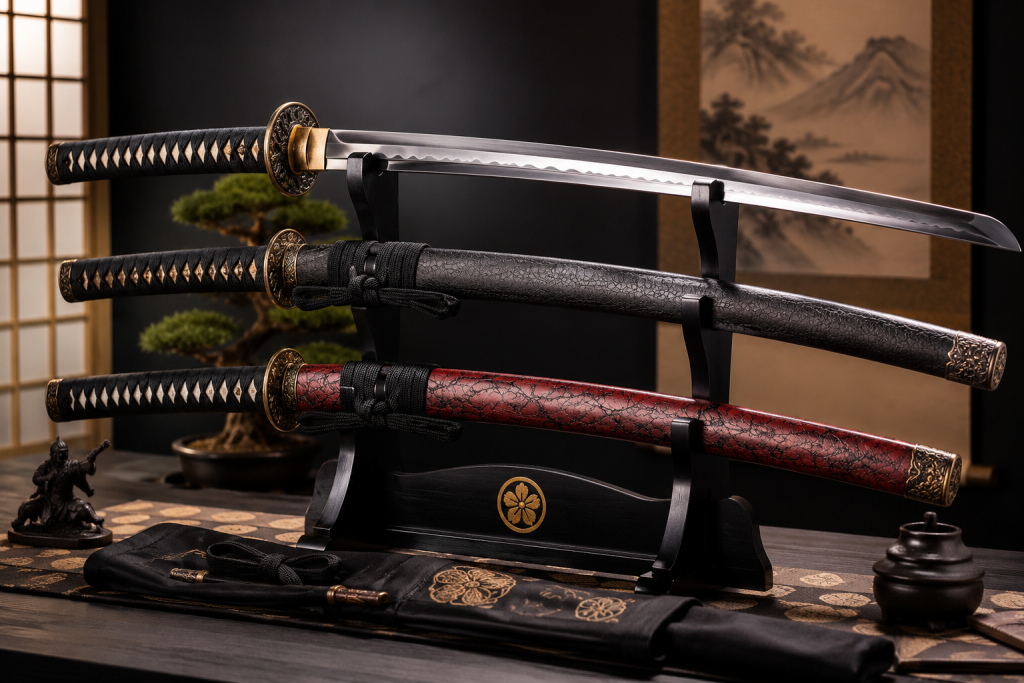
Finding the best katanas for sale means matching blade steel, construction, and intended use to what you actually plan to do with the sword, whether that is mounting it on a wall, practicing cutting drills, or completing a cosplay look. The right choice depends less on price alone and more on how the blade was forged and tempered.
Shoppers browsing Best Katanas For Sale will find that style options range widely. The katana collection at Blade City features a wide range of samurai-style swords, from traditionally inspired designs to modern decorative and collectible katanas, offering authentic style and craftsmanship at accessible prices. That range matters because a sword built for a themed display case has different requirements than one meant to hold an edge through repeated use.
Steel Types That Define Katana Quality
Blade steel is the single biggest factor separating a display piece from a functional sword. Carbon steel and stainless steel behave very differently once a blade leaves the shelf.
• High carbon steel (1045, 1060, 1095): High carbon steel is a popular choice for functional katanas, and more carbon generally translates to a harder blade with increased edge retention. A 1060 katana contains about 0.60 percent carbon and offers a great balance between flexibility and strength, making it ideal for many beginners.
• Stainless steel: Stainless steel swords are usually much cheaper than functional carbon steel blades, and the chromium content helps prevent rust and staining, which is ideal for people who want a low maintenance display sword. Stainless steel generally fits non-contact ownership such as wall display, cosplay photos, gifts, room decor, or style collecting.
• Spring and tool steel (5160, T10): These alloys show up in higher-end functional katanas where flexibility and wear resistance matter more than cost savings.
For buyers weighing authenticity against budget, it helps to understand how traditional Japanese blades were classified and constructed historically. The Metropolitan Museum of Art’s overview of Japanese sword technology explains the craftsmanship standards that modern reproductions often reference, even when using contemporary steel alloys instead of hand-folded tamahagane.
Matching a Katana to Its Intended Use
Not every katana on the market serves the same purpose, and mismatching steel to activity is the most common buying mistake.
1. Display and collecting — Decorative katanas with polished finishes and ornamental fittings work well here, since they are not subjected to impact.
2. Cosplay and costuming — Lightweight builds and bold visual finishes matter more than edge geometry for convention or photo use.
3. Cutting practice — A katana suitable for martial arts, tameshigiri, and serious use will always be made from some form of high carbon steel, not stainless.
Katana sword applications commonly include collecting for enthusiasts, display pieces for home or office settings, and cosplay or costume use for conventions and themed events. Buyers should confirm which category a listing falls under before purchasing, since marketing photos alone do not indicate whether a blade is rated for contact use.
Comparing Common Katana Steel Options
|
Steel Type |
Best For |
Maintenance Needs |
|
1045 Carbon Steel |
Display or light practice |
Requires oiling to prevent rust |
|
1060 Carbon Steel |
Beginner cutting practice |
Regular wiping and dry storage |
|
1095 Carbon Steel |
Experienced cutters, sharp edge retention |
More prone to chipping if misused |
|
Stainless Steel |
Decoration, cosplay, collecting |
Low maintenance, rust resistant |
This comparison reflects general industry patterns rather than a single retailer’s specifications, so always check the listed steel type on any individual blade before buying.
Frequently Asked Questions
Is a stainless steel katana safe for cutting? No. A stainless steel katana is best treated as a display piece only, since it can look amazing on a stand but should never be used as a battle ready katana.
What steel is best for a first-time buyer? 1060 steel offers a great balance between flexibility and strength, making it ideal for many beginners.
Do anime-style katanas use the same steel as traditional ones? Anime-inspired katanas are often styled after katana, nodachi, and fantasy-style blades, making them ideal for display, conventions, cosplay, or themed collections rather than cutting use, so steel specifications vary by listing.
How do I know if a blade is decorative or functional? Check the tang construction, steel type, and manufacturer description. Listings that specify high carbon steel with a full tang are typically built for more than display.
Choosing among the best katanas for sale comes down to being honest about intended use before looking at finish or price. Buyers focused on display or cosplay have far more flexibility in materials, while anyone planning cutting practice should prioritize high carbon steel and verified tang construction. For collectors browsing a wide range of styles in one place, Blade City lists katanas across traditional, decorative, and anime-inspired categories, making it easier to compare builds side by side before deciding which blade fits your actual plans for it.