Briefly:
• Evansville businesses have access to a full range of sign types, from exterior monument signs to interior ADA wayfinding systems.
• Choosing the right sign category depends on your goals: attracting street traffic, guiding visitors, or building fleet visibility.
• Local sign companies handle permitting, fabrication, and installation in one place, which simplifies the process considerably.
If you need a sign company in Evansville IN, the right partner handles far more than printing a name on a board. A full-service shop covers design, fabrication, code compliance, and installation across a wide range of sign types built for different business goals.
Architectural signage and wayfinding systems are among the most in-demand categories, requiring a deep understanding of each space, its form, materials, and purpose, so that signs feel intentional, functional, and visually balanced. Knowing which sign type fits your situation before you request a quote saves time and keeps your project on budget.
Exterior Signs: Making the First Impression Count
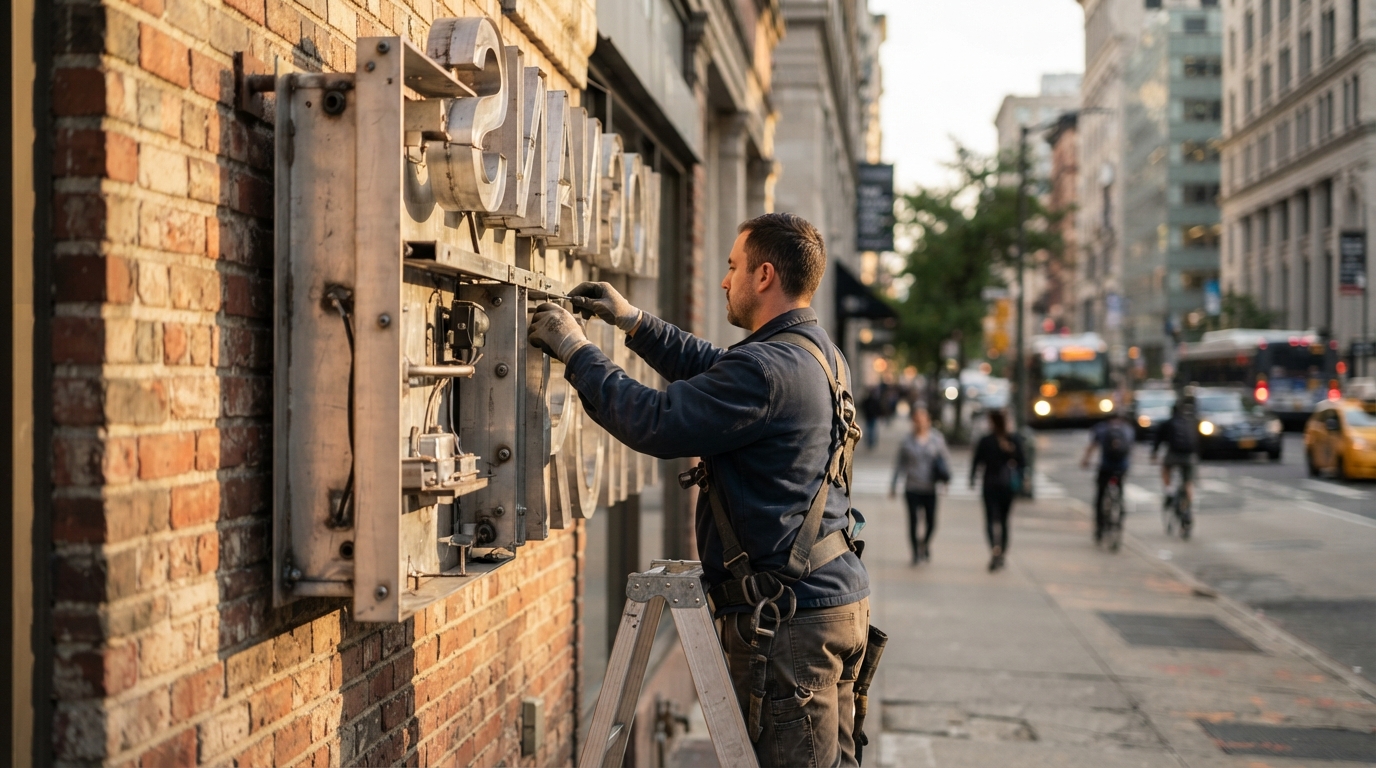
Exterior signage is the most visible investment a business makes. Options in this category include monument signs, pylon signs, channel letters, dimensional letters, cabinet signs, awnings, and facade signs. Each format serves a different purpose depending on your building type, setback distance, and the speed at which passing traffic moves.
Monument signs work well for businesses set back from the road, since they sit at ground level and are easy to read at low speeds. Pylon and pole signs are better suited to highway-adjacent locations where height is needed for visibility. Channel letters mounted directly to a facade are a common choice for retail storefronts in shopping centers.
Understanding local zoning and permit requirements, and coordinating site surveys before production begins, keeps a project on track and on budget. The International Sign Association maintains resources on sign regulations that can help business owners understand what local codes typically govern before they begin planning.
Interior Signs and Wayfinding Systems
Interior signage does a different job than exterior signs. Its primary function is to guide people through a space clearly and efficiently. Interior options include lobby and reception signs, wall graphics, murals, vinyl lettering, and ADA, wayfinding, and directory signs for compliance.
ADA-compliant signs are not optional for many businesses. They must meet specific requirements for tactile characters, Braille, mounting height, and contrast. Interior branding categories also include lobby signs, murals, experiential graphics, video walls, and dimensional letters.
Wayfinding systems are especially important in larger facilities such as hospitals, campuses, and multi-tenant office buildings. A well-designed system reduces confusion, improves visitor experience, and can reduce the burden on staff who would otherwise answer directional questions repeatedly.
Comparing Common Sign Types by Use Case
| Sign Type | Best For | Typical Location |
| Monument Sign | Ground-level brand visibility | Property entrance, parking lot |
| Channel Letters | Retail storefront identification | Building facade, strip mall |
| ADA / Wayfinding | Compliance and visitor navigation | Interior hallways, restrooms |
| Vehicle Wrap | Mobile brand exposure | Fleet vehicles, delivery vans |
| Digital / LED Sign | Dynamic messaging and promotions | Exterior roadside, lobby |
Vehicle Graphics, Digital Signs, and Promotional Displays
Beyond fixed signage, businesses often need graphics that move or change. Vehicle graphics options include full and partial wraps, cut vinyl decals, logos, and fleet branding that take a message on the move. For businesses with service vehicles or delivery fleets, a consistent wrap program turns every vehicle into a rolling advertisement.
Digital signage outperforms static signs by displaying dynamic content, including advertisements, directory information, weather updates, and safety alerts. Multi-site property managers can control content across all their digital signs from a single cloud-hosted sign management portal.
For short-term needs, temporary signs work when timing matters. Custom temporary signs command attention and are used for pop-up sales, events, construction notices, real estate, and election cycles.
Frequently Asked Questions
What types of businesses use wayfinding signs? Wayfinding systems are common in hospitals, corporate campuses, universities, retail centers, and government buildings. Any facility where visitors need to move between multiple areas benefits from a clear directional system.
Does a sign company handle permits? A full-service shop’s process covers concept through fabrication and installation, with permit handling and code compliance support included.
What is the difference between a monument sign and a pylon sign? Monument signs sit close to the ground and are typically built from masonry or foam with a solid base. Pylon signs are elevated on poles and are designed for visibility from greater distances, often used near highways or large commercial properties.
Can one company handle both interior and exterior signage? A full-service sign company can cover exterior signs, interior signs, wayfinding and compliance, portable and promotional displays, vehicle and fleet graphics, and digital and illuminated signs.
Ready to plan your signage project? Visual Harmony Signs & Graphics is a full-service sign company headquartered in downtown Evansville, IN, offering design, fabrication, installation, and ongoing maintenance across every sign category covered in this article. The company is part of the Signworld global network of over 350 sign companies and a member of the International Sign Association. Reach out to discuss your project scope, get a site survey scheduled, and move from concept to installation with a local team that knows Evansville’s permitting landscape.