Simply put:
- Well-fed water filtration systems in Great Falls need annual water testing, regular filter and membrane changes, and seasonal checks to keep hardness, iron, and sediment under control.
- Reverse osmosis and UV disinfection components require more frequent attention than whole-home sediment filters.
- A missed maintenance cycle is the most common reason filtration systems lose efficiency or fail outright.
Properly maintained water filtration keeps well-fed homes and commercial properties in Great Falls free of sediment, hardness minerals, and bacteria that are common in Cascade County groundwater. Routine filter changes, membrane replacements, and annual water testing are the core tasks that keep a system performing as designed.
Many households and businesses rely on private wells throughout the Great Falls area, and that makes Water Filtration in Great Falls, MT less of a one-time installation decision and more of an ongoing maintenance responsibility. Unlike municipal water customers, private well owners are solely responsible for monitoring and treating what comes out of the tap. Regular upkeep is what separates a system that protects water quality for years from one that quietly degrades after the first season.
Western Water Wells services filtration systems for residential, farm, ranch, and commercial properties across Montana, and routine maintenance questions are among the most common calls the company fields from Great Falls customers.
Why Maintenance Schedules Matter for Well Water Systems
Private wells do not benefit from the oversight that public water systems receive. According to the CDC’s guidelines for testing well water, well owners are responsible for confirming their own water is safe because EPA rules protecting public systems do not apply to private wells. That responsibility extends directly to any filtration equipment installed on the property.
A filtration system that is never serviced can start working against the household it is meant to protect:
- Clogged sediment filters restrict water pressure and strain pumps
- Saturated carbon filters stop removing odors and taste issues
- Neglected UV bulbs lose disinfection strength well before they visibly fail
- Reverse osmosis membranes scale over and allow dissolved solids back through
Core Maintenance Tasks by System Type
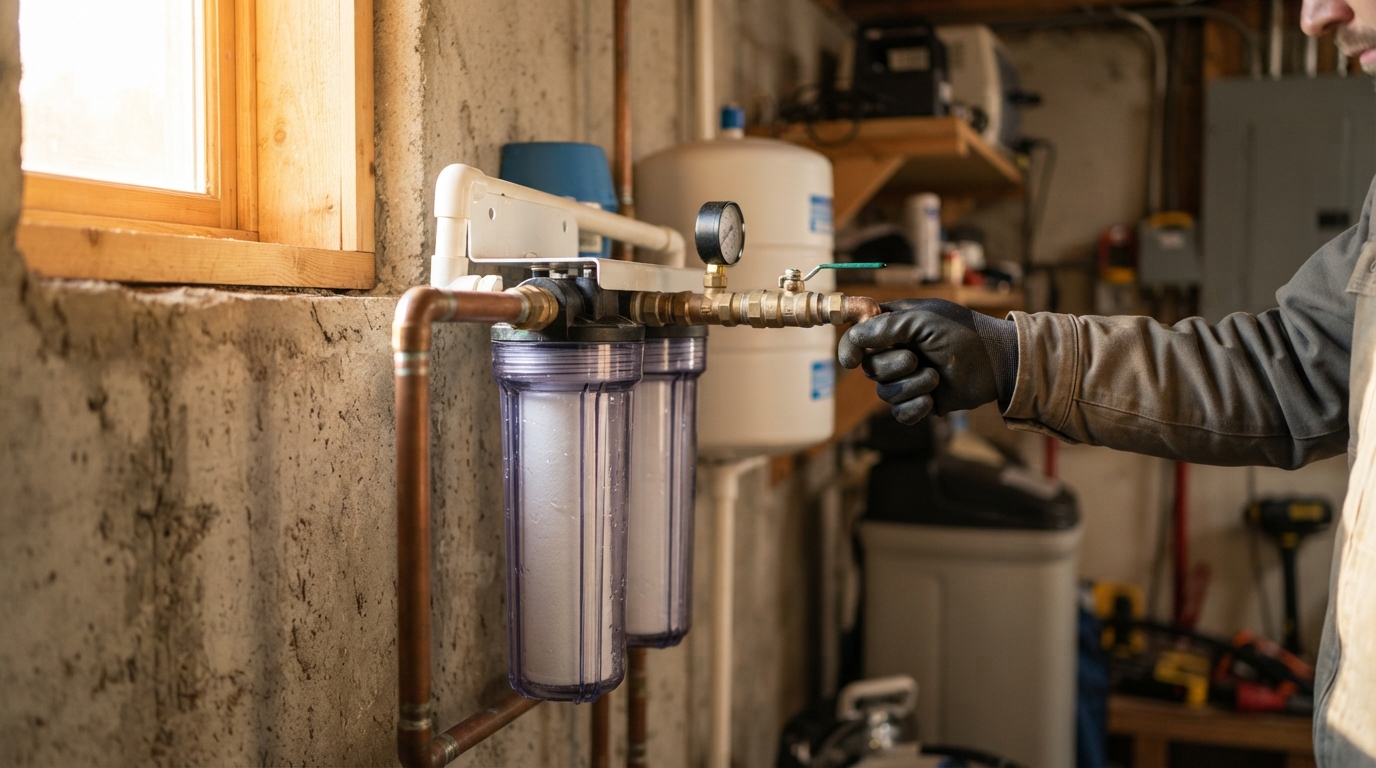
Different filtration components age on different timelines, so a single blanket schedule rarely works. The table below outlines general service intervals typical for the filtration technologies installed in Montana homes and small commercial buildings.
| System Type | Typical Maintenance Task | General Frequency |
| Whole-home sediment filter | Replace cartridge | Every 2-3 months |
| Water softener | Check and refill salt | Monthly |
| Reverse osmosis system | Replace pre/post filters and membrane | Every 6-12 months |
| UV disinfection unit | Replace UV lamp and clean sleeve | Annually |
Actual intervals depend on household water usage, incoming water hardness, and how much sediment or iron is naturally present in the well source.
Annual Testing and Seasonal Checks
Water testing is the maintenance step most often skipped, yet it is the one that reveals whether a filtration system is still doing its job. The EPA and CDC recommend testing private well water at least once a year for bacteria, nitrates, and other contaminants, with more frequent testing warranted near farmland or after flooding. Montana’s agricultural land use and fluctuating groundwater levels make this guidance especially relevant for Great Falls-area wells.
Seasonal upkeep should include:
- Checking for ice damage or frozen lines on exterior filtration housings before winter
- Inspecting salt bridging in softener brine tanks after heavy use periods
- Confirming pressure tank readings after spring snowmelt raises groundwater levels
- Scheduling a professional filter changeout before peak irrigation season strains well output
Skipping even one of these checks can let a small issue, like a slow leak or a clogged prefilter, turn into a larger repair.
Signs a System Needs Professional Attention
Some warning signs point to a problem that goes beyond a routine filter swap. Watch for:
- A sudden drop in water pressure throughout the house
- Returning odor, discoloration, or metallic taste after a filter change
- Visible scale buildup on fixtures despite a working softener
- Unusual noise from the pump or pressure tank
Any of these symptoms suggest the filtration system, the well pump, or the water chemistry itself needs a closer look rather than another filter swap.
Frequently Asked Questions
How often should a whole-home filter be replaced in Great Falls? Most sediment and carbon filters need replacement every two to three months, though households with high iron or sediment content in their well water may need to change filters more often.
Does hard well water affect filtration system lifespan? Yes. Mineral-heavy water common in Cascade County wells accelerates scale buildup inside filtration housings and membranes, which is why softeners are often paired with other filtration equipment.
Is annual water testing really necessary if the water looks clean? Yes. Many contaminants found in well water, including bacteria and nitrates, have no taste, smell, or visible sign, which is why testing remains the only reliable way to confirm water safety.
Can commercial properties use the same maintenance schedule as homes? Commercial properties typically see higher water usage, so filtration components may need service more frequently than the standard residential intervals listed above.
Keeping a filtration system on schedule protects both water quality and the equipment itself, whether the property runs on a private well or a treated municipal connection. Property owners in Great Falls who are unsure of their current maintenance schedule, or who notice any of the warning signs above, can reach out to a local water treatment professional for an inspection before a minor issue becomes a costly repair.