Short version:
- Ductwork Services cover duct repair, replacement, and sealing to fix airflow problems and reduce energy waste.
- Leaky or damaged ducts can push heating and cooling costs higher and reduce indoor air quality.
- Inspections, sealing, and professional repair are the main steps involved in restoring duct performance.
Ductwork problems are one of the most common reasons an HVAC system struggles to keep a home comfortable, even when the furnace or air conditioner itself is working correctly. Damaged, disconnected, or poorly sealed ducts can waste conditioned air before it ever reaches a living space.
Ductwork Services address this problem directly by identifying leaks, gaps, and airflow restrictions in the duct system and correcting them through repair, sealing, or replacement. For homeowners in Niceville, FL, where air conditioning runs for a large part of the year, duct condition has a direct effect on monthly utility costs and overall system lifespan.
Why Ductwork Condition Affects the Whole System
Ducts are the delivery network for an HVAC system. When they are compromised, the equipment has to work harder to maintain the same comfort level, which accelerates wear on components.
- Leaks in supply ducts release conditioned air into attics, crawlspaces, or wall cavities instead of living areas.
- Leaks in return ducts pull in unconditioned or dusty air, adding to the system’s workload.
- Disconnected or crushed duct sections create uneven airflow, leaving some rooms too warm or too cold.
Research on residential duct systems has found that it is estimated that 20 to 30 percent of air moving through ducts leaks into unconditioned spaces instead of reaching its intended destination in the home, according to ENERGY STAR (2025). That level of loss translates into higher energy bills and a system that cycles longer than it should to reach the thermostat setting.
Signs Ductwork Needs Attention
Most duct issues develop gradually, so homeowners often notice secondary symptoms before they identify the ductwork itself as the source.
- Rooms that are consistently harder to heat or cool than others in the same home.
- A noticeable rise in heating or cooling bills without a change in usage habits.
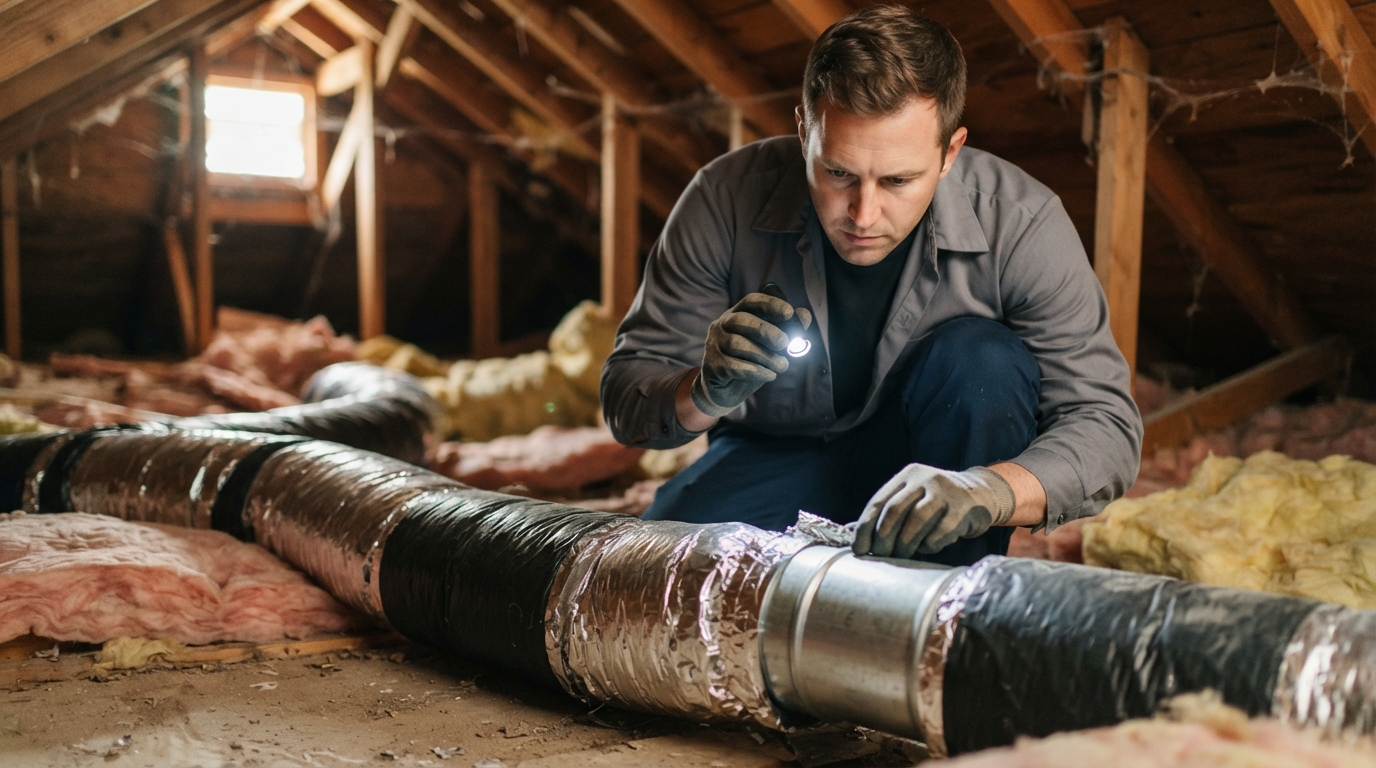
- Visible gaps, disconnected sections, or crushed flex duct in attics or crawlspaces.
- Increased dust, musty odors, or allergy symptoms tied to return-air leaks pulling in unconditioned air.
- Weak airflow at vents located far from the air handler.
Humidity swings and salt-air exposure common to the Florida Panhandle can accelerate duct wear, particularly where flexible ductwork runs through hot, humid attic spaces. Homes with ducts routed through unconditioned areas are more prone to the kind of leakage described in duct-efficiency research, which is why periodic inspection is useful even when no obvious problem is visible. The U.S. Department of Energy’s duct sealing guidance outlines how leakage location and duct insulation levels affect overall system performance.
What Ductwork Services Typically Involve
A dedicated duct service generally follows a sequence rather than a single fix, since airflow problems can originate at multiple points in the system.
| Service Step | Purpose |
| Inspection | Identify leaks, disconnections, and insulation gaps |
| Sealing | Close small leaks at joints and connections |
| Repair | Reconnect or patch damaged duct sections |
| Replacement | Install new ductwork where damage is extensive |
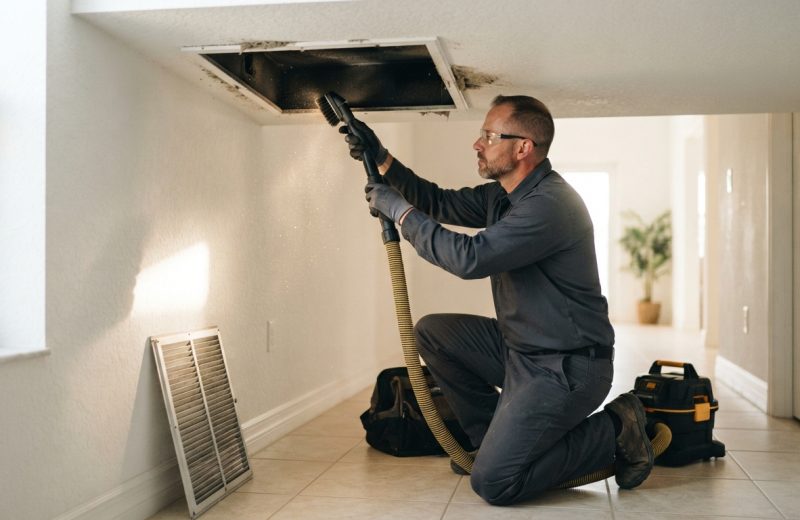
- Inspection typically includes a visual check of accessible duct runs in attics, crawlspaces, or basements.
- Sealing addresses minor leaks at joints, boots, and connections using mastic or appropriate sealant materials.
- Repair handles larger damage, such as torn flex duct or disconnected sections.
- Replacement becomes necessary when ductwork is undersized, severely deteriorated, or incompatible with a newer HVAC system.
Maintaining Ductwork Over Time
Ductwork is not a one-time installation that can be ignored afterward. Attic heat, pest activity, and general settling can all introduce new leaks over a system’s service life. A periodic inspection, particularly before peak cooling season in Niceville, FL, can catch small issues before they turn into larger airflow or comfort problems.
Frequently Asked Questions
How often should ductwork be inspected? Most HVAC guidance suggests a visual inspection during routine annual or biannual system maintenance, with closer attention if utility bills rise unexpectedly.
Can duct sealing be done without replacing the whole system? Yes. Sealing and targeted repairs are often sufficient when ductwork is structurally sound but has leaks at joints or connections.
Does duct location matter for efficiency? Yes. Ducts routed through attics or crawlspaces are more exposed to temperature extremes and are generally more prone to leakage than ducts within conditioned space.
What is the difference between duct repair and duct replacement? Repair addresses isolated damage like a torn section or loose connection, while replacement is used when ductwork is extensively deteriorated or no longer matches the system’s airflow requirements.
Business Information and Next Steps
Based in USA, Next Level Heating And Air serves customers across Niceville, FL, providing heating and cooling support to homes and businesses in the surrounding area.
Additional published information on duct repair and sealing procedures is available through Visit Next Level Heating And Air, which outlines the local service area in more detail.