In brief:
- Third-party lab testing verifies THCA flower matches federal hemp limits and is free of pesticides, heavy metals, and microbial contamination.
- A Certificate of Analysis (COA) documents cannabinoid potency, terpene content, and safety screening results for a specific batch.
- Shoppers across the USA can check COAs before purchase to confirm potency claims and compliance status.
A Certificate of Analysis is the clearest way to confirm that raw hemp flower matches its advertised potency and meets federal compliance limits. Without an independent lab report, buyers have no reliable way to know what is actually inside the jar.
Shoppers who want to explore premium flower selections from Luminate will find that lab verification sits at the center of how THCA flower is marketed and sold in the USA. Potency claims printed on packaging mean little without an outside laboratory confirming the numbers, since in-house testing carries an inherent conflict of interest.
What Third-Party Lab Testing Actually Measures
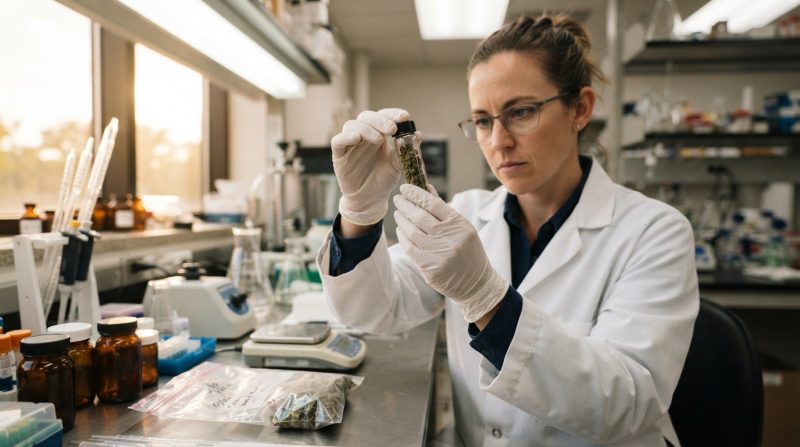
A legitimate COA comes from an independent, accredited laboratory rather than the seller itself. According to one buyer’s guide, a complete THCA COA should let a reader check six things: lab name and accreditation, batch ID and date, cannabinoid panel, pesticides, heavy metals, and microbials.
The report generally covers:
- Cannabinoid potency – THCA percentage, Delta-9 THC, and total THC calculated from both figures
- Pesticide screening – residue testing against established action limits
- Heavy metals – lead, mercury, arsenic, and cadmium levels
- Microbial and mycotoxin panels – checks for mold, yeast, and bacterial contamination
- Batch traceability – a lot number linking the document to the exact product on the shelf
A passing result typically means Delta-9 THC at or below 0.3 percent, with all contaminant panels at non-detect or below established action limits, and results traceable to a specific batch number.
Why the 0.3 Percent Threshold Matters
Federal hemp status hinges on a specific THC limit. The 2018 farm bill defines hemp as any part of the cannabis plant or its derivatives containing no more than 0.3 percent delta-9 tetrahydrocannabinol on a dry-weight basis. That threshold is what separates legally shippable hemp flower from regulated cannabis, and it is why a current COA matters more than a strain name on a label.
More recent federal guidance has expanded how that limit is calculated. The amended provision defines hemp to include cannabis and cannabis derivatives with a total THC concentration, including tetrahydrocannabinolic acid, of not more than 0.3 percent on a dry weight basis. For a deeper look at how this standard is tracked at the federal level, the USDA’s hemp program publishes current rules on testing and compliance.
Reading a COA Before Buying
A COA is only useful if a buyer knows what to look for. Industry guidance recommends confirming:
- The testing lab is independent from the seller and holds recognized accreditation.
- The batch number on the COA matches the batch number on the packaging.
- The test date is reasonably recent relative to the harvest or packaging date.
- Contaminant panels show “Pass” or “ND” rather than blank or missing sections.
| COA Element | What It Confirms | Red Flag If Missing |
|---|---|---|
| Cannabinoid panel | THCA and Delta-9 THC percentages | No listed potency numbers |
| Pesticide screen | Absence of agricultural chemical residue | Blank or “not tested” field |
| Heavy metals | Lead, mercury, arsenic, cadmium levels | Section omitted entirely |
| Batch ID and date | Document matches the product in hand | Generic or outdated report |
Comparing Verified Flower to Unverified Claims
Not every hemp product sold online carries documentation that meets these standards. A COA issued by an outside lab is fundamentally different from a potency figure the seller prints on its own packaging, since only the former involves independent verification of the sample. Flower marketed in the USA without a traceable, dated lab report leaves buyers guessing about both potency and contamination risk.
Frequently Asked Questions
What is the difference between a lab report and a COA? A Certificate of Analysis is the formal document a lab issues after testing, and it is the specific type of lab report buyers should request for hemp flower.
Does a COA guarantee THCA flower is safe? A passing COA shows the tested batch met contaminant and compliance limits at the time of testing, though it reflects only that specific sample rather than every future batch.
How often should lab testing be updated? Reputable sellers test each production batch separately, since potency and contaminant levels can vary between harvests even within the same strain.
Why does accreditation matter for the testing lab? An accredited lab has had its testing methods, calibration, and quality processes independently verified, which adds a layer of reliability beyond an in-house test result.
A Note on Verified Flower Availability
Current product listings and batch-specific documentation for Luminate are published for reference by shoppers in the USA.