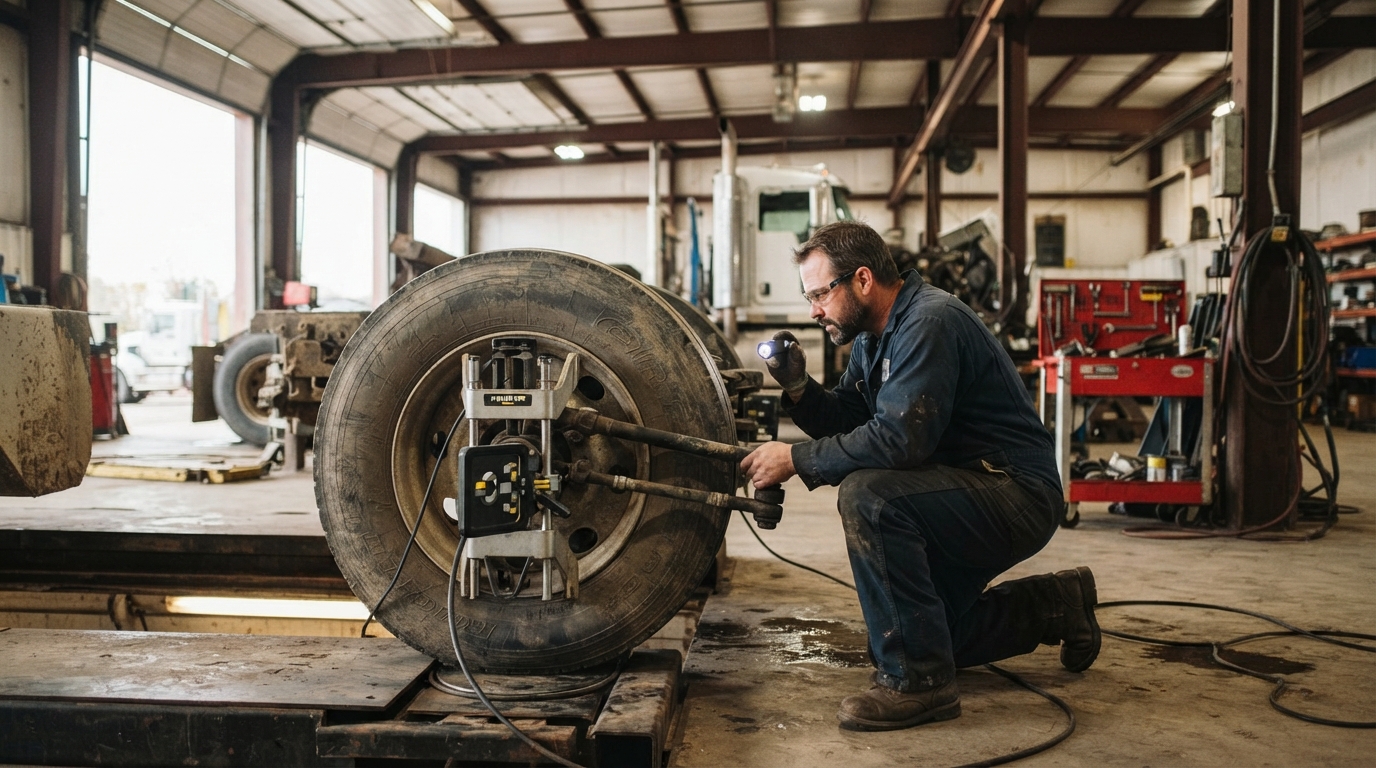
In short:
- Pulling to one side, an off-center steering wheel, and uneven tire wear are the clearest signs a truck alignment is overdue.
- Misalignment accelerates tire wear and reduces steering control, which affects both safety and operating cost.
- A professional inspection confirms whether the issue is alignment, suspension, or tire-related before repairs are made.
A truck that pulls to one side, has an off-center steering wheel, or shows uneven tread wear is likely due for an alignment check. These symptoms typically point to misaligned wheel angles rather than a worn tire or a mechanical fluke, and catching them early helps avoid more expensive repairs later.
Commercial drivers and fleet owners in the region can schedule a Truck Alignment inspection once any of these warning signs appear, since alignment problems rarely resolve on their own and tend to worsen with continued driving. Left unaddressed, a misaligned truck places uneven stress on tires, suspension components, and steering linkage.
Common Warning Signs of Misalignment
Several symptoms consistently appear across industry guidance on commercial vehicle alignment:
- Vehicle pulling to one side while driving on a flat, straight road, even with hands off center on the wheel.
- Uneven or accelerated tire wear, including feathering across the tread or heavier wear on one shoulder.
- Steering wheel vibration or instability, particularly at highway speeds.
- Tire squealing during turns, caused by tires scrubbing against the pavement instead of rolling smoothly.
- An off-center steering wheel when the truck is tracking straight.
Tire wear is often the most visible clue. Uneven or accelerated tire wear can be caused by under-inflation, overloading, or poor wheel alignment, and increased tread wear on only one side of a tire is often a sign of poor wheel alignment. Fleet operators and owner-operators who track tire condition closely are usually the first to notice these patterns before they become safety hazards.
Why Alignment Problems Develop Over Time
Wisconsin’s freeze-thaw cycles create seasonal road damage that commonly knocks a truck out of alignment. Potholes, uneven pavement, and curb strikes are frequent causes, and repeated impacts gradually shift steering and suspension angles even when no single event feels severe.
Routine commercial vehicle upkeep also plays a role in catching these issues early. Under federal maintenance rules, carriers must maintain records for each vehicle that show the identification, plus a history of inspections, repairs, and maintenance, which is one reason alignment checks are often folded into broader preventive maintenance schedules rather than treated as a standalone fix. The FMCSA’s maintenance regulations outline the inspection and recordkeeping standards that commercial carriers follow.
Alignment Symptoms Compared
| Symptom | Likely Cause | Typical Next Step |
|---|---|---|
| Pulling to one side | Toe or camber misalignment | Alignment inspection |
| Feathered or shoulder tire wear | Toe angle out of spec | Alignment and tire rotation check |
| Steering wheel vibration | Alignment, imbalance, or worn suspension | Combined alignment and suspension inspection |
| Off-center steering wheel | Steering angle misalignment | Alignment adjustment |
What to Do Next
Once pulling, vibration, or uneven wear appears, a few practical steps help confirm the cause before committing to a repair:
- Check tire pressure first, since under-inflation can mimic alignment symptoms.
- Inspect tread wear patterns across all tire positions, not just the steer axle.
- Note whether vibration changes with speed, which can point to balance versus alignment issues.
- Have a qualified shop perform a full inspection, since worn suspension parts or bent components can affect alignment results even after adjustment.
Based in Deerfield, WI, Truckstar Collision Center serves customers across Madison, WI, offering inspection and alignment work for heavy-duty trucks and other large commercial vehicles. The shop’s listed services include wheel alignment alongside frame correction, suspension repair, and collision repair for trucks, buses, and oversized vehicles.
Frequently Asked Questions
How often should a commercial truck be aligned? There is no single mileage rule, since alignment needs depend on road conditions, suspension wear, and driving patterns. A technician can determine whether current angles are within specification during a routine inspection.
Can bad alignment cause a blowout? Severe uneven wear from prolonged misalignment can weaken tire structure over time, though sudden blowouts are more often tied to pressure or impact damage. Either way, uneven wear patterns are worth addressing before they progress.
Is alignment different from wheel balancing? Yes. Alignment adjusts the angles of the wheels relative to each other and the road, while balancing corrects weight distribution around the tire and wheel assembly. Vibration can stem from either issue, which is why a full inspection is useful.
What causes a truck to go out of alignment? Potholes, curb impacts, worn suspension components, and normal wear from heavy loads are common causes. Road conditions in the Madison, WI area, particularly after winter freeze-thaw cycles, can accelerate this process.
Scheduling a Review
Published details for Truckstar Collision Center, Inc cover the location and hours relevant to the surrounding service area.