At glance:
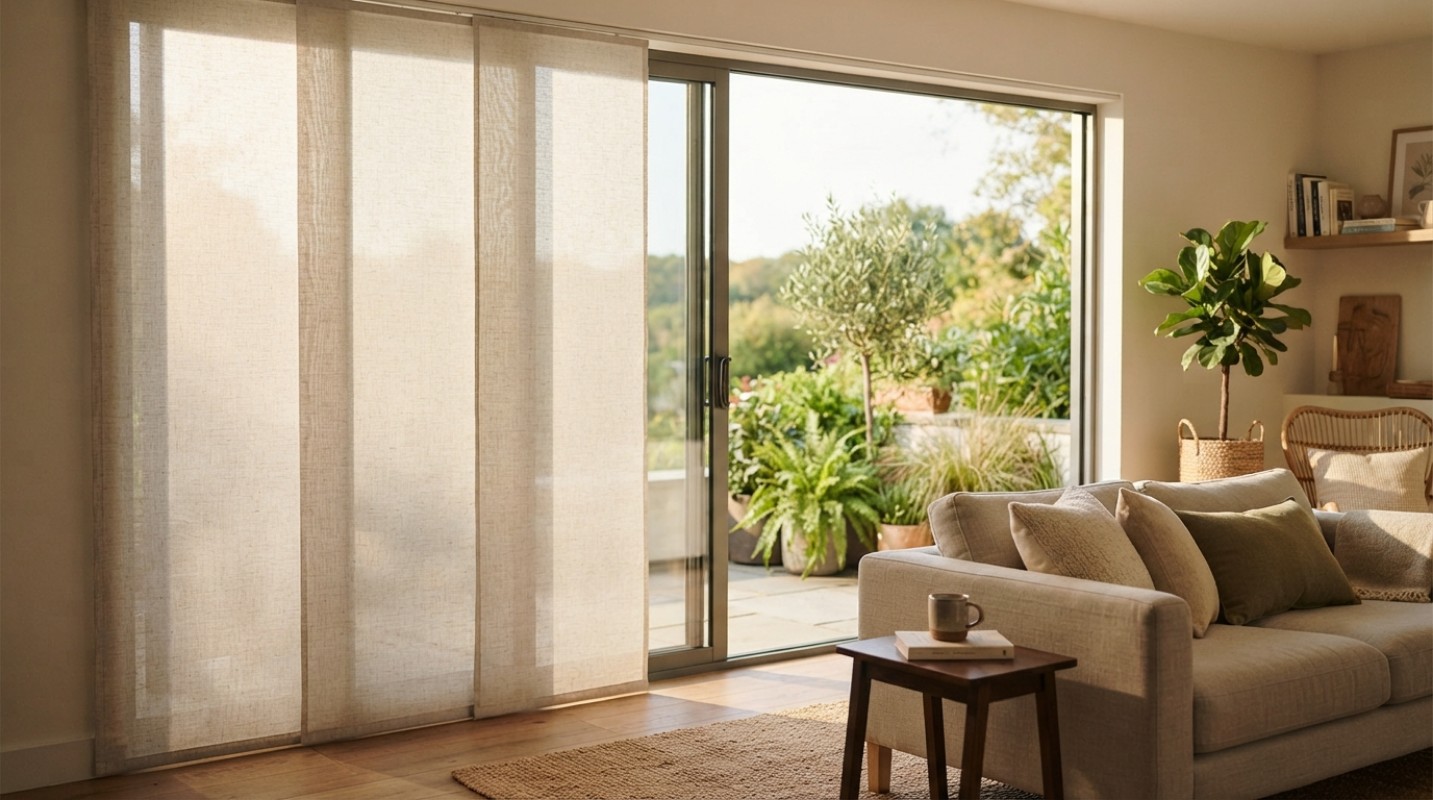
- Sliding panel track blinds use wide fabric panels on a track system, built for sliding glass doors and oversized windows.
- Panels glide horizontally, avoiding the bunching or stacking issues common with vertical blinds on wide openings.
- Material choice affects light control, privacy, and maintenance across different room types.
Sliding panel track blinds are a window covering system made of flat fabric panels suspended from a horizontal track, designed to cover sliding glass doors and wide windows that standard blinds or curtains cannot fit well. Each panel slides independently along the track, stacking neatly to one side when open and covering the full span when closed.
Large glass openings present a specific problem: traditional vertical blinds can snag or twist on wide spans, and curtain panels often pool excessively or block too much usable door space. Sliding Panel Track Blinds address this by distributing fabric across multiple flat panels that move along a track system mounted above the opening, so the covering glides rather than folds.
- How the Track System Works
The mechanism relies on a ceiling- or wall-mounted track with individual carriers for each fabric panel. Panels overlap slightly when closed to limit light gaps, then stack compactly against the wall when fully open.
Key mechanical features typically include:
- A multi-channel track that lets panels move independently or in groups
- Weighted bottom bars that keep panels flat against wind or drafts near doors
- A pull cord, wand, or motorized control depending on the installation
This design makes the system well suited to openings wider than 48 inches, where standard blind slats would require excessive splicing or multiple units.
- Material and Light Control Options
Panel fabric choices directly affect how a room functions throughout the day. Sheer fabrics diffuse sunlight while maintaining some outdoor visibility, while room-darkening or blackout fabrics block most incoming light for bedrooms or media rooms.
| Fabric Type | Light Control | Typical Use |
|---|---|---|
| Sheer | Diffused light, partial privacy | Living rooms, dining areas |
| Light-filtering | Moderate light reduction | Home offices, kitchens |
| Blackout | Near-total light block | Bedrooms, media rooms |
| Woven textures | Variable, adds visual depth | Open-concept spaces |
The U.S. Department of Energy notes that window coverings can play a role in reducing heat gain and loss, which is relevant when selecting fabric density for south- or west-facing glass doors.
- Where This Option Fits Compared to Alternatives
Homeowners weighing coverage options for wide openings generally compare three categories: vertical blinds, panel track systems, and layered curtain treatments. Each handles large spans differently in terms of operation and appearance.
- Vertical blinds use individual slats that rotate and stack, which can look dated and are prone to tangling on wide tracks
- Panel track systems use flat fabric panels that stack cleanly and suit modern interiors
- Curtain panels offer a soft look but often require more fabric and floor clearance to fully clear a sliding door
For rooms where the door or window is used daily, the stacking clearance and reduced tangling of a track system is a practical consideration over slat-based alternatives.
- Business Info
Window covering inquiries for installations across the USA, including panel track systems for sliding doors and large windows, are associated with Desyne Store, a supplier of fabric-based window treatments.
- Frequently Asked Questions
Do sliding panel track blinds work on regular windows, or only sliding doors? They are built primarily for wide openings such as sliding glass doors, but they also fit oversized windows or openings where standard blind widths are insufficient.
How much maintenance do fabric panels require? Most fabric panels can be spot-cleaned or vacuumed with a soft brush attachment; care requirements vary by fabric type, so checking manufacturer guidance for the specific material is recommended.
Can panels be opened partially for filtered light? Yes, individual panels can typically be positioned at partial points along the track, allowing adjustable light and privacy levels rather than only fully open or fully closed settings.
Are these systems suitable for high-traffic doors? The weighted bottom bars and track-based movement are designed to withstand regular daily operation better than lightweight curtain panels, which can wear at contact points over time.
- A Closing Note
Specific panel and track configurations for Desyne Store are listed for review by homeowners comparing window covering options for large openings.