Summary first:
- Pet boarding facilities combine structured supervision, climate-controlled housing, and scheduled exercise to reduce stress for dogs and cats away from home.
- Screening steps such as vaccination checks and temperament review help prevent illness and conflict between boarded animals.
- Chicago, IL pet owners can evaluate boarding options by comparing staffing ratios, cleaning protocols, and daily activity structure.
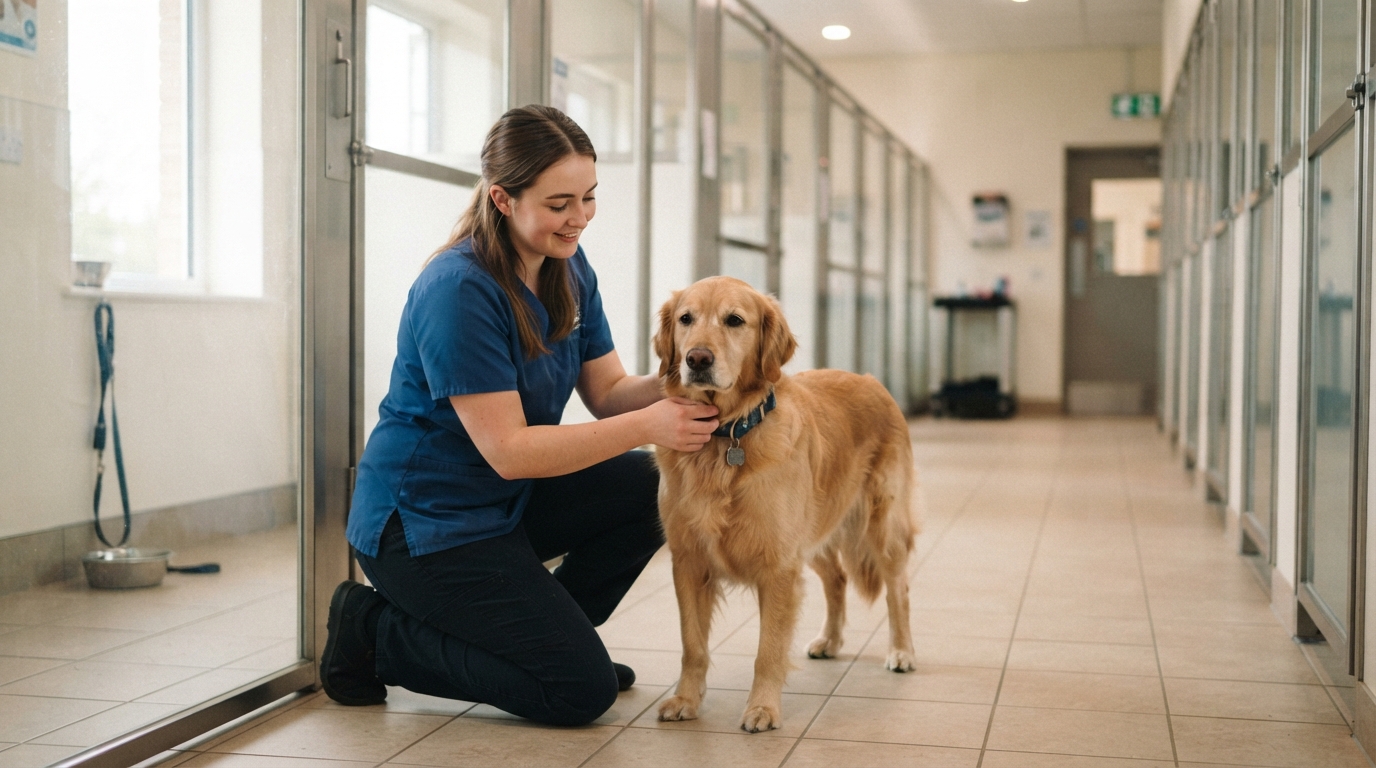
Leaving a dog or cat with a boarding facility means trusting staff with feeding schedules, medication, exercise, and daily comfort. Pet Boarding Services Chicago IL are designed around predictable routines, supervised play, and sanitary housing that together lower the stress animals typically experience in unfamiliar environments. Understanding what a facility actually does behind the scenes helps owners judge whether a location meets their pet’s needs.
Boarding operations generally follow a consistent intake process before an animal ever reaches a kennel or suite. This matters because inconsistent screening is one of the most common sources of illness outbreaks or behavioral incidents in group pet care settings.
What Happens During Intake and Daily Care
Most boarding facilities start with a health and vaccination check to confirm a pet is current on required shots before admission. Staff typically ask about feeding schedules, medications, and behavioral quirks so routines can be replicated as closely as possible.
Daily care structures commonly include:
- Scheduled feeding times matched to the pet’s home routine
- Multiple supervised potty or exercise breaks spaced through the day
- Separate housing or play groups based on size and temperament
- Visual health checks during each shift change
Consistency in these routines reduces anxiety, since animals respond well to predictable timing even in a new location.
Health and Safety Protocols That Matter
Vaccination requirements exist primarily to limit the spread of contagious conditions like kennel cough and parvovirus in group housing. According to the American Veterinary Medical Association, owners should confirm a facility’s vaccination and health screening requirements before booking a stay. Facilities that enforce these requirements consistently are generally reducing risk for every animal on the premises, not just the individual pet being checked in.
Sanitation routines also play a direct role in animal health. Surfaces, bedding, and feeding areas need regular disinfecting between occupants to prevent cross-contamination. Staff-to-pet ratios affect how quickly a team can notice symptoms such as lethargy, limping, or appetite loss, which is why facilities with smaller group sizes per staff member tend to catch problems earlier.
Comparing Boarding Structures
Owners often compare facility types based on housing style, supervision level, and activity structure rather than price alone. The table below outlines common differences.
| Feature | Traditional Kennel Boarding | Group Play Boarding | In-Home Style Boarding |
| Housing | Individual kennels or runs | Shared play areas with sleeping suites | Residential-style rooms |
| Supervision | Scheduled staff check-ins | Continuous supervised play | Close, low-ratio supervision |
| Best suited for | Pets needing quiet, separate space | Social pets comfortable in groups | Pets sensitive to noise or crowds |
Each structure has tradeoffs. Group play can tire out social dogs but may overwhelm anxious ones, while traditional kennels offer quiet but less physical activity.
Signs a Facility Prioritizes Animal Wellbeing
A few observable details tend to separate well-run boarding operations from less attentive ones.
- Clean, odor-controlled housing areas during a daytime visit
- Staff who ask detailed questions about a pet’s medical history and temperament
- Visible separation between unfamiliar animals until temperament is assessed
- Clear policies on emergency veterinary contact during a stay
Pet owners researching options in Chicago, IL often find that asking these questions directly during a facility tour provides more clarity than online reviews alone.
Frequently Asked Questions
What vaccinations are typically required before boarding a dog? Most facilities require proof of rabies, distemper, and bordetella vaccinations, since these address the most common contagious risks in group housing.
How can owners tell if a boarding facility is adequately staffed? Ask about staff-to-pet ratios during peak hours and whether someone is present overnight, since lower ratios generally allow faster response to health or behavior issues.
Is group play boarding safe for all dogs? Group play works well for social, well-socialized dogs but may not suit animals with anxiety, aggression history, or limited exposure to other pets.
Business Information and Next Steps
Based in Chicago, IL, Dog’s Life On Damen serves customers across Chicago, IL.
Readers can Visit Website for published service area and contact details.