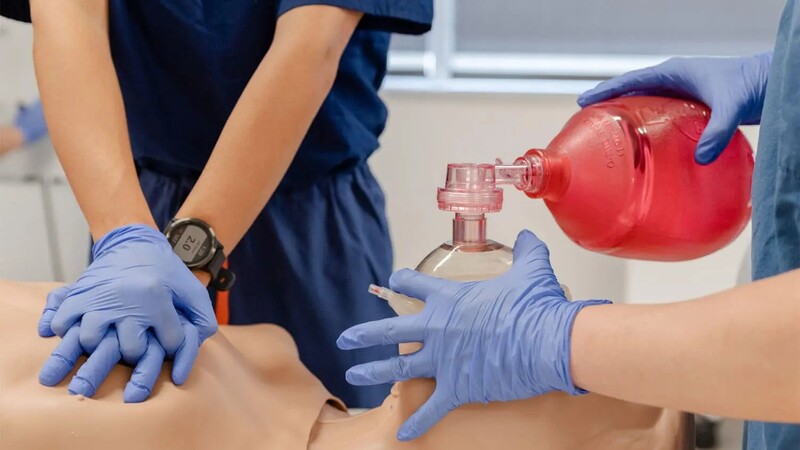
CPR training can help fitness teams recognize cardiac arrest, begin CPR, and understand how an AED fits into an emergency response before emergency medical services arrive. For gyms, studios, recreation facilities, and fitness professionals, preparedness should combine appropriate CPR certification with familiarity with the facility, available equipment, and a clear emergency-response plan.
Fitness environments are designed around movement, physical exertion, and improving health, but emergencies can still happen. A participant may become unresponsive during a workout, someone in a lobby could experience cardiac arrest, or a staff member may need to assist until emergency responders arrive.
That makes CPR preparedness a practical operational consideration rather than something fitness teams should think about only after an emergency occurs.
Why Should Fitness Teams Prepare for Cardiac Emergencies?
Cardiac arrest is a sudden loss of heart function that requires immediate action.
According to the American Heart Association’s 2026 statistics update, only about 42% of adults who experienced an out-of-hospital cardiac arrest in the United States in 2024 received bystander CPR. The same data showed public AED use in only 12.6% of adult out-of-hospital cases.
Those numbers highlight an important challenge: an emergency may occur in a public or community setting, but someone nearby still has to recognize what is happening and respond.
Fitness facilities can bring together people of different ages, activity levels, and health backgrounds. Employees do not need to predict who may experience an emergency. They do, however, benefit from knowing what actions they have been trained to take if someone suddenly collapses.
CPR certification is one way to build that preparedness.
What Makes a Fitness Setting Different From a Typical Workplace?
Fitness teams often work in environments where staff members are spread throughout a facility rather than seated together in one central work area.
A gym may include:
- Cardio areas
- Weight-training spaces
- Group exercise rooms
- Locker rooms
- Pools or recreation areas
- Personal-training spaces
- Reception areas
- Outdoor exercise spaces
A smaller studio may have fewer rooms but operate classes where one instructor is responsible for multiple participants at once.
These layouts create practical questions that extend beyond simply sending an employee to CPR classes.
If someone becomes unresponsive in a back exercise room, who calls 911? Who starts CPR? Where is the AED? Can another employee retrieve it quickly? Who directs emergency medical personnel to the correct area?
Training gives staff the skills needed for an emergency, while planning helps determine how those skills fit into the actual facility.
What Should Fitness Professionals Recognize About Cardiac Arrest?
Cardiac arrest is not the same as a heart attack, although a heart attack can sometimes lead to cardiac arrest.
The American Heart Association identifies two key signs of cardiac arrest: a person is unresponsive and is not breathing normally.
When those signs are present, action is needed immediately. Emergency medical services should be activated, CPR should begin, and an AED should be used as soon as one is available.
Fitness employees should not be expected to diagnose the cause of a collapse. CPR and AED training instead helps participants learn how to recognize the type of emergency that calls for an immediate resuscitation response and follow the steps taught during their course.
This distinction is important in a fitness environment because an unexpected collapse can initially be mistaken for exhaustion, dizziness, a fall, or another problem.
Why Do CPR and AED Training Belong Together?
CPR and an automated external defibrillator serve different but complementary purposes during cardiac arrest.
CPR helps maintain blood circulation through chest compressions. An AED analyzes the heart rhythm and can instruct a responder to deliver a shock when appropriate.
Modern AEDs provide step-by-step prompts and are designed so a shock is delivered only when the device determines that one is indicated. Still, seeing an AED mounted on a wall is different from having practiced how it fits into an emergency sequence.
CPR and AED training can help fitness staff understand how to:
- Recognize an unresponsive person who is not breathing normally
- Activate emergency medical services
- Begin CPR
- Retrieve and prepare an AED
- Follow the device’s prompts
- Coordinate CPR with AED use
- Continue responding until emergency personnel take over
For fitness facilities that already have an AED, staff familiarity with the device is particularly relevant.
Who on a Fitness Team Should Have CPR Certification?
The appropriate answer depends on the organization’s requirements, staffing model, operating hours, and policies.
A facility should not automatically assume that having one certified employee is sufficient for every shift or every situation.
Consider a fitness center that has one CPR-certified manager. That person may not always be present. They could be on vacation, in a meeting, assisting someone elsewhere in the building, or off duty when an emergency happens.
Businesses can instead examine coverage throughout their operating schedule.
Questions to consider include:
Are trained employees present on every shift?
Morning, afternoon, evening, and weekend staffing may differ significantly.
Are different parts of the facility covered?
In a large gym, a staff member at the front desk may be some distance from a person who collapses in a training area.
Do contractors or independent instructors understand the emergency plan?
Fitness facilities sometimes have people working on site under different employment arrangements. Management should determine how those individuals fit into the facility’s procedures.
Are certification requirements tied to specific jobs?
Some positions, employers, organizations, or governing bodies may require a particular type of CPR certification. Staff members should verify the actual requirement before registering for training.
Organizations in Arizona comparing cpr classes should therefore evaluate the credential needed as well as how many trained people must realistically be available throughout the day.
How Can Fitness Facilities Make CPR Training More Practical?
A CPR course teaches response skills, but a workplace can reinforce preparedness by connecting those skills to the actual facility.
Locate the AED Before an Emergency
Employees should know whether an AED is available and where it is located.
If a building contains several floors or separated exercise areas, management should also consider how quickly the device can be accessed from different parts of the facility.
Training should not be the first time employees think about where the AED is kept.
Make the Facility Easy for EMS to Navigate
A large fitness center can be confusing to someone entering for the first time.
Teams may benefit from determining who would meet emergency responders, open secured doors, control elevator access if applicable, or guide them directly to the person needing assistance.
Know How to Contact Emergency Services
Calling 911 may seem obvious, but facilities should think about practical complications.
Does the caller need to provide a suite number? Is the facility inside a shopping center or large complex? Is there a gated entrance? Are workouts sometimes conducted outdoors?
Providing a clear location can help emergency responders find the scene.
Know Who Is Trained
Management should have a practical way to determine which staff members currently hold required certifications.
A credential that expired months ago should not be treated as current simply because an employee completed training at some point in the past.
Does Fitness Experience Replace CPR Training?
No.
A person can understand exercise, programming, coaching, or fitness instruction without automatically knowing how to respond to cardiac arrest.
Similarly, being physically fit does not mean someone intuitively knows the correct CPR sequence or how to integrate an AED into the response.
CPR training classes provide structured instruction and practice specifically for emergency situations.
This is particularly important because a real emergency can be stressful. Familiarity with the basic sequence before an incident occurs can help reduce uncertainty over what should happen next.
Should Fitness Teams Also Consider First Aid?
Possibly, depending on the workplace and its requirements.
Fitness environments can involve emergencies other than cardiac arrest. Participants may experience falls, cuts, sudden illness, strains, or other incidents.
CPR and AED training is focused primarily on cardiac and breathing emergencies, while First Aid addresses a broader range of injuries and sudden illnesses.
Facilities should verify whether staff members need CPR/AED alone or whether their jobs, employer policies, contracts, or other requirements also call for First Aid certification.
The goal should be to select training that reflects actual responsibilities rather than assuming one certification covers every type of workplace emergency.
How Often Should Fitness Teams Review Their Emergency Preparation?
Emergency planning should not disappear from attention once employees complete CPR training.
Facilities change.
New employees join the team. Other staff members leave. Certifications expire. Equipment may be relocated. Floor plans change. A gym may add a studio, expand its hours, begin offering new programs, or take classes outdoors.
Periodic review can help an organization identify whether the original plan still works.
Useful review questions include:
- Are enough currently certified employees available?
- Can staff readily identify the AED location?
- Is the AED accessible during all operating hours?
- Do new hires understand emergency procedures?
- Has the facility layout changed?
- Are emergency contact procedures current?
- Do certifications need renewal?
These questions help bridge the gap between completing a course and maintaining practical readiness.
What Should a Fitness Professional Look for in a CPR Course?
The starting point should be the reason the person needs training.
If an employer, certification organization, school, licensing authority, or other entity requires CPR certification, the participant should confirm the exact credential required before enrolling.
Not every CPR course is interchangeable.
Course selection may depend on whether the person needs:
- Initial CPR certification
- Renewal
- CPR and AED instruction
- A particular course format
- Adult-only or broader age coverage
- First Aid in addition to CPR
Verifying the requirement first can prevent a participant from completing a course that does not meet their intended purpose.
For fitness employees who are training for general preparedness rather than a formal requirement, the nature of the facility and the people they serve can help guide the decision.
How Does Glendale Fit Into Fitness Emergency Preparedness?
Fitness professionals in Glendale, Arizona work in many types of environments, from traditional gyms and studios to recreation programs and other community settings.
The principles of CPR preparedness remain the same regardless of geography: employees should know what certification they need, understand their workplace’s response plan, and be familiar with available emergency equipment.
Local access to training can make it easier for employees and organizations to coordinate certification, but location should not be the only factor in choosing a course.
The more important question is whether the course matches the person’s role and requirements.
CPR Preparation Should Be Part of the Fitness Environment
Fitness professionals spend much of their workday helping other people move, exercise, and pursue health goals. Preparing for an unexpected cardiac emergency is a different responsibility, but it deserves the same deliberate planning.
Effective preparation begins with appropriate CPR certification and continues with an understanding of how the facility itself will respond.
Teams should know who is trained, where the AED is located, how emergency services will be contacted, and how staff members will coordinate if someone becomes unresponsive and is not breathing normally.
CPR and AED training cannot guarantee how an emergency will turn out. It can, however, give fitness employees structured skills for responding during the critical period before emergency medical personnel arrive.
For gyms, studios, trainers, and other fitness organizations, that makes CPR preparedness a practical part of operating a facility where people gather to be active.
About CPR Solutions AZ
CPR Solutions AZ is based in Surprise, Arizona and provides CPR, AED, BLS, and First Aid instruction for students and organizations in communities including Glendale. They offer American Heart Association classes and courses following AHA guidelines; for course information, they can be reached at (623) 640-3591, or students can find their location on Google Maps.


