Recap:
• Extreme cold forces furnaces to run longer cycles, which exposes weak ignition systems, worn blower motors, and undersized airflow.
• Frozen intake or exhaust vents and thermostat miscalibration are among the most common triggers for no-heat calls during cold snaps.
• Routine seasonal maintenance before winter reduces the odds of mid-cold-snap breakdowns.
When outdoor temperatures drop sharply, a furnace that worked fine in milder weather can suddenly fail or underperform because it is forced to run continuously under conditions it was not maintained to handle. Addressing furnace issues in extreme cold often means checking airflow restrictions, ignition components, and venting before the system shuts down completely.
For residents who need help identifying Furnace Issues In Extreme Cold, understanding why these problems cluster during the coldest stretches of the season can make the difference between a quick fix and a multi-day repair wait. Furnaces are sized and calibrated for typical winter conditions, not the sustained sub-zero stretches that strain every component simultaneously.
Why Cold Snaps Expose Hidden Furnace Weaknesses
A furnace that cycles on and off normally during moderate cold may run almost continuously once temperatures fall well below freezing. This extended runtime increases wear on parts that were already marginal.
• Ignition systems and flame sensors see more ignition attempts per day, raising the chance of failure.
• Blower motors and belts face more operating hours, accelerating wear on aging components.
• Ductwork and insulation gaps that seemed minor become larger sources of heat loss.
• Thermostats calibrated loosely may struggle to maintain accuracy across a wider temperature swing.
Anchorage winters regularly produce the kind of sustained cold that pushes residential heating systems toward their operating limits, which is why seasonal inspection timing matters as much as the repair itself.
Common Mechanical and Airflow Failures
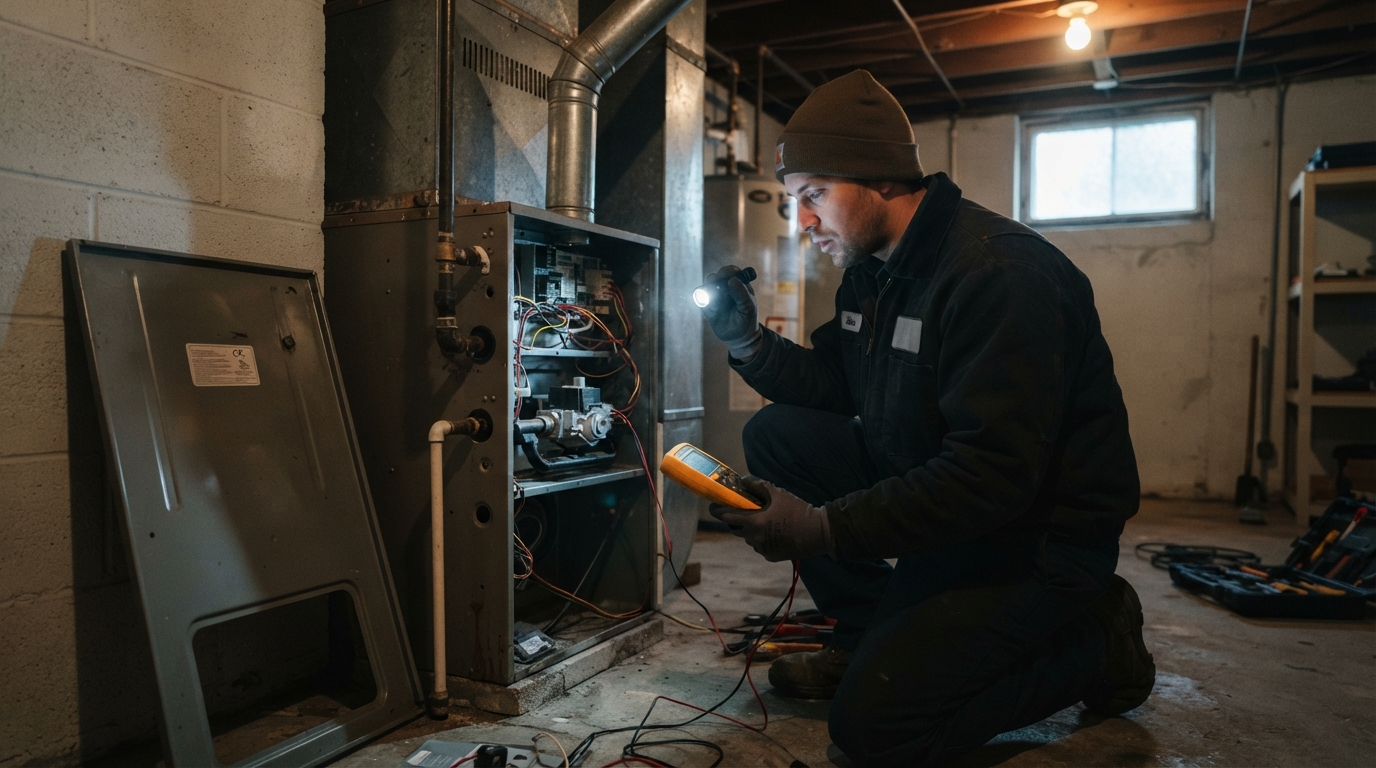
Several specific failure points recur across cold-weather service calls. Recognizing them early can help homeowners decide whether a problem is a simple fix or requires professional attention.
1. Frozen or blocked intake and exhaust vents – ice and snow buildup on exterior venting can restrict airflow, triggering safety shutoffs.
2. Pilot light or ignitor failure – older systems with standing pilots are prone to flameouts in drafty conditions, while electronic ignitors can fail after repeated cycling.
3. Dirty or clogged air filters – restricted airflow forces the system to work harder and can cause overheating or shutdowns.
4. Worn blower motor components – belts and bearings degrade faster under constant operation, leading to reduced airflow or unusual noise.
5. Thermostat miscalibration – inaccurate readings can cause short cycling or insufficient heating during the coldest hours of the day.
| Issue | Typical Cause | Immediate Risk |
| No heat output | Ignition failure or gas supply issue | Rapid indoor temperature drop |
| Weak or uneven heat | Clogged filter or duct blockage | Higher energy use, uneven comfort |
| Furnace shuts off repeatedly | Blocked vent or overheating sensor trip | Safety lockout, repeated no-heat events |
| Unusual noise during operation | Worn blower motor or loose components | Potential mechanical failure |
Preventive Steps Before the Next Cold Snap
Scheduling a pre-winter inspection remains one of the more effective ways to reduce the odds of a mid-storm breakdown. The national weather service publishes cold weather advisories for Alaska that can help residents anticipate when heating systems will face the heaviest demand.
• Replace or clean air filters monthly during heavy-use months.
• Clear snow and ice away from exterior vent terminations after storms.
• Test the thermostat’s accuracy against a separate indoor thermometer.
• Listen for new or unusual sounds, which often precede a mechanical failure.
• Keep registers and return vents unobstructed by furniture or storage items.
Addressing small issues before a deep freeze arrives reduces the chance that a minor inefficiency turns into a complete system failure when temperatures are at their lowest and repair demand is highest.
Frequently Asked Questions
Why does my furnace work fine most of the winter but fail during the coldest week? Extended runtime during extreme cold exposes marginal components, such as aging ignitors or worn blower parts, that handle shorter cycles without issue but fail under continuous demand.
Can frozen vents really shut down a furnace? Yes. Blocked intake or exhaust venting can trigger a furnace’s built-in safety sensors, which shut the unit down to prevent unsafe combustion byproduct buildup.
How often should filters be checked in cold weather? Monthly checks are reasonable during heavy-use winter months, since restricted airflow from a dirty filter is a common contributor to reduced heating performance.
Is a furnace that short-cycles in cold weather a serious problem? Short cycling can indicate thermostat miscalibration, airflow restriction, or an overheating sensor trip, and it typically warrants inspection before the next cold stretch arrives.
Getting Help Before the Next Freeze
Based in the USA, services are available to customers across Anchorage.
Seasonal heating system details and service area information are published through Learn More About CGC Services, LLC for residents preparing for the coldest part of the winter.