Quick summary:
- Swimming classes are typically grouped by age and skill level, ranging from preschool water orientation to advanced stroke development for swimmers age 6 and up.
- Class formats generally fall into three categories: group lessons, semi-private lessons, and private one-on-one instruction, each offering a different ratio of instructor attention.
- Selecting the right format depends on a swimmer’s age, comfort level in water, and specific skill goals rather than a single “best” option for every learner.
Choosing among the available Swimming Classes options starts with identifying a swimmer’s age group and comfort level in water, since programs are structured around measurable skill progressions rather than a one-size-fits-all curriculum. Parents and adult learners in Toronto, ON who understand these distinctions can match a child or themselves to a class format that supports steady, safe progress. TAC Aquatics, a swim school based in Thornhill, ON, is one option among several that structure programs this way, though the principles below apply broadly to swim instruction standards used across Ontario.
How Swimming Classes Are Typically Structured by Age
Most swim programs separate instruction into two broad age bands, each with distinct learning objectives.
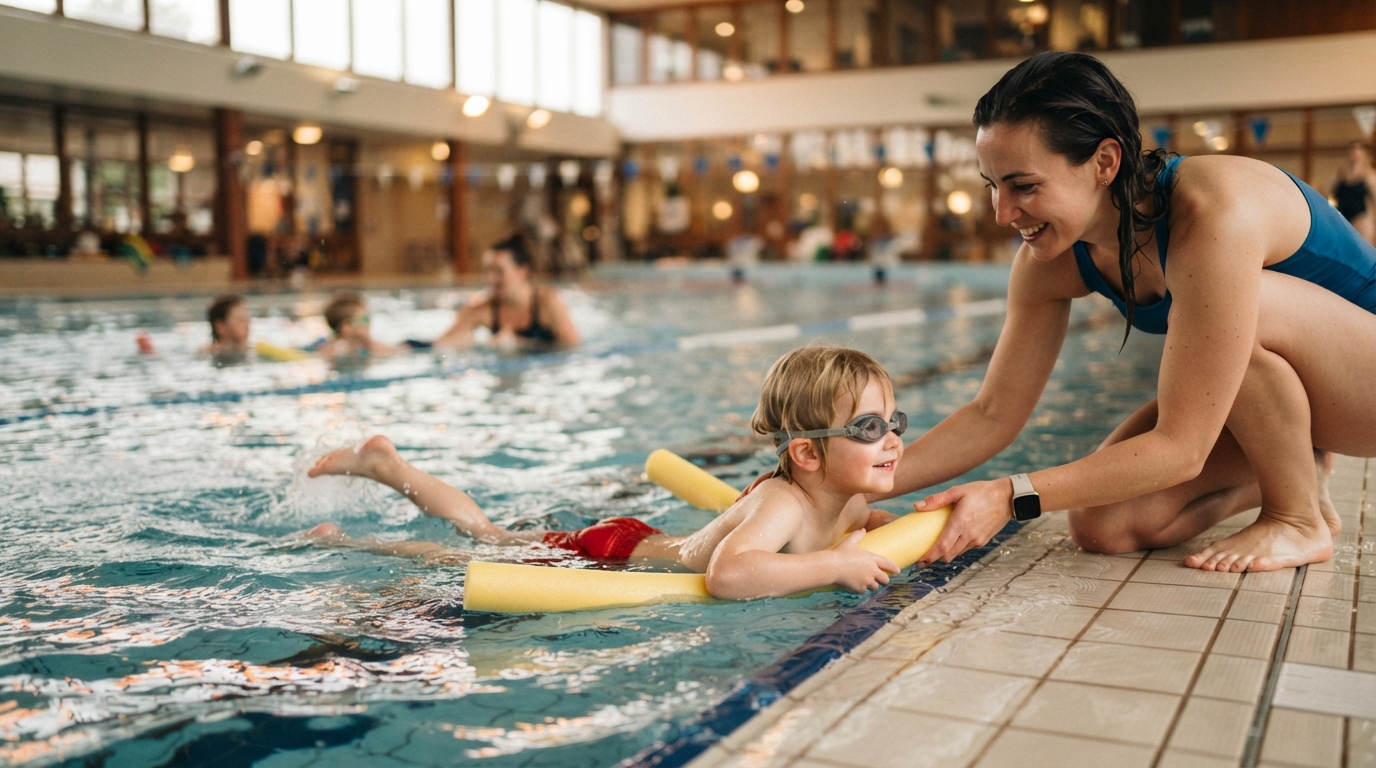
- Preschool lessons (ages 3 to 5): Focus on water orientation, comfort with submersion, and basic safety habits rather than stroke mechanics.
- Swimmer lessons (ages 6 to 18+): Build on foundational comfort to introduce stroke technique, endurance, and more structured skill benchmarks.
This age-based separation aligns with standards used across Canadian swim instruction, including those developed by the Lifesaving Society, which many Ontario-based swim schools reference for curriculum structure.
Comparing Class Formats: Group, Semi-Private, and Private
The ratio of instructor to student time is one of the most practical factors in choosing a class, since it directly affects how much individualized feedback a swimmer receives during a session.
| Format | Typical Ratio | Best Suited For |
| Group Lessons | 1 instructor to 4 students | Swimmers who benefit from peer interaction and a structured class pace |
| Semi-Private Lessons | 1 instructor to 2 students | Two swimmers at a similar level who want more individual attention than a group setting allows |
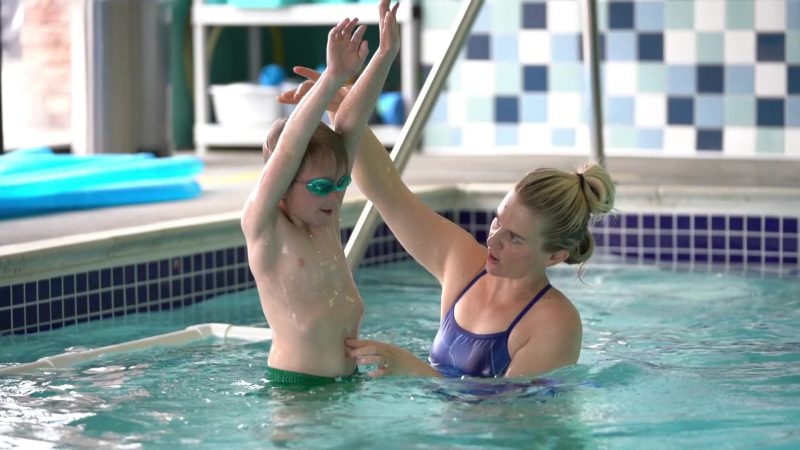
| Private Lessons | 1 instructor to 1 student | Swimmers needing fully personalized pacing, often for rapid skill-building or specific technique correction |
Group formats are generally more cost-effective and offer social motivation, while private instruction allows pacing tailored to a single swimmer’s progress. Semi-private lessons sit between the two, often chosen by siblings or friends at comparable skill levels.
Why Water Safety Context Matters in Toronto, ON
Swim instruction carries safety implications beyond skill-building alone. National data compiled by the Lifesaving Society shows that over half of drowning deaths in Canada occurred during a recreational activity, most commonly swimming, underscoring why structured instruction and supervised practice remain central to water safety education. For families in Toronto, ON, this context reinforces the value of choosing programs that follow recognized safety curricula rather than informal instruction alone.
Business Info
Based in Thornhill, ON, TAC Aquatics serves swim class participants across Toronto, ON through structured preschool and swimmer-level programs offered in group, semi-private, and private formats.
Frequently Asked Questions
What age should a child start swim lessons? Many programs begin preschool-level instruction around age 3, focusing on water comfort and basic safety skills before introducing formal stroke technique around age 6.
Is group or private instruction better for beginners? Group lessons work well for beginners who are comfortable in a social learning setting, while private lessons suit swimmers needing more individualized pacing or those working through specific fears or technique issues.
How long does it typically take to learn to swim? Progress varies by age, frequency of lessons, and individual comfort in water, so timelines differ significantly between swimmers rather than following a fixed schedule.
Do semi-private lessons cost less than private lessons? Semi-private lessons generally cost less per participant than one-on-one private instruction, since the instructor’s time and fee are shared between two students.
Current scheduling and program details for TAC Aquatics are published for review ahead of enrollment.