Simply put:
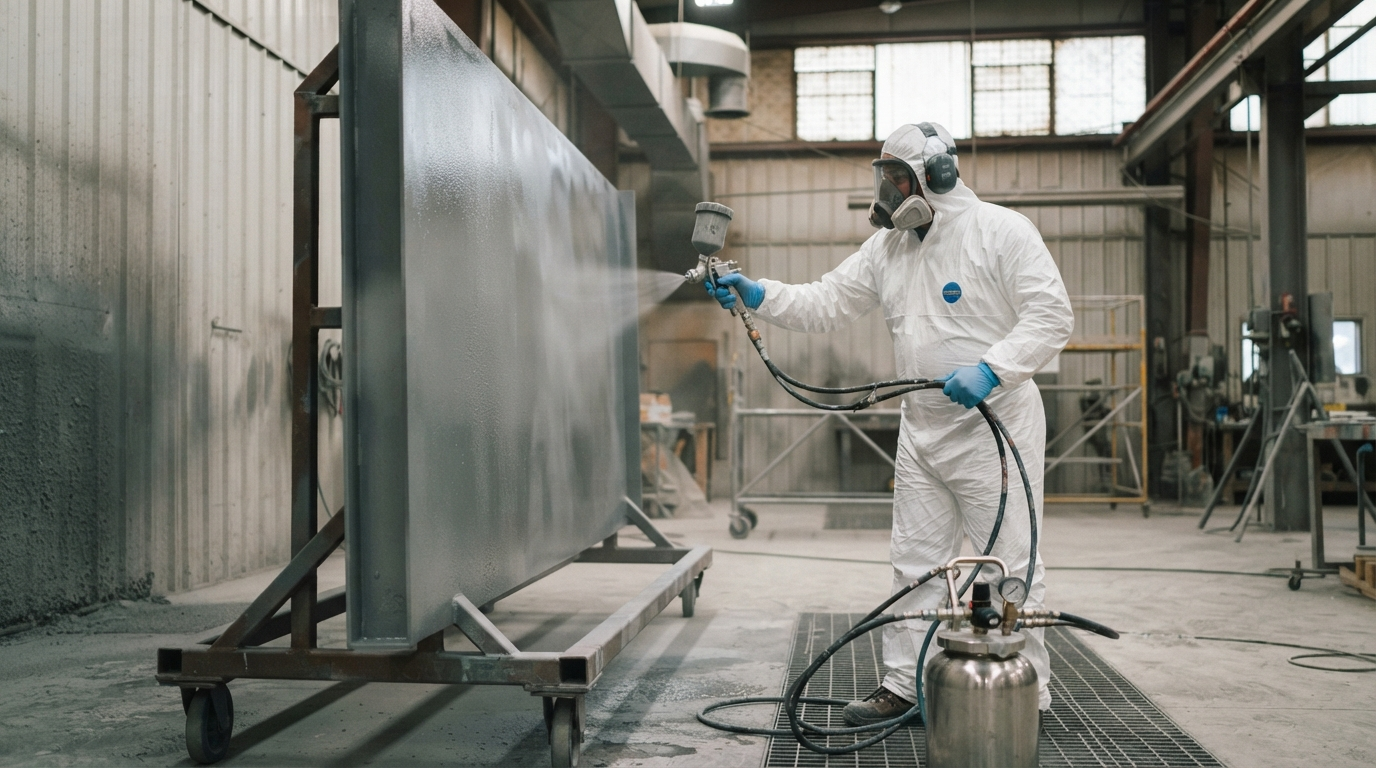
- Commercial paint equipment includes spray guns, pressure tanks, paint booths, and related accessories used for industrial-grade coating work.
- Selection depends on project scale, coating type, surface prep method, and compliance with ventilation and respiratory safety rules.
- Paint booths, hoses, and spray guns are sized and configured differently for small touch-up jobs versus large structural coating projects.
Choosing the right commercial paint equipment means matching spray guns, pressure tanks, hoses, and booth systems to the coating material, surface size, and safety requirements of a given industrial project. Equipment selection errors commonly show up as uneven finishes, overspray waste, or non-compliant ventilation setups that create downstream safety problems.
Commercial-grade commercial paint equipment differs from consumer paint tools in durability, pressure capacity, and compatibility with industrial coatings such as epoxy and high-build primers. Contractors and facility managers working on tanks, structural steel, or large equipment surfaces typically need pressure-fed spray systems rather than simple handheld sprayers. Matching gun type, tank size, and hose length to the coating viscosity and job scale reduces material waste and rework.
Core Equipment Categories for Industrial Painting
Industrial paint setups generally fall into a few recognizable equipment groups, each suited to a different stage of the coating process.
- Spray guns – conventional and HVLP guns designed for industrial coatings, available in multiple nozzle configurations for different finish requirements.
- Pressure tanks – code-rated galvanized or carbon steel tanks that feed paint to the gun under controlled pressure for consistent output on large surfaces.
- Hoses and fittings – fluid and air hose assemblies rated for industrial duty cycles, connecting the tank, gun, and air supply.
- Paint booths – enclosed or open-front structures that contain overspray, manage airflow, and support compliant finishing work.
Selecting among these categories depends on whether the job involves field application, such as coating a structure on-site, or shop-based finishing inside a dedicated booth.
Matching Equipment to Project Type and Scale
Project size and location change which configuration makes sense. A small maintenance touch-up calls for different gear than a full structural recoating project.
- Field or on-site coating – portable pressure tanks and longer hose runs support work away from a fixed booth.
- Shop or booth-based finishing – stationary paint booths with controlled airflow suit repeat production finishing.
- Large structural projects – larger-capacity tanks and multiple gun setups reduce downtime on big surface areas such as tanks or steel structures.
- Specialty coatings – epoxy and high-solids coatings often require different gun tips and tank linings than standard enamels.
| Setup Type | Best Suited For | Typical Components |
|---|---|---|
| Portable spray system | Field touch-up, small structures | Spray gun, small pressure tank, short hose |
| Booth-based system | Repeat shop finishing | Enclosed booth, fixed air supply, gun |
| Large-capacity tank setup | Structural steel, tanks, vessels | 30-60 gallon tanks, multiple guns, long hose runs |
Safety and Compliance Considerations
Paint booth ventilation and spray finishing operations are regulated under federal workplace safety rules. According to OSHA’s spray finishing operations guidance, ventilation standards govern airflow, booth design, and dust or vapor control for spray finishing work. Facilities running paint booths in Deer Park, TX should confirm booth airflow rates and enclosure design meet these federal ventilation requirements before starting production coating work, since local permitting often references the same standards.
Respiratory protection and PPE selection should match the coating type and application method, since solvent-based and powder coatings carry different inhalation risks. Keeping hose fittings, gaskets, and gun components inspected on a routine schedule helps prevent pressure failures during use. Facilities handling larger coating volumes may also need to verify fire suppression and electrical code compliance for enclosed booth structures.
Business Info
Based in Houston, TX, a commercial paint and blasting equipment supplier serves contractors and facility operators across Deer Park, TX, supplying spray guns, pressure tanks, and paint booth components for industrial coating projects. This type of supplier, T-Texas Industries, typically stocks equipment compatible with common industrial coating brands used on structural steel and tank surfaces.
Frequently Asked Questions
What is the difference between HVLP and conventional spray guns for industrial coating work? HVLP guns use lower pressure and higher volume airflow, which reduces overspray compared to conventional guns, though conventional systems often handle thicker industrial coatings more efficiently on large surfaces.
How often should paint booth filters be replaced? Replacement frequency depends on booth usage volume and coating type; high-volume operations typically inspect and change filters more often than intermittent-use shops.
Do all paint booths require the same ventilation setup? No. Enclosed booths, open-front booths, and downdraft booths each have different airflow and exhaust configurations suited to different project sizes and coating methods.
Can the same pressure tank handle both standard enamel and epoxy coatings? Tank compatibility depends on the lining material and the coating’s viscosity; some epoxy formulations require tank liners or agitation features not needed for standard paints.
A Final Note on Equipment Selection
Matching spray guns, tanks, hoses, and booth systems to the specific coating and project scale reduces downtime and helps maintain compliance with ventilation and safety standards. Published details for T-Texas Industries cover the local service area for industrial paint and blasting equipment supply.